
Video marketing for business has revolutionized digital marketing. It’s no longer optional; it’s a critical component of any effective marketing strategy. Businesses of all sizes leverage video content to engage customers, increase sales, and differentiate themselves from competitors.
Why is video marketing so powerful in digital marketing? It grabs attention quickly, as people naturally engage with moving images and sound. Once you capture attention, it’s easier to generate leads or sales. 78% of people prefer learning about products or services through short videos.
Video marketing also allows you to demonstrate your products or services in action. This helps your target audience better understand your offerings than text alone can. Plus, video is incredibly shareable, helping your message spread organically across social media platforms. Through this article, you will learn what video marketing is, as well as its importance and how to create effective videos.
What is Video Marketing
Video marketing involves leveraging video content to promote products, services, or brands. It also entails creating and distributing videos for purposes like the following:
- Product demonstrations
- Tutorials
- Customer testimonials
- Brand storytelling
- Social media content
- Webinars
- Advertisements
Video marketing is a popular marketing strategy for businesses. In 2025, 89% of businesses use video marketing.
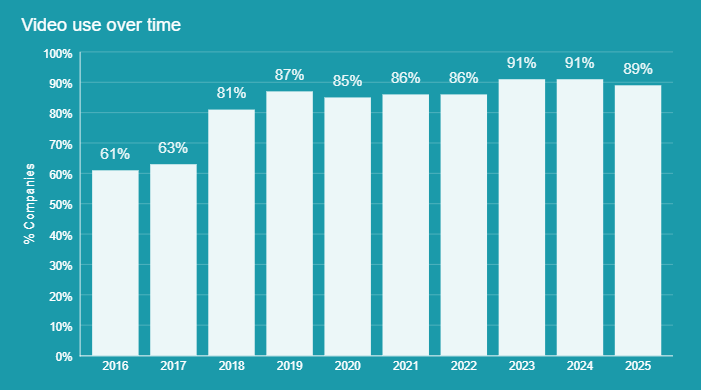
(Source – Wyzowl)
Why Your Business Needs Video Marketing
A well-crafted video marketing strategy can deliver substantial returns. Video has a profound impact on key business metrics, from brand awareness to conversion rates. It helps build a connection with viewers that static content often cannot. 72% of customers prefer learning about products and services in video format rather than static content like a blog or e-book.
Integrating videos into your marketing efforts can significantly improve engagement. Videos keep people on your website longer, which sends positive signals to a search engine like Google. This can lead to improved SEO rankings and more organic traffic over time.
A video is also a fantastic tool for building trust. It allows you to showcase the human side of your business, fostering a genuine connection with potential customers. Ultimately, a strong brand connection and increased trust lead to higher conversion rates and help boost sales.
Let’s look at potential impact:
- A quality video on a landing page can increase conversion rates.
- Including a video in an email has been shown to increase the click-through rate.
- Businesses that use video can grow revenue year over year faster than those without video.
- Videos make information easier to understand and remember, helping your audience learn about your offerings faster and improving the user experience. An improved user experience often translates into higher satisfaction, referrals, and loyalty.
- Consistent use of video makes your business more memorable by strengthening brand recognition. This repeated exposure increases the likelihood that customers will remember and choose your business when making a purchase decision.
93% of marketers who use video say it’s an important part of their marketing content and gives them good ROI.
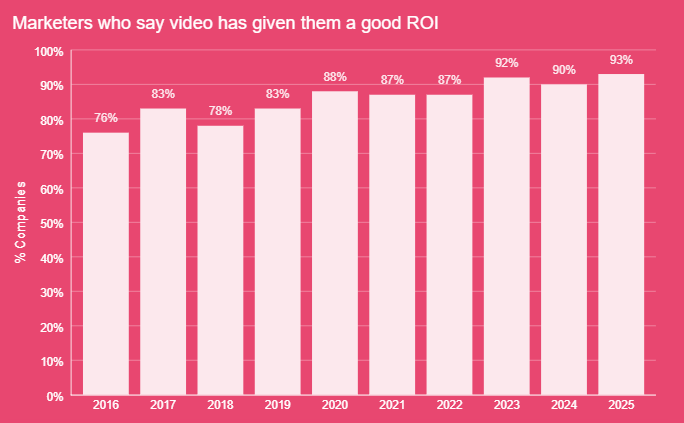
(Source – Wyzowl)
Types of Video Content for Business
There are many different types of marketing videos you can create for your business. The key is to choose formats that align with your goals and resonate with your target audience. Here are some of the most effective options to consider for your business content strategy as well examples for some of them.
Explainer Videos
An explainer video breaks down a complex idea into a simple, easy-to-understand concept. Explainer videos are perfect for showcasing how your product or service solves a specific problem. They should be short, engaging, and to the point, usually staying under 2 minutes.
Example – Crazy Egg
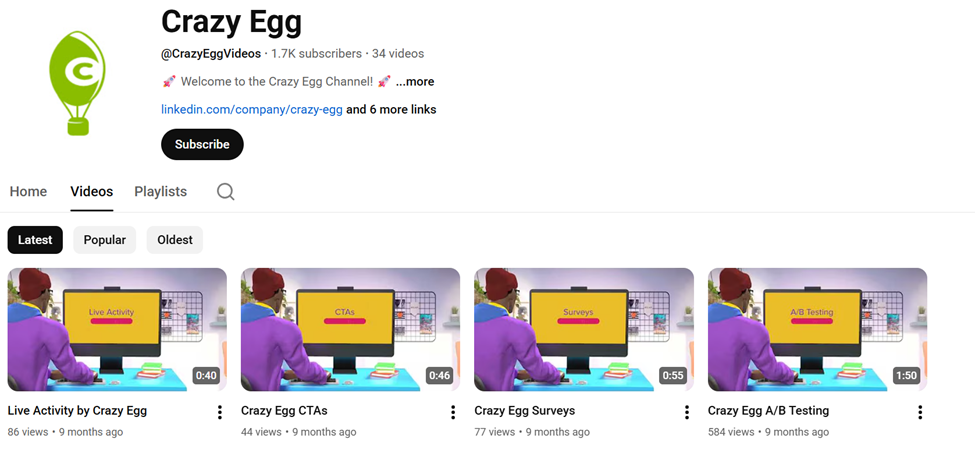
Crazy Egg provides analytic tools for visitor behavior. Among those tools are the following:
- Heatmaps
- Recordings
- Web Analytics
- A/B Testing
- Surveys
Crazy Egg has a YouTube page that explains many of the terms listed above. Their page is great because it gives potential customers a better understanding of those terms, helping them use the tool more effectively.
Product Videos
Showcase your product in action with a product demo. This video gives potential customers a clear view of what they receive and how it functions. It’s like offering a virtual test drive that can profoundly influence purchasing decisions.
Effective product videos focus on the benefits, not just the features. Show viewers how the product will make their lives easier or better. This format is crucial for e-commerce businesses seeking higher conversion rates.
Example – Grammarly
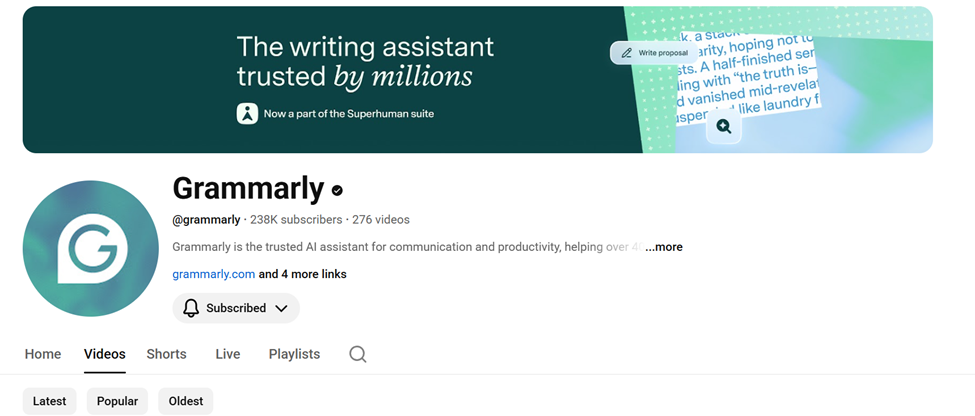
Grammarly is among the most popular AI writing assistants worldwide. The writing tool is predominantly used for communication and productivity. Grammarly offers many different features that help individuals and organizations improve emails, communications, messages, and reports.
Grammarly’s YouTube page offers demo videos for many of their features, including:
- Paraphraser agent
- AI detector agent
- Plagiarism checker
- AI writing app
What makes these videos great is their brevity and clarity. They also offer in-depth videos that highlight various aspects of their tool and its features.
Customer Testimonial Videos
Nothing builds trust like hearing from happy customers. A customer testimonial video lets your satisfied clients share their positive experiences. This form of social proof is incredibly powerful and can sway undecided buyers.
When creating these, prompt customers with questions that encourage authentic, detailed responses. Genuine stories are far more compelling than scripted endorsements. These videos work well across your website, social media, and in email campaigns.
Example – Brandwell AI
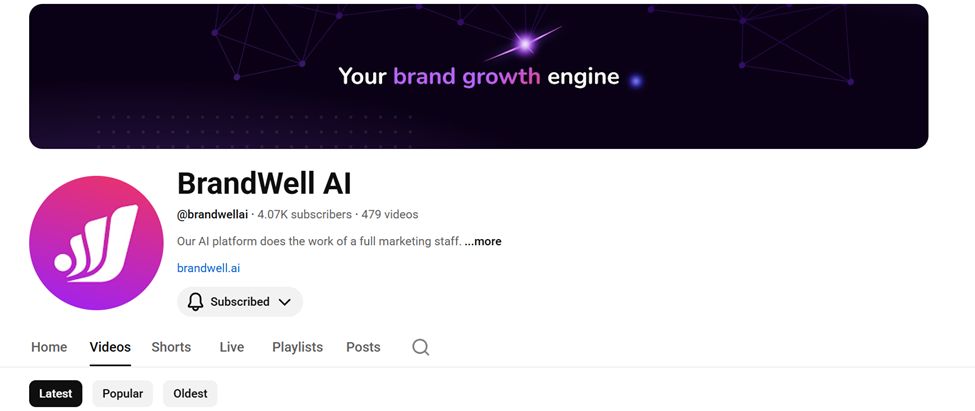
BrandWell AI is an AI writing tool that helps writers and marketers automate their content, such as blog posts. The BrandWell AI YouTube page features a variety of videos for visitors to watch. The video types include strategy and tutorials, walkthroughs, and customer testimonials in the form of case studies. As part of the case studies, the customer discusses their success with the tool.
Educational Videos
An educational video positions your brand as an industry expert and a valuable resource. This type of marketing content focuses on teaching your audience something useful related to your niche. You can create how-to guides, tutorials, or industry-specific informational content.
This approach builds a loyal following and a strong brand reputation. When customers are ready to buy, they’ll think of the business that helped them learn. This is a core component of effective business-to-business content marketing.
Example – Hootsuite
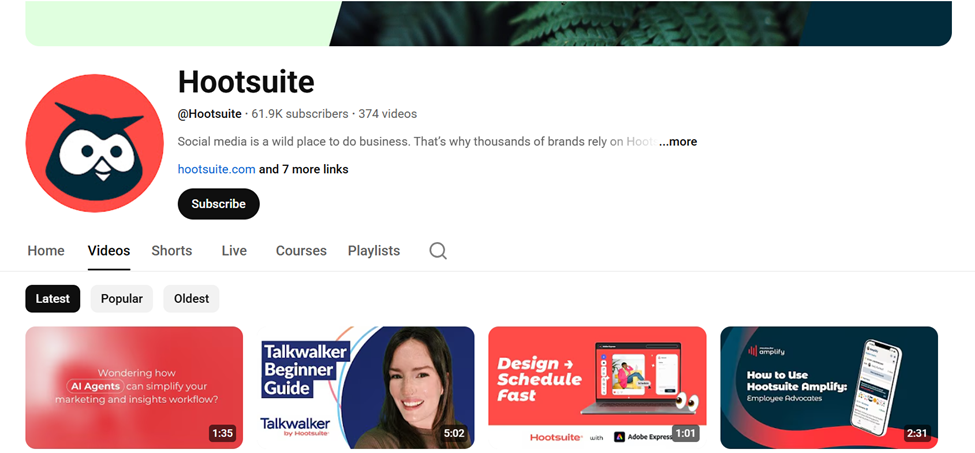
Hootsuite is a social media management platform. Hootsuite enables individuals and organizations to manage multiple popular social media platforms, including LinkedIn, YouTube, Instagram, X (formerly Twitter), and Facebook. Hootsuite’s YouTube page offers many educational videos ranging from how-to guides for their tools to insight series and advanced feature videos.
Behind-the-Scenes Videos
Give viewers a peek behind the curtain of your business operations. This type of form video humanizes your brand and helps build a stronger connection with your audience. You can showcase your team, workspace, or production process.
This transparency fosters authenticity and trust. It shows that there are real people behind the brand, which can be a major differentiator. It’s a great option for a social media video that feels personal and engaging.
Short-Form Video
The rise of platforms like TikTok, Instagram Reels, and YouTube Shorts has made short-form video essential. These short videos, typically under 60 seconds, are perfect for quickly capturing attention. They are visually appealing and highly shareable.
Use a short video for quick tips, fun trends, or bite-sized product showcases. An Instagram Reel or YouTube Shorts video can dramatically increase your reach and brand awareness. This format is a key part of any modern content marketing plan.
Live Stream Videos
A live stream offers a unique way to engage your audience in real time. You can host Q&A sessions, product launches, webinars, or virtual events. This direct interaction helps build a strong community around your brand.
Platforms like Facebook, Instagram, and YouTube make it easy to go live. The unscripted nature of a live stream can feel more authentic and personal. It’s an excellent way to connect directly with your followers and answer their questions on the spot.
How to Create Effective Business Videos
Creating great business videos doesn’t have to be complicated or expensive. With a clear plan and the right approach, even a small business can produce high-quality video content. Follow these tips to get started.
Steps 1-3: The Basics
- Know Your Audience – Before you press record, understand who you are creating the video for. What does your target audience care about, what are their pain points, and what kind of content do they consume? A deep understanding of your audience will guide every decision in the video production process. Leveraging a content strategy will help you determine this in more detail.
- Keep It Short and Engaging – Online attention spans are notoriously short. The average adult internet user’s attention span is 8.25 seconds. The short attention span is influenced by increasing distractions on the internet, such as social media, as well as the environment around them. When broken down by generation, Gen Z has the shortest attention span of 8 seconds.

(Source – Amra and Elma)
For most platforms, it’s best to get to the point quickly and deliver value within the first few seconds. While longer videos have their place for in-depth tutorials, most marketing videos should be concise.
3. Focus on Benefits, Not Features – Viewers want to know what’s in it for them. Don’t just list your product’s features; show how they solve a problem or improve your customer’s life. A benefits-focused approach is more persuasive and helps convert viewers into customers. If you want to add features to the video, list them at the end as an add-on.
Steps 4-6: Additional Requirements
4. Use a Strong Call-to-Action (CTA) – What do you want people to do after watching your marketing video? Tell them clearly with a compelling CTA. Instead of a generic phrase, be specific, such as the following:
- Download our free guide.
- Schedule your demo today.
- Subscribe to the channel.
- Sign up for my email list for a monthly free newsletter.
5. Optimize for Mobile and Silent Viewing – Around 75% of all video views happen on mobile devices. Ensure your videos are formatted correctly for vertical viewing on mobile screens. Add captions or on-screen text so your message is clear even without sound.
6. Maintain Consistent Branding – Your brand video should align with your company’s overall identity. Use consistent colors, fonts, logos, and messaging to reinforce brand recognition. A consistent look and feel across all your online videos helps build a strong brand identity.
For example, Backlinko, an online blog that helps organizations grow their online presence through SEO, digital, and content strategies, has YouTube videos that cover many of the topics previously listed. It also includes GEO and AI. The videos all have a similar look and messaging consistency
Tools for Video Marketing
You don’t need a giant budget to get started with video production. Many accessible tools can help you create a quality video without breaking the bank. Here are some essentials to consider.
| Tool Category | Descriptions and Examples |
|---|---|
| Cameras | Modern smartphones shoot high-quality video, making them a perfect starting point. For a step up, consider a digital single-lens reflex camera (DSLR) or mirrorless camera for more control over your shots. |
| Audio | Clear audio is non-negotiable. An external microphone or a shotgun mic external microphone or a shotgun mic, will capture much better sound than your camera’s built-in microphone. |
| Lighting | Good lighting can make a huge difference in video quality. Natural light from a window works well, but a simple three-point lighting kit with a key light, fill light, and backlight will make your videos look professional. |
| Editing Software | Video editing is where your story comes together. Beginner-friendly editing software like iMovie (Mac) or CapCut (Mobile/Desktop) is free, while more advanced options like Adobe Premiere Pro or Final Cut Pro offer more features. |
Remember, the most important element of your video is its content. Don’t get too hung up on achieving perfect production values, especially when you are just beginning your video marketing campaign.
Where to Share Your Business Videos
Once you’ve created your videos, it’s time to get them in front of your audience. A strategic distribution plan is crucial for maximizing the impact of your video marketing efforts. Here are the key media platforms to focus on.
Your Website
Embedding videos on your website can boost engagement and increase the time visitors spend on your pages. Add a product video to a product page to increase conversion or place an explainer video on your homepage to quickly communicate your value proposition. Creating a dedicated video gallery can also improve the user experience.
YouTube
Putting your videos on your website can take up a lot of bandwidth, depending on your plan. Try leveraging another location instead. YouTube is the most popular video platform on social media, making it a powerhouse for video marketing. Create a YouTube channel for your business and regularly upload valuable content.
Optimize each YouTube video with relevant keywords in the title, description, and tags to improve its visibility in search results. You can link your videos back to your website and vice versa.
Social Media Platforms
Different social media platforms require different approaches for your social media video content. For example, polished, educational videos perform well on LinkedIn, especially for business-to-business (B2B) content marketing.
Meanwhile, short, entertaining videos like Instagram Reels or TikTok are great for reaching a wider audience and showcasing your brand’s personality. Using a content distribution plan will help you properly strategize which social media platforms to use based on your needs and the audience you’re trying to reach.
Email Marketing
Including video in your email marketing campaign can dramatically boost your metrics. Simply using the word “video” in your email subject line can increase open rates by 19%. Embedding a thumbnail of your video that links out to the full version is an effective way to drive traffic and increase click-through rates.
Measuring the Success of Your Video Marketing
To ensure your video marketing strategy is effective, you need to track its performance. Analyzing key metrics will help you understand what’s working and where you can improve. Here are the most important metrics to watch.
- View Count – This shows how many times your video has been watched. Although view count is an important starting point, it doesn’t tell the whole story about your content engagement.
- Watch Time & Audience Retention – This metric shows how long viewers are watching your video. A high audience retention rate indicates that your content is engaging and valuable to your audience. A low audience retention rate, on the other hand, indicates that your content isn’t engaging or valuable to your audience.
- Engagement Rate – This includes likes, comments, and shares. High engagement shows that your content is resonating with viewers and prompting them to interact.
- Click-Through Rate (CTR) – If your video includes a CTA with a link, the CTR measures the percentage of viewers who click it. The CTR metric is a direct indicator of how effective your CTA is.
- Conversion Rate – Is widely considered the most important metric. It tracks how many viewers took the desired action after watching your video. Examples include the following:
- Making a purchase
- Filling out a form
- Signing up for a subscription/email newsletter
Most video and social media platforms provide built-in analytics tools to help you track these metrics. Use this data to refine your content marketing business plan over time. This will lead to higher conversion rates and better return on your investment (ROI) for your content.
Common Video Marketing Mistakes to Avoid
As you build your video marketing campaign, watch out for these common pitfalls. Avoiding them will help you create more effective content. This will ultimately deliver better results for your small business.
Primary Mistakes to Avoid
- Focusing on Features, Not Benefits – Customers care about how your product or service solves their problems. Always frame your video content around the benefits you offer to your customers.
- Making Videos Too Long – Respect your viewers’ time. Get straight to the point and deliver your message concisely to keep them engaged.
- Neglecting Mobile Viewers – With the majority of videos watched on mobile devices, you must optimize for small screens. This includes using vertical formats and large, readable text.
Bonus: Additional Mistakes to Avoid
- Forgetting a Call-to-Action – A video without a CTA is a missed opportunity. Always guide your viewers on what to do next, whether it’s visiting your website or following you on social media. CTA examples include the following:
- Download our free content audit template to get started today.
- Subscribe to our newsletter for weekly marketing tips delivered to your inbox.
- Share this post with your team and let us know your thoughts in the comments.
- Book a free 30-minute consultation to discuss your content strategy.
- Join our community of 10,000+ marketers and get exclusive resources.
- Inconsistent Branding – Ensure all your videos align with your overall brand identity. Inconsistent visuals or messaging can weaken brand recognition and confuse your audience. Key areas include the following:
- Logo placement and brand colors throughout video content.
- Tone of voice matches brand personality.
- Visual style, including fonts, graphics, animations, and editing techniques that reflect your brand.
- Messaging that displays brand mission, values, and value proposition.
- Video intro and outro sequences that are consistent with your brand across all your video content.
- Ignoring Video SEO – Your online videos need to be optimized for search engines. Use relevant SEO requirements, including:
- Keywords in your titles
- Descriptions
- Tags
Leveraging these in your video SEO will help people discover your content through popular search methods.
By avoiding these mistakes, you’ll be on the right track. You will be able to create a video marketing strategy that works. Now it’s time to put your plan into action.
Conclusion
Video marketing for business is an essential component of any modern digital marketing and content strategy. It’s a powerful tool that helps you connect with your audience, build trust, and drive meaningful results. From increasing brand awareness to achieving higher conversion rates, the benefits are too significant to ignore.
Creating compelling video content doesn’t require a massive budget or a professional film crew. By focusing on providing value to your audience and strategically sharing your videos, any business can succeed. Start small, experiment with different formats, and use data to refine your approach over time.
With persistence and a clear content marketing business strategy, you can harness the full potential of video. It’s a key part of content marketing for business growth in today’s visually driven marketplace. Don’t wait any longer to get started with building your video marketing approach.