
There is an essential fact about content and its ability to be successful: the more people read and view your content, the more likely it is to be successful. Unfortunately, countless brilliant content pieces fall flat because they aren’t seen. A content’s lack of visibility is generally because it didn’t have a solid distribution plan behind it. For example, most B2B marketers (89%) use organic social media platforms to distribute content in today’s marketing space.
This comprehensive guide will explain content distribution and how to create a strategy to help your content reach your audience.
What is Content Distribution?
Before developing a content distribution plan, it’s important to understand content distribution. It is the strategic process of publishing, sharing, and promoting your content across different channels to reach your target audience.
Your content distribution plan is part of your broader content strategy.
Understand Content Distribution Fundamentals
Now that we understand content distribution, it’s time to move on to its fundamentals. Understanding the fundamentals will help you build a successful plan. First are what are deemed the three pillars of content distribution.
The Three Pillars of Content Distribution
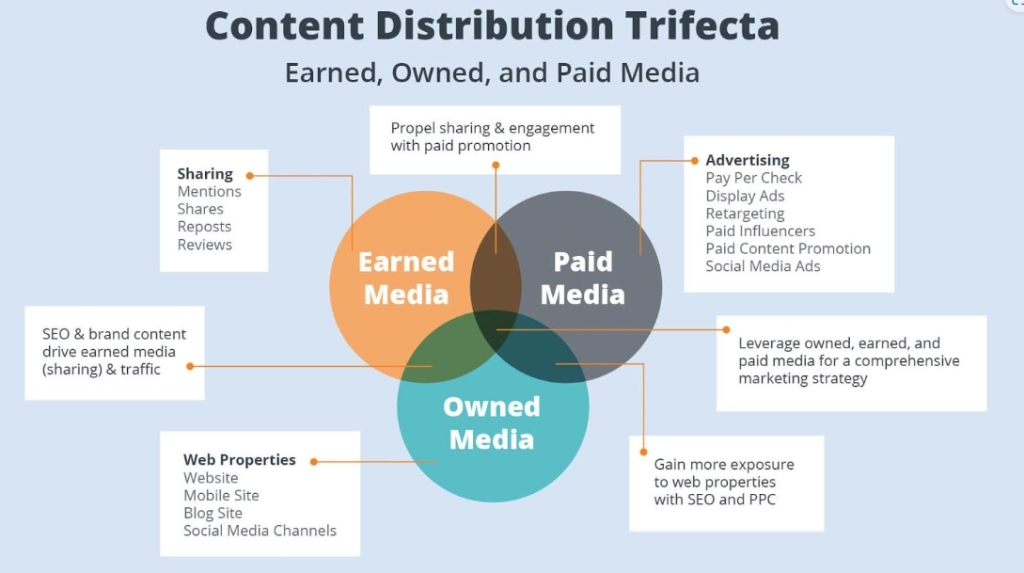
(Source – Instapage)
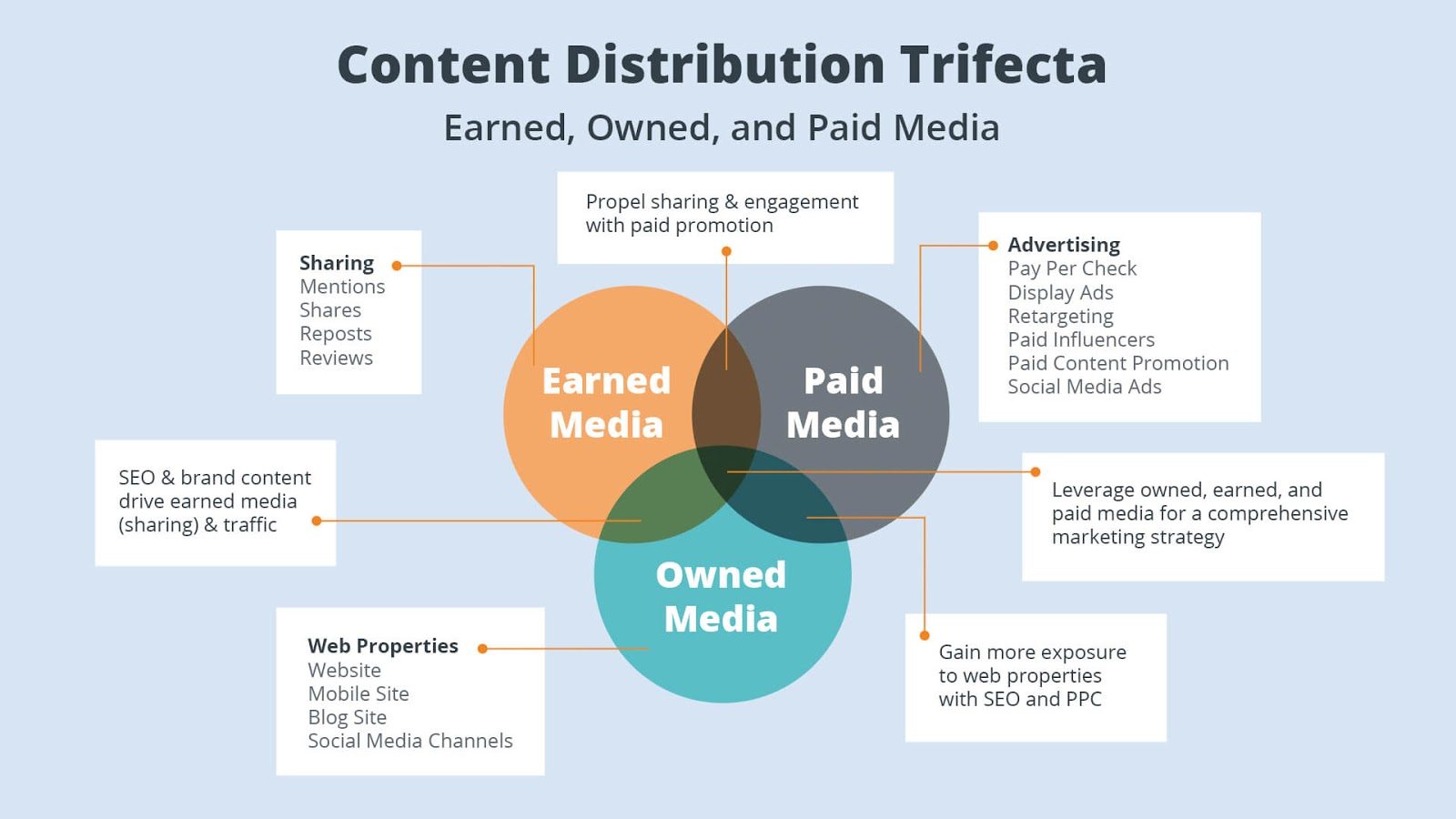
Generally speaking, there are three main distribution channels that bloggers, marketers, and organizations use to deliver their content to their audience. The three pillars are as follows:
Owned Media Channels
These are the platforms you control entirely. Your website, blog, email newsletter, and social media profiles are prime examples. The beauty of owned channels is that you have complete control over your message and timing. Building a strong, owned media presence gives you a reliable foundation for all your distribution efforts.
Earned Media Channels
This is where your content gets shared and discussed by others organically. It includes social shares, mentions in industry publications, and word-of-mouth recommendations. While you can’t directly control earned media, you can influence it through high-quality content and relationship-building. Some of the most successful pieces of content go viral simply because they uniquely address a common industry pain point.
Paid Media Channels
These are platforms where you pay to distribute your content, like social media advertising, content discovery platforms, and sponsored posts. Paid channels generally work best when you’ve already validated your content’s performance through owned and earned media. Paid media channels should be your last line option, with the owned and earned media channels being leveraged beforehand.
Understand Your Content Distribution in the Marketing Environment
Your content distribution actions shouldn’t be used in isolation; they should be integral to your overall content marketing strategy.
Here’s what makes distribution so vital in today’s digital space:
1. Increases your content’s reach across multiple touchpoints.
2. Helps you engage different audience segments where they’re most active.
3. Provides valuable data about content performance and audience preferences.
4. Maximizes the ROI of your content creation efforts.
Content distribution is constantly changing, especially with the rise of AI and automation tools. These tools have made life easier for content developers and marketers, especially when distributing content at scale. However, the fundamental principle remains the same: Your content needs to reach the right people at the right time through the right channels.
Create Your Content Distribution Strategy
Now that we’ve reviewed the fundamentals of content distribution, we can start creating the strategy. As with all great strategies, we begin by setting clear goals.
Develop Clear Distribution Goals
Setting a clear set of distribution goals will help you build out the rest of your strategy. Without clear goals, your distribution strategy runs the risk of being directionless. You need to establish what success looks like in order to reach it. For example, if you’re aiming to increase brand awareness, your KPIs might include:
1. Social media reach and engagement rates.
2. Website traffic from distributed content.
3. Email newsletter subscription growth.
4. Content share rates across platforms.
Try to develop a list of 3-5 goals. Ensure they align with your business goals and objectives and fall under the SMART goal framework.
Understand Your Audience’s Channel Preferences
Once you’ve developed your goals, you should understand your target audience. Understanding your audience and their channel preferences will help you determine which channels you should leverage.
You must understand that your audience isn’t everywhere and don’t want to be; they only focus on their location.
Developing Audience Personas
Create detailed profiles of your target audience members. Although you’ll want to build a robust audience persona, you’ll want to focus primarily on their viewing habits and the distribution channels they leverage. Specifically, focus areas should include the following:
- Preferred content consumption channels
- Peak engagement times
- Content format preferences
- Professional pain points
- Information-seeking behaviors

To build your audience persona, try using a content strategy template.
Perform Content-Channel Mapping
A content-channel map is a strategic planning process that aligns different types of content (like blog posts, videos, social media updates, or whitepapers). The content-channel map process aligns the other content with specific distribution channels to ensure the right content reaches the right audience at the right time.
Creating a content-channel map is crucial for organizations because it helps maximize content ROI by preventing random content creation, ensuring consistency across channels, and enabling teams to identify gaps or opportunities in their content strategy.
You need to map two specific channels for two significant types of content: long-form and short-form content; below are some examples of each.
Long-form Content
- LinkedIn Articles
- Industry publications
- Email newsletters
- Company blog
Short-form Content
- Social media platforms
- Email snippets
- Push notifications
Set up a Distribution Workflow and Calendar
Organization is crucial for consistent distribution.If you cannot build consistency with your content output and distribution, you run the risk of your audience moving elsewhere. This is generally because people enjoy consistency, and although your content may be excellent, people will move on. You risk having your audience be inconsistent with reviewing your content because they aren’t sure when new content is out.
A high-level workflow and calendar will help keep you on track with distributing your content.
Use the high-level workflow system described below to get you started:
1. Plan content distribution 2-4 weeks in advance.
2. Schedule primary distribution channels first.
3. Plan secondary promotional pushes.
4. Include time for engagement monitoring.
5. Schedule performance review sessions.
Below is a distribution calendar summary example:

Implement a Measurement System and Review the Cadence
Setting up proper tracking is essential. Metrics help you measure and understand what is and isn’t working. When starting, try to focus on the following metrics:
- Channel-specific engagement metrics
- Conversion tracking across platforms
- Content performance by format and topic
- ROI calculations for paid distribution
Remember, your distribution strategy should be flexible. What works today might not work tomorrow, and that’s okay. The key is to keep testing, measuring, and adjusting based on accurate data and audience feedback. Try to develop a periodic review process of your metrics. When starting, try quarterly or bi-annually.
Maximize Your Owned Media Channels
One of the most critical aspects of your content distribution process is your owned media channels. Before you master the other two media channels, you must master your own. The best place to start is your website.
Perform Website and Blog Optimization
The foundation of your owned media strategy starts with your website. To be successful in maximizing your website, start with the following:
Technical SEO Elements
The elements of technical SEO are vital to a successful website. Technical SEO is the process of optimizing your website’s technical aspects, which include architecture and coding. They act as the backbone of your website. When improving this area of your website, start by performing the following:
- Optimized site structure with clear content hierarchies
- Fast loading speeds (under 3 seconds is ideal)
- Mobile responsiveness
- XML sitemaps and proper indexing
Content Organization
Having a well-organized content hub makes a huge difference. As you’ve seen on this website, some hubs help people navigate to sections that interest them. Hubs help both organizations and allow your audience to access the information they want to see easily. Content organization via hubs promotes the following:
- Clear category structures
- Related content suggestions
- Internal linking strategy
- Content search functionality
To help build a hub for your website, try to make a hierarchical map as shown below:
Implement an Email Marketing Strategy
Email remains one of the most effective owned channels, with an average ROI of $36 for every $1 spent. Emails allow you to keep in touch with your audience and inform them when new content is out. When developing your email marketing strategy, try using the following for starters:
1. Segment your email list based on user behavior.
2. Create targeted newsletter content for each segment.
3. Test different sending times and frequencies.
4. Use automation for consistent content delivery.
Perform Social Media Profile Optimization
Your company’s social media profiles must act as a communication channel. These channels foster genuine engagement, build community, and create meaningful dialogue with your audience.
To be successful in optimizing your social media profiles, try the following:
Profile Setup
- Consistent branding across platforms
- Complete profile information
- Regular posting schedules
- Engaging visual content
Content Strategy
The key is to adapt your content for each platform while keeping your core message. For instance, what works on LinkedIn might need significant adjustments for Bluesky Social or Twitter. Properly understand what those platforms do and how to be successful with each.
Leverage Earned Media Opportunities
Earned media can be incredibly powerful, especially when done right. However, you can’t just force your way into using earned media. You have to build relationships with those who own them. When you have relationships with those in your industry, leveraging the relationships you have built and gaining access to an all-new audience becomes more effortless.
Here’s how to make it work for your content distribution strategy.
Build Industry Relationships
As previously noted, relationships are everything in earned media. No matter the content, it becomes easier to get massive reach simply because of strong industry connections. Whether it’s a guest blogging opportunity or a partnership doesn’t matter. The more outlets for your content, the better. To succeed in this area, focus on:
1. Regular engagement with industry leaders.
2. Providing value before asking for anything.
3. Authentic relationship building.
4. Consistent presence in industry conversations.
Create Shareable Content
Creating great content helps set you apart from your competitors. Making your content shareable can vastly improve it and reach more people. While people who go to your owned channels are great, real growth comes when people share the content outside your owned channels.
The secret to creating shareable content isn’t just about its quality; it’s understanding what triggers sharing behavior. Below are some criteria that should help you build excellent shareable content.
Content Characteristics That Generate Shares
- Emotional connection
- Straightforward delivery of factual data
- Practical value
- Visual appeal
- Unique insights or data
- Timely relevance
Implement Paid Distribution Tactics
Paid distribution channels are crucial for your content development process to succeed. They provide a reliable and scalable way to reach your target audience. Paid distribution channels such as pay-per-click campaigns and social media advertising offer precise audience targeting capabilities.
To implement paid distribution tactics, you must ensure that you have the financial means to do so. No matter how much you have in your budget for this, you must be strategic with how you spend it. Once you have correctly budgeted what you will use, try following the criteria below to ensure you properly implement paid distribution.
Platform Selection
Other than your allocated budget, choose your paid platforms based on:
- Where does your audience spend time?
- Cost per engagement metrics
- Targeting capabilities
- Content format compatibility
Develop a Budget Strategy
A budget strategy is fundamental to effective content distribution, as it helps balance the need for reliable results with the importance of innovation and discovery.
When figuring out where to put your budget, try the following.
- 60% to proven channels
- 30% to testing new platforms
- 10% to experimental campaigns
Measuring and Optimizing Distribution Performance
Your content is only as good as the improvements and updates you put into it. The same is true for your distribution channel’s performance. You don’t just put your content out there and hope it goes well; you must see if your channels and techniques are successful. Try to track and measure your performance quarterly or bi-annually to ensure your channels are performing to your expectations.
Essential Metrics to Track
- Channel-specific engagement rates
- Content performance by type
- Conversion rates
- Time-to-conversion
- Distribution cost per engagement
Performance Analysis Framework
Create a systematic approach to analysis:
- Weekly performance reviews
- Monthly trend analysis
- Quarterly strategy adjustments
- Annual comprehensive audits
Always remember that the key to successful distribution isn’t just about being everywhere; it’s about being in the right places with the right content at the right time. It’s also about using the proper channels for your content. Not all distribution channels are created equal for everyone; some will work better than others.
Conclusion
Creating a content distribution plan involves more than creating content and using different channels. You have to be strategic about how and when to use those channels.
By implementing the previously outlined strategies, you’ll be better positioned to improve your content’s impact and ROI. Remember that the best content distribution plan evolves with your audience’s needs. Your channels and why you use them will change over time. If you’re ready, start implementing these strategies today and watch your content’s reach expand. Thank you for reading.