
You have been tasked to market a new product or service for your business. So, you write a blog post. Then you post something on social media. But nothing seems to connect, and it all feels like a huge waste of time.
You are not alone in feeling this way. The secret is not doing more; it is about making your social and content marketing work together. They are not separate jobs and thinking of them as a team is how you finally stop spinning your wheels.
This integrated approach is what separates the brands that grow from those that just make noise. A well-planned social and content marketing strategy can significantly impact your digital marketing results. You will learn how these two marketing focuses create a powerful combination.
What is the Big Deal with Content Marketing Anyway?
Let’s get one thing straight. Content marketing is not just about writing blog posts and hoping someone finds them on a search engine. It is about creating valuable content that people actually want to read, watch, or listen to. This is because it helps them solve a problem or learn something new, positioning you as a helpful resource.
Think of it like this: you are building a relationship before you ever ask for a sale. People are tired of being constantly bombarded with advertisements. But they are not tired of getting help from a trusted thought leader.
When you consistently provide them with helpful information, you build trust. This trust is the foundation for a sustainable business and is essential for guiding potential customers through the marketing funnel. A marketing funnel consists of
- Awareness – Content strategies that grab your audience’s attention and make them aware of your brand.
- Consideration – Your brand is on your audience’s radar, and they are starting to compare your content to that of your competition.
- Conversion – Your content helps your audience buy a product or service from you, now making them a customer.
- Loyalty – A loyalty program provides periodic discounts and free items.
- Advocacy – The customers that are signed up to the loyalty program are more likely to buy your products or services as well as refer them to others.
An example of a marketing funnel chart is shown below:

(Source – Sprout Social)
The right content type, including blog posts, can make all the difference. The formats for developing content are varied. Content types include:
- Articles and blog posts
- White papers
- Video content
- Newsletters
- Podcasts
- Infographics
- E-books
- Product demos (text/videos)
The key is that every one of your content pieces has to be useful to your ideal customer and address their specific needs.
Where Does Social Media Fit In?
Okay, so you have this amazing piece of content. What now? You cannot just publish it on your website and hope for the best.
That is like throwing a party and not sending out any invitations. Social media marketing is your invitation, your megaphone, and your town square all in one.
Your target audience already spends time on at least one social media platform. Your mission, should you choose to accept it, is to bring your media content to them. Social media is the distribution network that gets your valuable information in front of the right eyes.
Without a content channel strategy that encompasses social media, even the best content remains unseen. But social media marketing is much more than a simple broadcast tool. It is your direct line to hear from your community.
To drive home the point of social media and its impact on the success of your content, in 2025, social networking sites are estimated to reach 5.42 billion users, and these figures are expected to continue growing. The estimated growth of social networking sites is largely attributed to the increasing use of mobile devices. The chart shown below displays the most popular social networks worldwide as of February 2025, based on monthly active users.
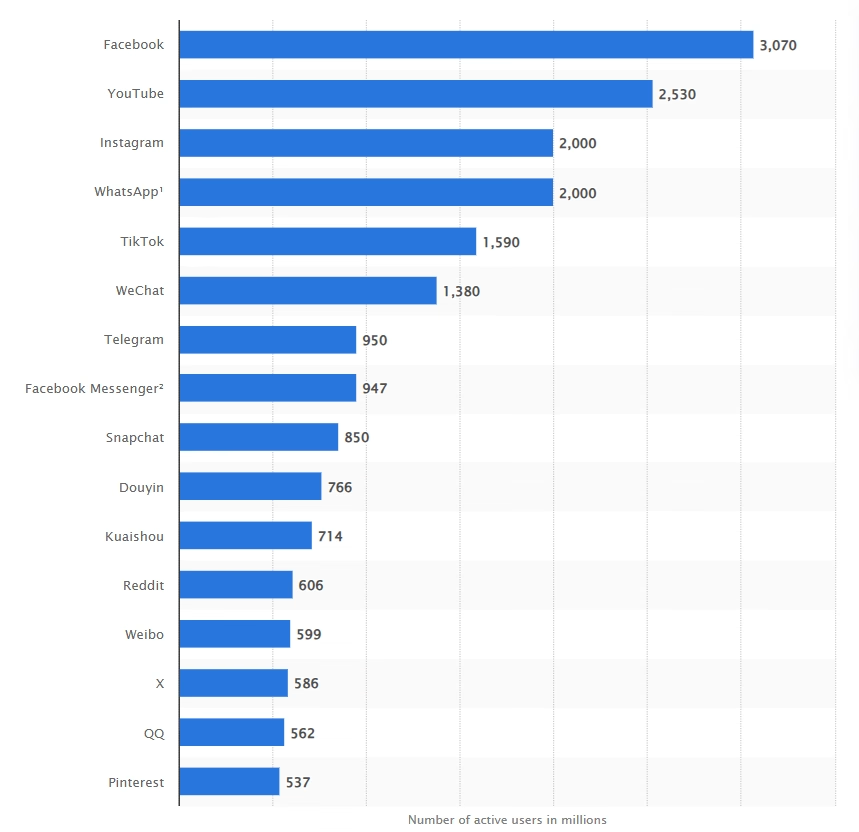
(Source – Statista)
Merging Social and Content Marketing
Here is where the magic really happens. When your content provides value and your social media platform distributes it, sparking conversations, you create a powerful growth engine. One without the other is almost entirely ineffective in modern marketing strategies.
Content needs social media for reach, and social media needs content for substance. You cannot have a successful presence on popular social media platforms without good things to share. You also cannot get the most from your successful content marketing without a social media strategy to promote it.
Start with a Solid Content Strategy
Before you write a single word, you need a plan. This content strategy starts with knowing exactly who you are talking to. What are their biggest challenges, and what keeps them up at night?
Create a detailed picture of your ideal customer to guide all of your marketing efforts via a customer persona chart. This understanding of your target audience will inform every piece of social media content you create. You should also analyze what competitors are doing to find content gaps you can fill. Your user persona chart should consist of the following:
- Age
- Job profile
- Goals
- Interests
- Goals
- Objectives
- Pain points
Here is an example of a customer persona chart:

Once you know who you are creating for, you can map out your ideas. A content calendar is your best friend in this case. This simple schedule of what you will post and when keeps you consistent and stops the panic of having to find something to post at the last minute.

Your plan should have content marketing focuses that genuinely help your audience along their customer journey. Do not just talk about your product or service. Talk about their problems and how they can fix them to position yourself as an expert.
Amplify Your Content on Social Channels
You wrote an amazing 2,000-word blog post. Great. But you cannot just drop a link on your social media and call it a day.
You have to adapt that content for each specific social media platform. Each social network has its own language and preferred content formats, ranging from professional networking sites to highly visual platforms. Here is a list of some of the most popular social channels marketers leverage to engage with their audience.

LinkedIn is the world’s largest professional networking platform, designed specifically for career development and business connections. The platform enables users to create a digital resume, showcasing their work experience, skills, and achievements, and connect with colleagues, industry leaders, and potential employers.
YouTube

YouTube is a video-sharing platform that has become the second-largest search engine globally, allowing users to upload, watch, and share video content. The platform offers monetization opportunities for creators, making it a primary platform for video marketing, brand building, and content creator economies.
X (Twitter)

Twitter, now rebranded as X, is a microblogging platform that enables users to share short messages, known as “tweets,” with a global audience. X emphasizes quick and immediate engagement, making it particularly popular for breaking news and live event commentary.
Facebook is a social networking platform that connects billions of users worldwide through personal profiles, pages, and groups. The platform allows users to share updates, photos, and videos with friends and family. It also serves as a major advertising platform for businesses. Facebook offers features like messaging, event planning, marketplace transactions, and news feeds.
TikTok

TikTok is a short-form video platform that emphasizes creative, often viral content. It specializes in videos ranging from 15 seconds to 10 minutes, featuring music, dance, comedy, education, and trending challenges.
Instagram is a visual-first social media platform focused on photo and video sharing, emphasizing aesthetic content and visual storytelling. The Instagram platform features multiple content formats, including posts, stories, and reels. The platform is particularly popular among younger demographics and serves as a key channel for lifestyle brands, visual artists, and businesses looking to showcase products or services through compelling imagery.

Pinterest is a visual discovery platform that functions as a digital pinboard where users collect and organize images, ideas, and inspiration across various categories and interests. The platform serves as both a search engine and a social network, allowing users to discover new ideas through browsing and searching. These features make it particularly valuable for lifestyle brands, e-commerce businesses, and anyone looking to drive traffic to websites through visually compelling content.
These social media platforms offer so much to brands to grow and reach their target audience. For example, a detailed blog post can become a series of tips for a Facebook post. For LinkedIn social media, you might create a more in-depth text post about a key professional insight from the article. On a visual platform like Instagram, you could turn statistics from the article into an engaging infographic.
| Original Content | Repurposed for Instagram | Repurposed for LinkedIn | Repurposed for Twitter |
| Blog Post: “5 Ways to Boost Productivity” | A five-part carousel post, each slide covering one tip. | A thoughtful post that expands on the most professional tip, accompanied by a link to the full article. | A thread of five tweets, each tweet summarizing one of the productivity tips. |
| Video: “How to Create a Monthly Budget” | A 60-second reel showing the three most important budgeting steps. | An article about financial wellness for professionals, embedding the video. | A poll asking, “What’s your biggest budgeting challenge?” followed by a link to the video. |
| White Paper: “The Future of Remote Work” | A series of “Myth vs. Fact” story slides based on the paper’s findings. | A summary article on LinkedIn Pulse, establishing you as a thought leader. | A tweet storm highlighting the most surprising statistics from the research. |
Listen to Your Audience for New Ideas
One of the best, yet most overlooked, benefits of social media is direct audience feedback. The questions people ask in your comments are pure gold. The topics they discuss in your direct messages are your next great content ideas.
You have to pay attention. This active listening is a form of ongoing market research that costs you nothing. It is a critical component for all social media marketers.
Notice what people respond to. Which posts get the most shares or saves? These are clues about what your audience finds most valuable, and should guide your future marketing focuses.
You can even ask them directly. Use polls and “ask me anything” sessions to learn what they want to know. When you create content that directly answers their questions, they feel seen and heard, which can improve customer loyalty significantly. Additional feedback includes the following:
- Website survey
- Email survey
- Customer interview
- Data analysis (performed via content analytics tools)
- Blog comment section review
- Community forums or groups
- Live Q&A sessions
- Content polls and voting
Utilize one of the many additional options to gain a deeper understanding of your audience. The more insights from different avenues, the better your understanding will be.
Building a Community, Not Just an Audience
For a long time, the game was about follower count. People are obsessed with getting more likes and more followers. However, those are just vanity metrics that do not indicate whether your marketing is effective.
A person with 1,000 engaged fans is far better off than someone with 100,000 followers who do not care. The real goal is to build a community. This is a group of people who trust you, interact with each other, and advocate for your brand.
They not only consume your content, but also engage with it and share it, because they believe in the value you provide. Encourage conversations in your comments section by asking questions. You can also improve customer relations by featuring user-generated content, which makes your community feel valued and seen.
This shift from broadcasting to conversation is what separates a simple following from a true, thriving community. Strong community management is also a form of customer service. It builds brand awareness in a more authentic way than traditional advertising ever could.
How to Know If Any of This Is Actually Working
You are putting in the work. You are creating great content and sharing it on social media. But how do you know if it is making a difference?
You need to examine the correct data. It is easy to get lost in a sea of numbers, but only a few of them really matter for your business. Do not just look at surface-level stats like likes or views.
Look deeper. Which content is driving people to click through to your website? A metric like click-through rate tells you if your social media is effectively increasing website traffic, a key goal for many content marketing strategies.
Tracking the right metrics is crucial for success. Ultimately, you want to connect your efforts to real business outcomes. Are your social and content activities helping to generate leads for your email list?
You can even track how your content influences email marketing success. Do targeted email campaigns that feature your blog content have higher open rates? Are people who read your blog more likely to become customers?
Tracking this information helps you prove the value of your work. It enables you to make more informed decisions about where to focus your energy for future content and media marketing. This data-driven approach is what separates good digital marketing from great digital marketing.
Conclusion
Stop thinking about social and content marketing as a checklist of separate tasks. They are intertwined. Your valuable content provides the substance, and social media gives it the wings to fly to your target audience.
When you build a system where they feed each other, your marketing stops feeling like a chore. It starts producing real results, from increased brand awareness to qualified leads.
The best social and content marketing feels less like advertising and more like a helpful conversation. It is a communication built on trust, value, and community. That is how you grow your brand for the long term.