
When content creators develop and publish content, the focus is generally on the creation process. However, it’s crucial to understand that the channels through which you distribute your content are equally as important. Today, organizations are moving away from haphazardly posting content across various distribution channels, realizing the value of a strategic approach.
Developing a strategic approach to content distribution can be the difference between getting lost in the noise and building meaningful connections with your audience. This guide will teach you everything you need to know about creating a content channel strategy that engages your audience and drives actual business results in 2025 and beyond.
What is a Content Channel Strategy?
A content channel strategy is your roadmap for distributing and optimizing content across specific platforms to reach your target audience effectively. It is a crucial part of your overall content marketing strategy. It also encompasses developing valuable content and aligning content distribution with audience behavior. Unlike a general content strategy focusing primarily on content creation, a channel strategy determines the content’s deployment. Your content strategy also differs from your content distribution plan.
Your content channel strategy is the long-term approach or overarching roadmap. It guides an organization or individual toward achieving specific goals and/or objectives.
Understand Content Creation vs. Distribution
The sad truth is (and I know you’ve heard this before) that you can create valuable, but without strategic distribution, it’s directionless.
Understand Why Channel-Specific Optimization Matters
It’s important to understand that each distribution channel has its unique algorithm, audience expectations, and content format requirements. For example, LinkedIn users interact differently with content than TikTok users. Your strategy should account for these differences. For instance, organizations specializing in B2B content focus on LinkedIn, while a solo blogger/influencer would likely concentrate on TikTok.
Understand the Core Components of an Effective Content Distribution Strategy Framework
Before developing your content channel strategy, it’s essential to understand its core components. Four primary components will act as the building blocks of your strategy. The core components are as follows:
- Channel Selection Criteria – Not every platform deserves your attention. Focus on what channels best align with your goals and objectives. When you are starting, focus on 2-3 channels.
- Channel-Specific KPIs – Different metrics matter on different platforms. Develop KPIs that align with your organization’s goals and objectives.
- Content Adaptation Guidelines – Understand the effect modification has on your core messages by channel. Each channel is different, so it’s essential to modify messages where applicable so they resonate with specific sections of your audience.
- Publishing Cadence – Optimal timing and frequency vary by platform. Make sure your publishing cadence works as the channel user expects it to.
Common Misconceptions to Avoid
There are many misconceptions about content channel strategies. Avoiding them is essential to developing a content strategy successfully. Below are some common misconceptions:
- Your organization only needs one content channel.
- A small organization can perform the same tactics as a large organization.
- Content should perform identically across all platforms. Something that goes viral on Instagram will also go viral on LinkedIn.
Understand Your Target Audience
Understanding your target audience isn’t just a step in a process but a key pillar of an effective content distribution strategy. It involves delving deep into understanding audience desires and behaviors.
Researching Your Target Audience
Gather data from various sources to better understand your target audience. Website analytics software tools like Google Analytics provide insights into who visits your site and what content they engage with.
Customer surveys and feedback are invaluable for gaining direct insights into your audience’s preferences and pain points. Market research reports can also provide a broader context for understanding your audience.
Create Buyer Personas
Creating detailed buyer personas is another great way to understand your audience. Customer personas are fictional yet realistic profiles that represent your ideal customers. They include demographic information such as location, gender, age, occupation, interests, preferences, and behaviors. By developing these personas, you can tailor your content to meet the needs of your various audience segments.
For example, a buyer persona might describe the following:
- 35-year-old marketing manager who prefers consuming content via LinkedIn and enjoys reading in-depth industry reports.
- 25-year-old tech enthusiast who spends much time on YouTube and prefers video tutorials.

Understand Audience Needs and Preferences
To create content that truly resonates with your target audience, you must understand their needs and preferences. This involves analyzing their pain points, challenges, and goals and developing content that addresses these issues.
For instance, your audience might be looking for educational content such as tutorials, guides, and webinars to help them solve specific problems. They might also appreciate entertaining content like videos, podcasts, and social media posts that provide a break from their daily routine. Inspirational content, such as motivational and success stories, can be highly engaging. Finally, informative content like news, updates, and industry trends can help keep your audience informed and engaged.
Addressing these needs, you can develop content that attracts and retains your audience, driving long-term engagement and loyalty.
Why You Need a Content Channel Strategy
Having a content channel strategy as part of your overall marketing strategy is just as important as a content strategy. A content channel strategy ensures your message reaches the right audience through the most effective platforms. It prevents wasted resources by focusing efforts where they’ll generate maximum impact. Strategic channel selection significantly increases engagement, conversion rates, and overall marketing ROI.
The Content Saturation Challenge
Content saturation is possible and something you want to avoid at all costs. As more content is created, standing out and boosting organic traffic becomes difficult.
This saturation means your content is fighting hard for attention; without a strategic approach, you’re practically invisible.
Algorithm Changes and Organic Reach
Most major platforms now prioritize certain content types and behaviors. For example, Facebook favors content that sparks meaningful interactions, while Pinterest rewards fresh, seasonal content. Your strategy must account for these preferences, so aligning your content with your potential channels is important.
Targeted (Sniper) Approach vs. Unfocused (Shotgun) Approach
Many organizations use the “shotgun” method. This approach is easy to implement: You create and post content on various channels. A targeted, focused approach focuses on 2-3 channels that align with your audience and objectives.
The targeted approach will almost always outperform the unfocused approach.
Content Distribution Strategy
A well-crafted content distribution strategy is essential for ensuring your content reaches the right audience at the right time. It involves systematically publishing and promoting your content across various channels, maximizing its impact and effectiveness.
Definition of Content Distribution
Content distribution involves publishing and promoting your content across multiple channels to reach your target audience. This includes social media platforms, email newsletters, blogs, and other online platforms where your audience is active.
An effective content distribution strategy involves several key steps.
1. You need to identify your target audience and understand their preferred channels for consuming content.
2. Create content that addresses this audience’s needs and preferences.
3. Publish and promote the content across the selected channels, ensuring it reaches as many people as possible.
4. Measure and analyze the performance of your content to understand what works and what doesn’t.
Measuring and analyzing content involves tracking key metrics such as engagement, click-through, and conversion rates and using the data to refine your strategy over time.
How to Audit Your Current Content Channel Performance
Before you can improve your content channel strategy, you need to know what marketing channels you have. Your content audit acts as an inventory review of the content channels you’re using and gauges how your channels are performing against your goals.
Choose The Key Metrics That Matter
Not all metrics are created equal. Choosing and aligning the right practical metrics with your goals and objectives is essential. For instance, for a blog, pay attention to key metrics, including:
- Average time on page and scroll depth – They reveal whether people consume your content or leave.
- Content shares by platform – How many people share your content on LinkedIn, Bluesky Social, Twitter (X), Pinterest, etc.
- Comment quality and frequency – Audience members provide detailed comments on your content, such as your blog posts. In addition to quality, the frequency is the number of audience members who comment on your content.
Identify Content-Channel Fit
Content that aligns with its channels is generally more successful than content that doesn’t.
To identify content fit, try the following actions:
- Select your top 10 performing pieces for each channel.
- Analyze your top 10 performing pieces and validate them for commonalities.
Locate Opportunities and Gaps
Another important aspect of your content channel strategy is analyzing your channels for opportunities and gaps in your content. Performing an analysis to discover gaps and opportunities allows you to find areas for improvement. When looking for performing this analysis, look for these signs of distribution gaps:
- High-performance outliers – If one type of content significantly outperforms others on a specific channel, you’re probably underinvesting in the high performer.
- Platform-specific engagement drops – Sudden performance changes often indicate algorithm shifts requiring strategy adjustments
- Conversion disparities – When content engages well but doesn’t convert, there’s typically a disconnect between content and audience intent.
Create Your Measurement Baseline
Your audit findings will form the foundation of your measurement framework going forward. Documenting baseline metrics for each channel is a valuable approach. To measure your baseline, try developing a simple scorecard.
For starters, the baseline scorecard should cover the following:
- Current performance averages.
- Top-performing content types.
- Engagement patterns.
These baselines make it possible to objectively evaluate whether your strategy adjustments are moving the needle or just creating more noise.
Identify Your Ideal Content Channels
Now that you understand a content channel strategy, its core components, why a channel is needed, and how to perform assessments, it’s time to identify your ideal content channels.
Use an OAR framework (Objectives, Audience, Resources) when finding your content channels. The OAR framework is a strategic approach to choosing the most effective distribution channels for content distribution:
- Objectives – Define clear goals for your content distribution. For example, are you trying to generate leads and drive conversions? Your objectives determine which metrics matter most.
- Audience – Identify where your audience spends their time and how they prefer to consume content. Consider demographics, psychographics, online behaviors, and the customer journey stage.
- Resources – Assess your available time, budget, skills, and tools. This will help determine which distribution channels your team can manage effectively and sustainably.
Align Business Objectives with Channels
It is vital to map your primary business goals against channel strengths before making final decisions about selecting the right channels. Each channel has inherent strengths that make it better suited for specific objectives. For example, LinkedIn delivers better results for B2B content, especially regarding lead generation, than Twitter (X).
Find Audience Demographics and Behavior Patterns
Your audience’s demographics are vital to the success of your channel selection. Understanding demographics helps you identify which social media channels your target audience uses most frequently. Behavioral patterns reveal when and how your audience consumes content. This knowledge prevents wasting resources on ineffective channels. Matching content distribution to audience habits significantly increases engagement and conversion rates. Understanding where your audience is, why they’re there, and what they’re doing is also key.
B2B vs. B2C Channel Considerations
Depending on the type of business you have may determine the content channels you select. If you’re a B2B company, you may not want to select channels geared towards B2C and vice versa. B2B content generally (not always) performs better on LinkedIn, Twitter, and email marketing, while B2C finds more traction on Instagram, TikTok, and YouTube.
Content Format Requirements and Channel Fit
Before deciding which platforms to leverage, it’s essential to understand their central focus and what it does for your content. Essentially, each platform has its content language. Below is a high-level breakdown of content languages for some core channels.
- LinkedIn – Rewards in-depth, thoughtful content with professional insights.
- Instagram – Demands visually striking, high-quality images or short videos.
- TikTok – Requires authentic, trend-aware short videos with fast pacing.
- Podcasts – Work best for complex topics needing nuanced discussion.
Don’t try to force content types that go against a platform’s natural format preferences. Going with their preferences will make leveraging the tool and eventual audience growth easier.
Balance Potential with Capacity
Another crucial aspect of identifying your content channel is being honest about resource constraints. Every organization, no matter how big or small, runs into content constraints. You don’t want to overexert yourself and your team. You also don’t want to use five distribution channels, no matter how good they may be if your team can’t leverage them all. Be realistic about your content production capacity, consistency requirements, and the expertise needed for each platform. Efficiency using your teams and channels is an important goal to reach.
Develop Channel-Specific Content Strategies
Publishing content without a strategic approach is a recipe for disaster. Each channel leveraged needs its tailored approach. Developing specific content for each content channel will help adequately leverage them.
Adapt Core Content for Different Environments
Think of your core content as a foundation that needs different architectural styles depending on where it’s built. When leveraging the same piece of your core content, you must remember that it should be modified to suit each platform’s unique format and audience expectations.
Adapting your core content prevents jarring user experiences when content doesn’t match platform norms. Strategic adaptation maintains message consistency while maximizing engagement on each channel. Properly tailored content performs better and appears more authentic to the audience. The last thing you want to happen is having your content pieces on the wrong channels.
Platform-Specific Best Practices
To build content that aligns with your content channels, you need to understand what each channel can do for the specific type of content you want to develop. Different platforms reward different approaches, for example:
- YouTube values depth and comprehensive coverage, although most people like watching shorts or short-form videos that typically run 7-15 minutes.
- LinkedIn Rewards professional insights with a personal touch. Adding your perspective to industry trends generally outperforms purely objective content. Statistics and testimonials are extremely helpful.
- Instagram requires visual storytelling content. Carousel posts that tell a complete story are generally more popular than single images.
Leverage Content Repurposing Techniques
Repurposing content can be a game changer, especially for organizations with smaller content development teams. It transforms and leverages an existing piece of content in multiple ways. For example, you can create a comprehensive pillar guide on investing money for retirement. From that, you can develop 8 LinkedIn articles, 4 YouTube videos, 12 Instagram carousels, and 20 Twitter threads. Each piece is modified to match its channel while maintaining the integrity of the core information.
Balance Consistency and Customization
Brand consistency doesn’t mean identical content everywhere. It means maintaining consistent core messages, values, and quality standards while adapting the format and presentation. It can be easy to fall into the temptation of always wanting to customize your content; believe me, it’s something I still run into. You should find a healthy balance; for starters, try aiming for about 70% consistency in messages with 30% channel-specific customization. Remember that you can always focus on customization when you update your content.
Maintain Brand Voice Amid Algorithm Demands
Algorithms often push content in directions that might not align perfectly with your brand voice. The solution isn’t to abandon your voice but to find the overlap between algorithm preferences and authentic expression, for example, a B2B software specializing in productivity and automation targeting algorithm-friendly short-form video. They aim to maintain their energetic, lively tone while adopting more dynamic pacing and hooks required by the platform.
Content Calendar and Workflow Management
Your content development is only as good as the processes used to develop them. Even the best channel strategy falls apart without proper execution systems. In addition to a content workflow management process, you should have a content calendar to keep you on track. The workflow management system ensures you and your team develop and distribute content consistently and timely. Your content calendar keeps you on task and ensures you work towards completing your tasks within a deadline.
Integrate Channel Strategy Into Your Calendar
As previously noted, your content calendar should keep you on task. Your content calendar should also reflect your strategic priorities. When you develop your content calendar as it relates to your channel strategy, try performing the following actions:
- Use a color-coding system where each channel has its own color.
- Ensure each content type has different shades within that color family.
This visual approach makes it immediately apparent if you’re overcommitting to specific channels or neglecting others. The best calendars also include performance targets alongside publication slots. Below is an example:

Leverage Tools That Streamline Distribution
The explosion of software tools in the content development space has made it easier to streamline your distribution process. Below is a list of tools that can help with managing channel distribution:
- Airtable or ClickUp for strategic planning and production tracking
- Asana or Trello for task management and approvals
- Buffer or Hootsuite for scheduling across social platforms
What matters isn’t which specific tools you choose but how well they integrate. Also, try to avoid shiny object syndrome. Don’t move to every new tool that offers a new feature.
Strategic Staffing and Resource Allocation
Channel specialization delivers better results than generalization. Specialists give you a better understanding of specific areas within the content development space.
Efficient Workflows for Channel-Specific Content
As previously noted, having a workflow management system can help you develop your content correctly. Without one, you’re aimless. One content development workflow structure that I recommend is the “create once, modify many” approach. You should never let perfection get in the way of good enough. You can always make updates later. Below is a high-level process flow to get you started.
- Develop core content assets based on strategic pillars.
- Assign channel specialists to adapt these assets.
- Use standardized templates for standard channel formats.
- Implement parallel rather than sequential review processes.
Maintain Quality While Scaling Content
Quality inevitably suffers when scaling without proper guardrails to keep you in line. To help you and your team avoid falling out of line, create channel-specific quality checklists that dramatically reduce the number of subpar pieces that make it to publication.
These checklists should include technical requirements (image dimensions, video length) and strategic elements (brand voice consistency, call-to-action strength). Perform regular audits of published content against these standards to identify where your process needs strengthening.
Measure and Optimize Your Channel Strategy
Leveraging a process to measure your performance is another key aspect of your content channel strategy. You need to measure where you are to understand what potential updates you need to make. Understanding your performance also validates alignment with your objectives.
Set Channel-Specific KPIs That Matter
Each channel should have KPIs reflecting its primary customer journey purpose. For example, a B2B client’s strategy measures their cost-per-qualified lead for LinkedIn while measuring their YouTube success by watch time and subscription rate. The key is connecting these platform metrics to actual business outcomes. When starting, limit each channel to 2-3 primary KPIs. Limiting each channel to 2-3 KPIs will help keep teams focused on what drives results rather than vanity metrics.
Leverage A/B Testing That Delivers Actionable Insights
Performing A/B testing of your content distribution channels (or split testing) is essential to its success. The A/B testing process involves testing two or more versions of content to determine which performs better with your audience. For example, test the same content against different distribution channels.
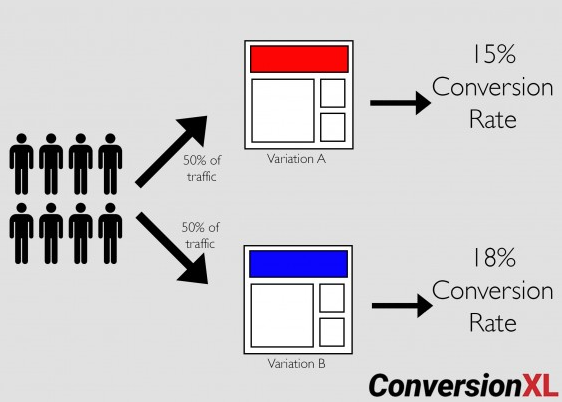
(Source – Conversion XL)
A/B testing removes guesswork from content decisions by providing data-driven insights about which channels work best with the content it’s paired with.
Build a Continuous Improvement System
The most successful channel strategies evolve constantly. Implement a quarterly or bi-annual review cycle, where you analyze performance data, identify 2-3 key optimization opportunities per channel, and develop specific action plans.
Discover Emerging Trends in Content Channel Strategy
The content landscape has evolved dramatically over the past few years and isn’t slowing down. We will only see growth in this area as we continue to use and rely on technology for content development. The global AI market is projected to reach $747.92 billion by 2025.
Specially AI-powered distribution tools have completely changed how we approach content optimization.
Leverage AI-Powered Content Distribution
AI can be leveraged beyond simple scheduling to predict content performance. As previously noted, it also helps with content development.
Tools like Lately AI and Cohesive have changed how content creators address content distribution across multiple channels. It’s important to note that AI should be used as a tool and not as something that handles everything. For example, you can use a tool like Jasper AI to build an outline for a blog post instead of writing the whole document.
Be Aware of Evolving Content Consumption Patterns
Audience behaviors are changing in ways that directly impact channel strategy. Short-form video continues dominating attention spans, while long-form content is slowly gaining popularity. The most successful brands recognize that users now expect different types of content at other times. As you use various channels, be mindful of how your audience views your content.
Integrate Paid, Owned, and Earned Media Channels
The traditional boundaries between media types are blurring. With the fusion of the various media and distribution channels, leveraging them together is becoming more and more of a necessity. There are three primary media distribution channels that content creators, bloggers, marketers, and organizations use to deliver their content to their audience:
- Owned Media Channels – These are platforms over which you have complete control. Examples include your website, blog, email newsletter, and social media profiles.
- Earned Media Channels – Channels where others share and discuss your content organically. It includes social shares, mentions in industry publications, and word-of-mouth recommendations.
- Paid Media Channels – These are platforms where you pay to distribute your content, including content discovery platforms and social media advertising.
Conclusion
Developing an effective content channel strategy requires periodic evaluation and adjustment. By understanding your audience, selecting the right channels, and optimizing your approach for each platform, you will eventually see results. It’s also important to consistently measure results and create a distribution strategy that amplifies your content’s impact. Doing so will drive meaningful business outcomes over time. Start implementing these strategies today, and you’ll be well on your way to cutting through the noise and connecting with your audience where it matters most.