
What is B2B SaaS? The topic of B2B SaaS is something many business owners and entrepreneurs may ask themselves as they consider whether or not to pursue this venture for their business or to leverage it as part of their business. B2B SaaS pertains to software sold to other companies instead of individual consumers. When you think of B2B SaaS offerings, Microsoft’s Microsoft 360 and Salesforce’s Slack come to mind.
In this blog post, we will discuss what B2B SaaS is in more detail and how it can benefit your business. We will also look at some of the best companies in this industry and explore their successful portfolios.
What is B2B SaaS?
B2B SaaS stands for business to business software as a service. As briefly stated above, B2B SaaS encompasses a business selling software to another company. Organizations can make one product the basis for their entire business, like Brevo, and others may have a whole suite of different SaaS offerings, such as AWS.
A SaaS, in general, is a software distribution model which consists of vendors hosting their applications in the cloud allowing business customers to access and use them.
B2B SaaS products help organizations with their daily work-related activities. A B2B SaaS can consist of many different types, including but not limited to the following:
- Customer Relationship Management
- Content Management
- Project Management
- Video Conferencing and Communication
- Productivity
- Accounting
- Enterprise Resource Planning
- Email Marketing
- Enterprise Feedback Management
B2B SaaS services and products generally require customers to pay via a subscription-based model, which means a monthly or annual fee is required. B2B SaaS is versatile regarding its customer base, ranging from small businesses to large fortune 500 organizations. B2B SaaS services can be sold on the owners’ website or a third party B2B marketplace.
Benefits of B2B SaaS
In addition to helping businesses perform their day-to-day activities, B2B SaaS products provide many other benefits to companies leveraging them.
Cost Effective
Due to the rise of B2B SaaS adoption by organizations worldwide, more and more companies are building B2B SaaS. The overall SaaS market, including B2B, is expected to grow to 247 billion in 2024. Some organizations specifically cater to small businesses. With the constant growth in competition, many B2B SaaS companies provide excellent price points for any company to leverage.
Outside of the price points, the paid subscription model also makes these products cost-effective. You can pay month to month instead of annually, giving you the flexibility to properly plan and move off your current service in favor of another one when required.
Data Security
B2B SaaS providers have dedicated teams focused on customer data security. B2B SaaS companies generally use defense in depth when protecting your data. Defense in depth involves multiple levels of information security controls. The more layers of controls applied, the more secure the environment is expected to be.
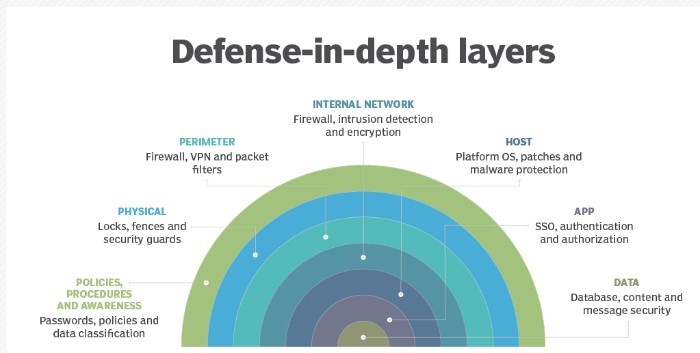
(Source – TechTarget)
Some B2B SaaS companies have taken it further by introducing advanced encryption algorithms to protect customer data from malicious attacks. B2B SaaS companies also regularly update their products to ensure they are running securely and are up to date with the latest security patches and updates. As the business customer, you don’t need to worry about security as long as the data resides with your B2B SaaS vendor; it’s their responsibility to keep their environment and your data secure.
Ease of Use
What makes B2B SaaS and SaaS products great in general is their ease of use. Most products entail accessing the product online and then using it to perform the various actions applicable to your job function. Even products that may be more difficult to learn and execute generally come with customer service assistance and quickly accessible manuals, guides, and FAQ pages. These tools can help answer any questions, comments, or concerns with the product.
Scalability
The ability to scale up or down is one of the most vital benefits B2B SaaS services and products have. Organizations value scalability when it comes to deciding upon B2B SaaS products. Scaling involves increasing or decreasing the storage capacity of the B2B SaaS you are using.
With today’s constantly changing environment, you always want to give your organization flexibility. Whether your organization has a sudden influx of cash due to substantial revenue or a sudden need to downsize and limit your costs, scalability is essential to your company’s overall ability to thrive.
Readily Accessible
B2B SaaS is highly vital to the success of the solution. Most SaaS applications only require an internet connection, username, and password. The more accessible customers can access and use their B2B SaaS solution, the higher the chances they will subscribe and retain it.
The ability to easily use the product is also helpful for organizations because it’s one less item of concern. With one less obstacle in your way, your organization can focus on driving the efficiency of employee output. Being readily accessible also saves time in training and follow-up inquiries with the vendor’s customer service team.
Limited Maintenance (System Upkeep)
With B2B SaaS products, companies can save time and resources maintaining an application. The organization using the product only has to worry about the data they input into the system; the vendor manages the maintenance and upkeep. As a business owner, you won’t have to worry about the various maintenance and upkeep actions, including the following:
– Software Updates
– Patching
– Software Upgrades
– Scheduled Error Correction
– Server Support
B2B SaaS vs B2C SaaS
While B2B SaaS focuses on selling products to businesses, its counterpart B2C (Business to Consumer) SaaS, focuses on selling products to consumers. Besides their SaaS sales focus, B2B and B2C SaaS have many other differences.
Cost
B2B SaaS products are generally more expensive than B2C SaaS products. The higher product price point is primarily due to their sales focus. With B2B SaaS companies selling to businesses, their products’ prices are higher. B2C SaaS companies sell products to individuals; their budget is generally smaller. The B2B SaaS products are also more expensive because of the number of individuals using the product and the various capabilities the product has to perform. These products have to cater to larger groups—B2B SaaS products, on average, cost more than B2C SaaS products.
Customer Relationship and Engagement
B2B SaaS teams generally focus more on their customers’ needs and pain points. The clear focus is due to the smaller market that a B2B has and the length of the buyer’s journey. B2B SaaS sales take a great deal longer than B2C because there are more decision makers in a company than with B2C. With the B2B sales process, it is much easier for someone in the decision making chain to either reject the potential sale or slow it down with additional questions and concerns.
The B2B SaaS sales and relationship management team put a higher emphasis on not only building the relationship with the customer but strengthening it. The better the relationship, the higher probability of customer retention.
Although B2C SaaS has teams dedicated to customer relationships, they have a much larger pool to draw leads (potential customers). With B2C having a larger pool of leads to select from, they have a higher probability of turning them into customers.
Complexity
Although partially alluded to earlier, the B2B SaaS sales process is more complex than B2C. The complexity, in large part, is due to the number of decision makers in a company. The B2B sales process can also be more complex based on the industry/business sector of your leads and customers. Some highly regulated business sectors, including aerospace, healthcare, and finance, can make buying more difficult and lengthier. In addition to regulations, organizations must adhere to standards and legislative requirements that businesses must follow. Not all legislative items and standards are required; their applicability depends on whether or not organizations perform tasks tied to the legislation and standards. Examples include the following:
– Sarbanes Oxley (SOX):
– Payment Card Industry DSS (PCI)
– Health Insurance Portability and Accountability Act (HIPAA)
– Gramm-Leach-Bliley Act (GLBA)
With so many parameters, it often makes it tedious and difficult to follow through to complete the sale.
5 B2B SaaS Marketing Strategies to Benefit your Business
For organizations that are B2B SaaS companies and want to grow, you need to be able to sell the product. Selling the product involves several critical factors, including the following:
– Researching and educating your leads about the product
– Assisting your leads and customers with any issues they may have
Apart from these critical areas, you can use several key strategies to strengthen your chances of successfully selling your B2B SaaS product.
Implement a strong value proposition
Showing customers the actual value of your B2B SaaS offering will lead you on the path of making sales consistently. Implementing a solid value proposition goes back to researching your product and your customer and adequately communicating its strengths and how it can help remedy its pain points. To successfully convey to leads that your product is worth buying, you need to differentiate yourselves from other companies with the same or similar products.
As a salesperson, you need to have the customer genuinely believe in what you’re saying; without that, the customer won’t buy your product, no matter how great it may be. You also must confirm that your product is something a customer wants and needs.
Build specific targeted app portfolio
Focusing on your overall B2B SaaS portfolio can help leads quickly home in on what they want and need. Many companies, such as Adobe Inc and Intuit, have various product suites that cover different purposes, such as design, illustration, email marketing, and taxes.
A smaller, more focused app portfolio will help customers focus on specific apps they want to buy much quicker. To properly execute strategy, you should perform the following actions:
Focus
Focus on a specific type or grouping for your application suite, for example, email marketing, information security, enterprise planning, etc. Keep the number of apps small with a focus of generally 2-4.
Customer Engagement
Review your results sales based on a specified timeframe, monthly, quarterly, etc. Once complete, you want to engage with your customers and update them on the products. There are various forms of communication, including the following:
– Site tutorial courses
– Webinars
– Topic FAQ pages
– Testimonial pages
Retention
After you have a customer base and see the growth, you can expand to a different category line/silo. For example, you focus on email marketing or data storage. In that case, you can create a data security offering covering anti-virus and malware or a web design and illustration suite.
Offer free trial
Everyone loves free things, and being able to try something before they buy it is no different. Giving a potential customer the ability to test the offering for free before buying may speed up the sales process as it could eliminate many preliminary questions and concerns. According to Inspira Marketing, 65% of customers buy a product after trying it. When implementing a free trial, keep the time limited and the number of users testing.
Display user testimonials
When buying B2B products, potential customers want to hear from other customers about how the product has helped them and their businesses. Releasing these testimonials on your website will help potential customers feel more comfortable investing in your B2B SaaS offering. 58% percent of customers buy a product based on reviews/testimonials.
Involve personal interactions with leads customers
Although we rely increasingly on technology, we must interact with our leads and customers. Buyers today are more intelligent and more informed; they research things before they make a purchase. Even with the research they perform, the customers still need to interact with someone.
Customers feel more comfortable and confident when interacting with a sales consultant or a sales team, mainly due to their overall product knowledge. It is human nature to want personal attention. The sales contacts can answer many of the questions and concerns customers have. Although businesses can buy directly online, over the phone, or internet, companies still want to work through sales teams.
Implement a top-of-the-line onboarding process
It’s crucial to implement a robust onboarding process for your incoming customers. Onboarding is properly acclimating your new customer to their new application and environment. Onboarding generally covers the following:
– System Activation
– Training
– Account Creation
– System Configuration
If you cannot successfully onboard your customers, they are less likely to use your product and renew their subscription when it is up. Customers also have less potential to refer your product to other businesses.
Keeping our customers happy is the key to sustainable success. If you are selling high ticket (expensive) B2B SaaS solutions, you may want to leverage high ticket digital marketing strategies specific to them.
Important B2B KPIs to track and review
Being able to track and gauge the success of your product(s) is vital. You need to properly track your performance to successfully measure where your business is regarding forecasting, goal setting, budgeting, and reaching your business goals.
To properly track your success, you must develop key performance indicators (KPI), which businesses leverage to gauge their success in specific areas. An example of a KPI is the number of leads generated within a given timeframe (i.e., monthly, quarterly, annually, etc.). In the B2B SaaS world, here is a couple of essential KPS worth tracking.
Churn Rates
The churn rate refers to the number of customers that cancel their subscriptions and no longer use the vendor’s services. This KPI is crucial to track because you can gauge the customer retention rate.
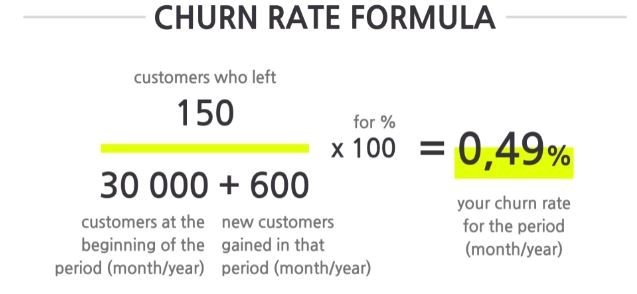
(Source – Snov.IO)
Correctly gauging your retention rate will help you strategize ways to remediate the causes of poor customer retention. An example of this would be implementing a customer engagement team that would assist customers with the tool and assist with any questions they have. Avoiding or at least limiting churned customers is crucial to your business’s success.
One way to understand customers’ issues is to capture them in a textbox that appears when they cancel the subscription. Subscription based SaaS companies like Hulu and Netflix do this when customers leave.
Monthly Recurring Revenue (MRR)
The MRR metric measures the total monthly amount of expected revenue that your organization anticipates coming in. What makes this metric great is that it can allow your organization to forecast and budget its monthly spending. This metric is also great because you can measure growth and properly strategize and implement new processes and strategies to continue growth.

(Source – Baremetrics)
Annual Recurring Revenue (ARR)
This metric is essentially the same as the monthly recurring revenue metric; however, you are tracking the annual recurring revenue in this case. This metric will allow you to measure annual growth or lack thereof and correctly forecast your annual budget and areas of spending.
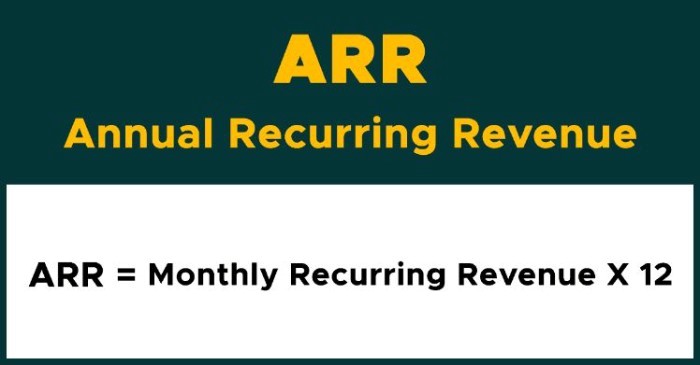
(Source – Appsumo)
Customer Lifetime Value (CLTV)
The CLTV metric displays the average amount your customers spend during their relationship with your company. This metric is important because it lets you understand each customer’s overall value to your organization. Those who spend more money and stay with your organization for an extended period receive rewards and incentives to stay longer. Incentives and rewards can come in the following forms:
– Discounts
– Free products
It is essential to know that retaining high-value customers should be a primary focus of your organization.
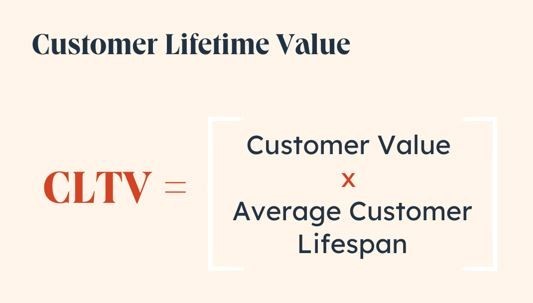
(Source – Hubspot)
Customer Acquisition Cost (CAC)
The customer acquisition cost metric is the total amount of money your organization invests in acquiring new customers. This KPI metric is critical to have on your list to monitor and track because of the importance of acquiring customers. All organizations need new customers as well as solid customer retention to survive. As a B2B SaaS organization, you need to know if spending on customer acquisition is more expensive than its worth. If your CAC is over budget may be spending much more on some of the following customer acquisition areas:
– Email Marketing
– Social Media Marketing
– Advertising
As an organization, you want to ensure your marketing efforts are being used and spent in the right places. You want to limit your customer acquisition costs and set a healthy Return on Investment (ROI) and Return on Ad Spend (ROAS).
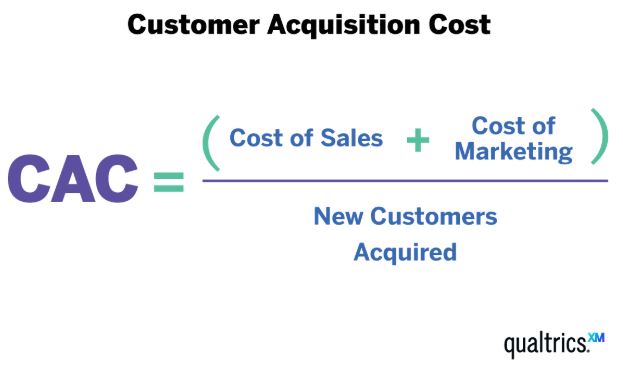
(Source – Qualtrics)
Top 5 B2B SaaS Companies
These B2B SaaS companies are at the top of their game in providing B2B software solutions to their customers and are a great example to follow when developing your strategies. B2B SaaS is a growing field; keeping track of these companies can help you stay ahead of the curve.
1.Microsoft
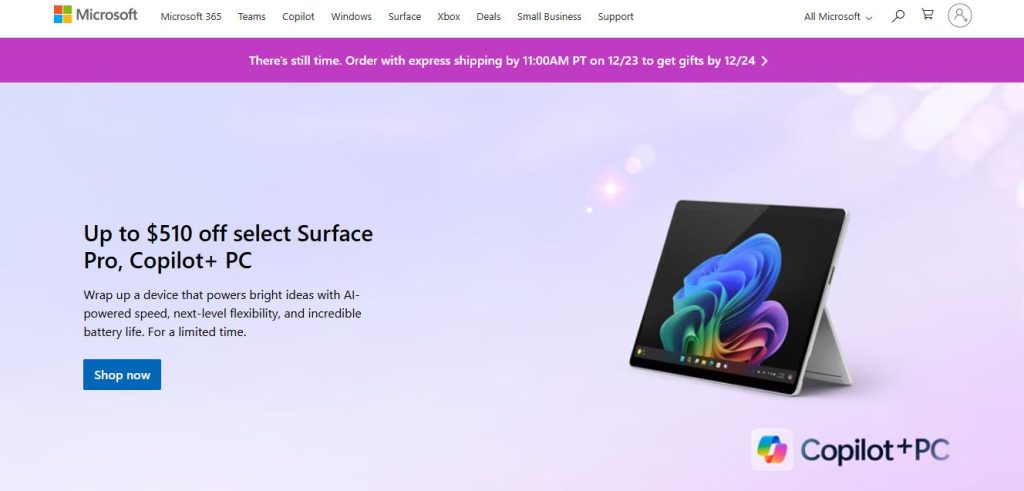
Microsoft is among the most successful companies in the world with a robust portfolio covering B2B and B2C SaaS products and non-SaaS specific products, including their XBOX gaming console and surface laptop product lines. Their extensive portfolio has allowed them to grow outside their original product focus. Microsoft’s popular B2B SaaS products include Microsoft Azure and Microsoft 365.
Microsoft Azure is a cloud service platform. Microsoft Azure allows customers to store their data in the cloud. Microsoft 365 is a SaaS product that falls into the productivity category. The product consists of a suite of online services involving many other popular standalone Microsoft offerings, including Microsoft Teams, OneDrive, and Outlook, as well as the very popular Microsoft Office suite. The Microsoft Office vast product suite covers the following applications:
- Microsoft Word
- Microsoft Excel
- Microsoft PowerPoint
With Microsoft’s robust product offering, they continue to see success and growth.
2.Google – Google Workspace
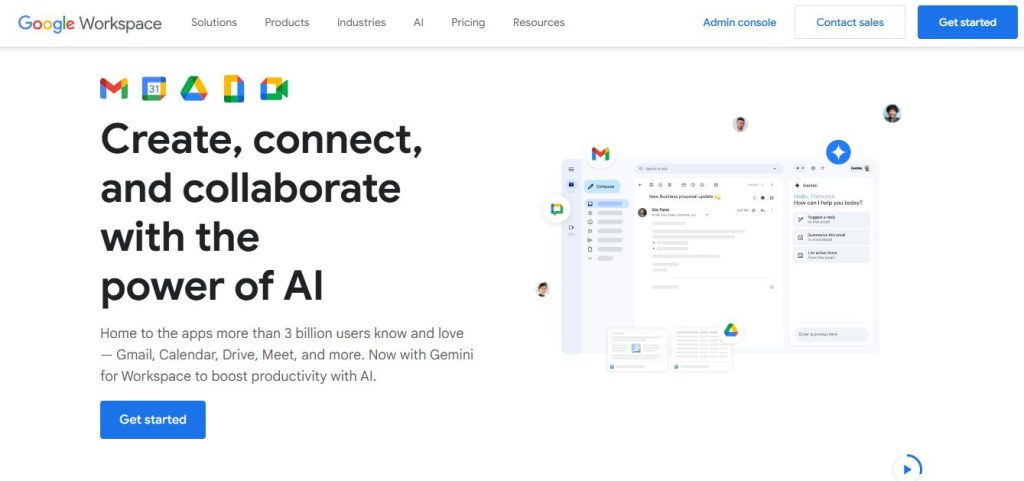
Google, like Microsoft, is among the most successful companies globally. Although they are predominately known for its search engine, Google also has a successful portfolio of products outside its widely used search engine. Among the successful list of products are the following:
– Google Workspace – Collaboration tool encompassing many of Google’s standalone products.
– Google Drive – Data storage system
– Google Pixel – Mobile phone
– Google Chat – Communication service
– Google Meet – Video communication service
With the continuous, rapid success and growth of its diverse product line, Google has shown its ability to diversify by being able to amend its Google Workspace product to fit the education industry by adding a learning platform to its suite called Google Classroom.
3. Salesforce
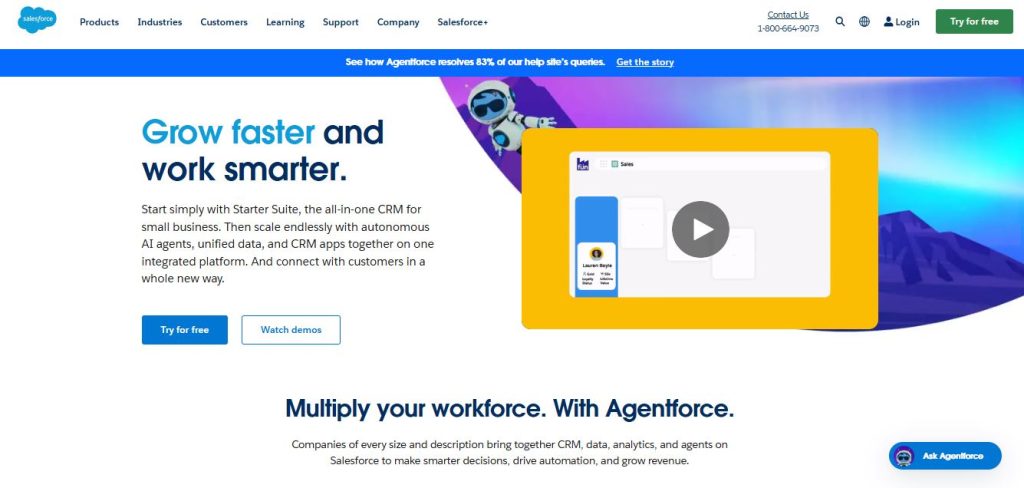
Salesforce is a popular and highly successful SaaS organization. Salesforce has a wide variety of product offerings, including the following:
– Customer 360 – CRM Platform that can integrate with multiple applications under the Salesforce product portfolio.
– Slack – A Communication community platform.
– Salesforce Marketing Cloud – Cloud based software platform that marketers can leverage to perform various tasks, including campaign launching.
The variety of Salesforces products is expansive and covers various industries, including technology, education, health, and retail, which has led to its success. Salesforce’s overall 2024 fiscal year revenue totaled 34.9 billion which was an increase of 11% from 2023 fiscal year.
4. Adobe
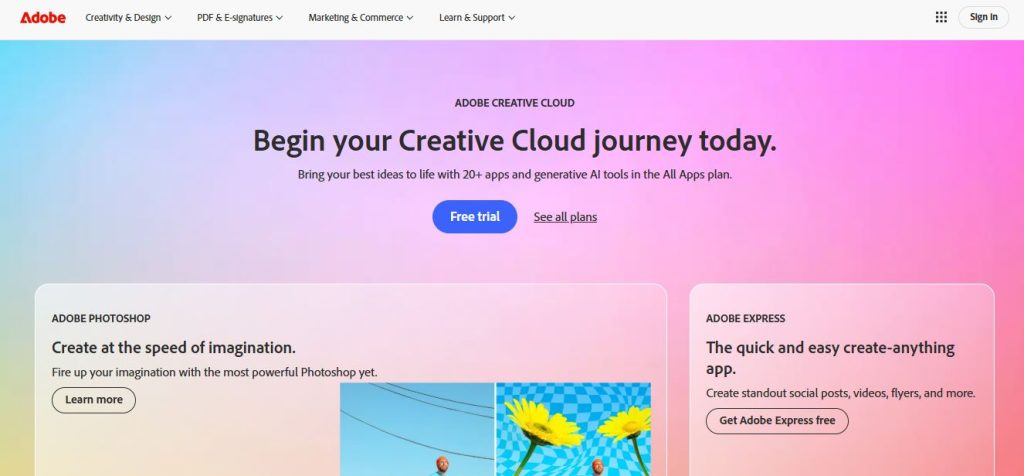
Adobe provides B2B customers various products, predominately in illustration, animation, and graphic design. Adobe is the market leader in this area with popular products, including Adobe Photoshop, Premier Elements, Cold Fusion, and the Adobe Creative Cloud suite. The success of their core products has led to their ability to branch outside of their primary market and into marketing and learning with the launch of their digital marketing tools, including Adobe Experience Cloud and their e-learning development tools, such as Adobe Captivate. Adobe sees continued growth, with an annual revenue of 19.41 billion in the fiscal year 2023.
5. Dropbox
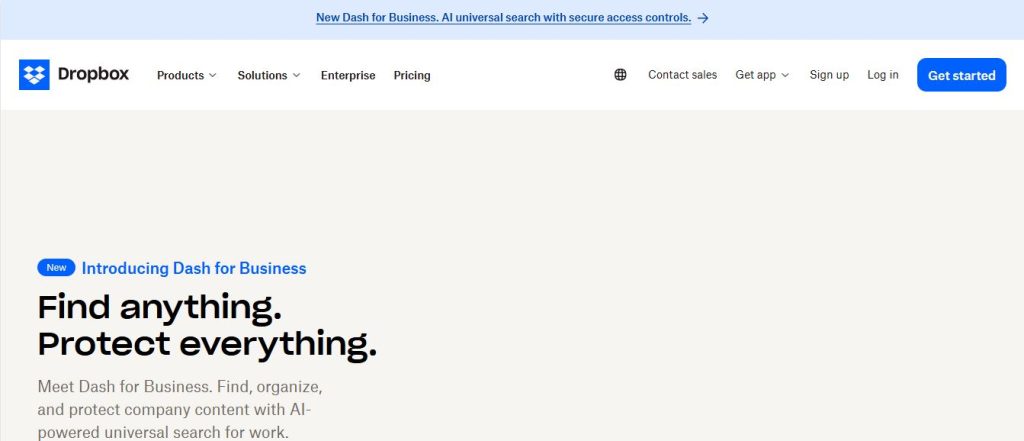
Dropbox specializes in cloud storage and backup services. What makes Dropbox great is its ability to not only cater to businesses of any size but it can also cater to the general consumer. The organization has grown to offer many solutions specific to different industries, including IT, marketing, sales, and creative arts. Although Dropbox is predominately in the cloud storage and backup services, they also offer other products, including:
– Dropbox Sign – Requires and adds signatures to documents.
– Doc Send – Send documents securely and track activity.
– Capture – Create and screen recordings and video messages.
Dropbox also offers a free trial allowing customers to test the product before fully committing.
Conclusion
For organizations that want to improve and ensure that they efficiently manage and perform various tasks in the workplace B2B SaaS has many effective solutions to help. B2B SaaS can also grant organizations the ability to increase their productivity.
For companies that want to improve their B2B SaaS business, we have outlined some strategies to help benefit your business. In addition to the strategies outlined, following B2B SaaS companies like Microsoft, Google, Salesforce, Adobe, and Dropbox are excellent examples to research and learn from.
Now that you have finished the article, I hope you found it helpful. If you have implemented any of the strategies listed, I’d love to hear about it.
If you have any questions or comments, please comment below. All feedback is welcome and appreciated.
Thank you for reading.