
Finding the right keywords in your niche can be all the difference between success and failure in content development. Many people who develop content for blogs and online publications struggle with finding the right keywords to develop their content around.
This is due to many reasons, including a lack of understanding of their niche, a lack of understanding of how to perform keyword research, and a lack of respect for the keyword research process.
In this comprehensive guide, you’ll learn how to conduct a content gap analysis that gets results. This guide takes an economic approach, leveraging only free tools (Google Keyword Planner) to help you perform your keyword research on a budget.
What is a Content Gap Analysis?
Content gap analysis sounds more complicated than it is. Think of it like doing a bookstore inventory with your books acting as your website’s content. You’re essentially taking stock of what content you have, what your competitors have, and, most importantly, what your audience needs but currently isn’t getting. A content gap should be part of your content strategy.
Understand Content Gaps vs. Keyword Gaps
While keyword gaps focus on missing search terms, content gaps are much broader. A keyword gap might show you’re not targeting “best project management tools for startups.” Still, a content gap might reveal you’re missing the entire format your audience wants, like video tutorials or case studies.
To provide a clearer understanding of the details mentioned above, the following example is presented:
A B2B software company has many articles targeting all the correct terms, but its conversion rates aren’t great. After a proper content gap analysis, it was discovered that it was missing crucial comparison guides and setup tutorials that its audience desperately needed. After filling these content gaps, its traffic doubled within six months.
The Business Impact of Regular Analysis
Performing a content gap analysis is very important; in fact, it has a significant impact on your business. A significant business impact can occur only if you incorporate a periodic analysis of your content and content gaps. Below are examples of what happens when you regularly analyze your content gaps:
1. You stop wasting resources creating content nobody wants.
2. Your conversion rates typically improve because you meet user needs.
3. Your organic traffic grows more predictably because you’re filling audience demands.
Step-by-Step Content Gap Analysis Process
Now that we better understand a content gap, why it’s important to you and your business, and the difference between content and keyword gaps, we can walk you through the step-by-step content gap analysis process.
Set Up Your Competitor Content Audit
The first step is getting organized with your competitor analysis. You should track everything in a spreadsheet, such as MS Excel, Google Docs, or Numbers (Apple).
Here’s an ideal setup process:
1. Create a master spreadsheet with separate tabs for each competitor
2. Document their top-performing content using your keyword analysis tool of choice. Again, we will be using Google Keyword Planner because it’s free.
3. Track key metrics for each keyword:
Important Note – Some of these metrics may not be listed in a tool and may need to be added via manual analysis. For example, word count will depend on each competitor article you review. They will each have a differing word count.
- Estimated monthly traffic
- Number of backlinks
- Word count
- Content format (blog, guide, video, etc.)
- Update frequency
Below is an example of the tracked metrics.

Analyze SERP Features and Search Intent
SERPs means Search Engine Results pages. Essentially, they are Google’s response to a user’s search query. When a user enters a search into Google, Google returns a list of articles on its page for the user to choose from. Items included on Google’s first page include:
- Organic Search Results
- Featured Snippets
- Videos
- Ads
- Charts and Graphs
Search intent is the intent of a user’s search query on a search engine. The person searching for an answer within a search engine is trying to have their question answered. It’s important to understand that while analyzing SERPS, you must look beyond the content and explore how it appears in search results.
First, examine the SERP features for each target keyword. Are featured snippets appearing? Video carousels? Each of these represents a specific content opportunity.
For search intent, use the classification system below:
- Informational: “how to,” “what is,” “guide to.”
- Commercial: “best,” “top,” “vs.,” “review”
- Transactional: “buy,” “discount,” “deals.”
- Navigational: branded searches
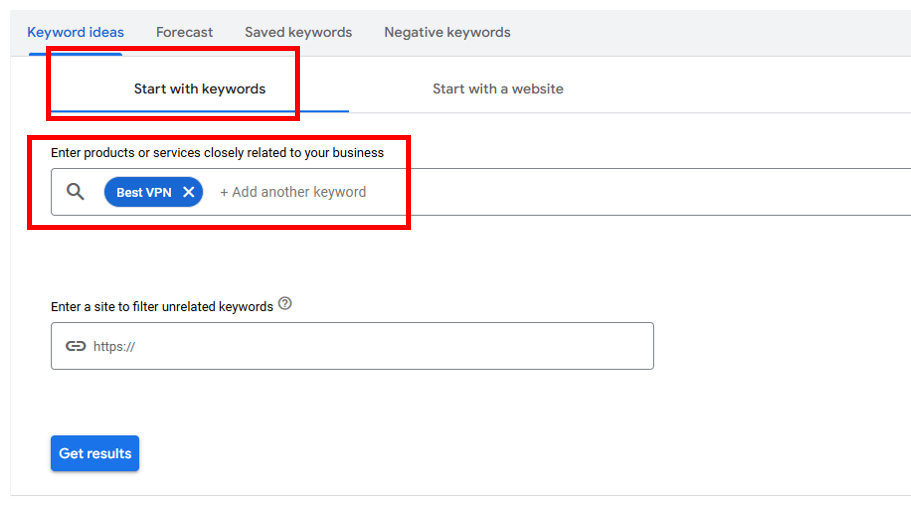
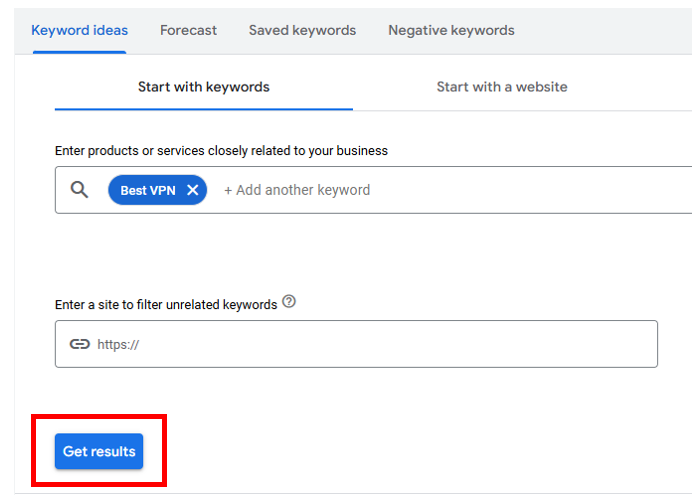
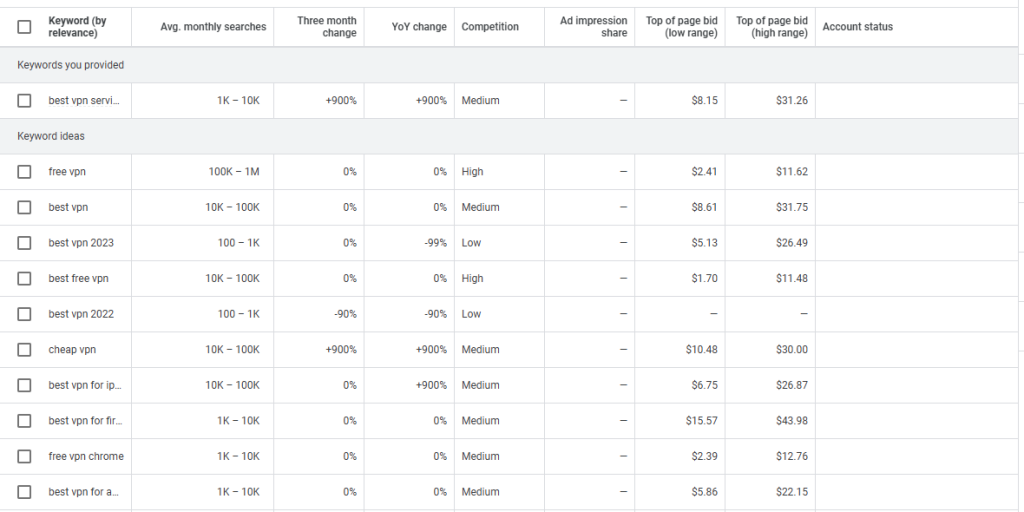
Below is how to find this information via Google Keyword Planner:
1. Enter Proposed Keyword
2. Click the Get Results Button
3. View Response Output
Identify Topic Clusters and Content Opportunities
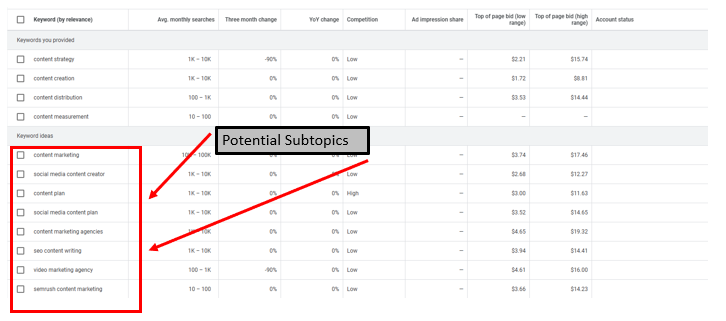
Now that you have identified your keywords’ SERPS and Search Intent, you can start identifying your content opportunities and topic clusters. Organizing content gaps by topic clusters instead of individual keywords is a great way to ensure you find similar keywords that you can rank for. This makes developing similar content that can link to each other easier.
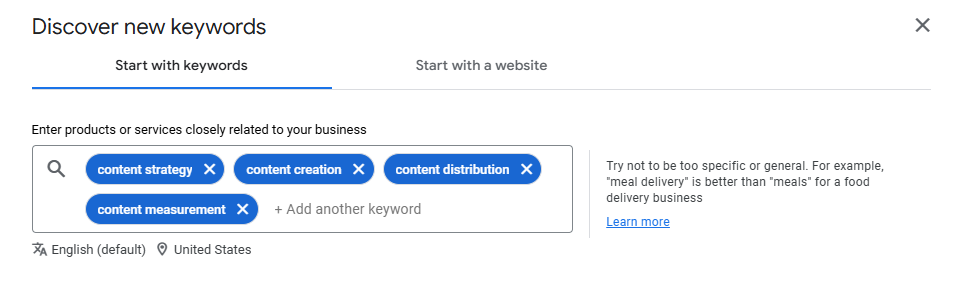
For example, if “content marketing” is your pillar, you might include related items under content marketing, including “content strategy,” “content creation,” “content distribution,” and “content measurement.”
Here’s how to find them via Google Keyword Planner:
1. Identify core topics (pillar content) by entering multiple pillar ideas
2. Map out related subtopics
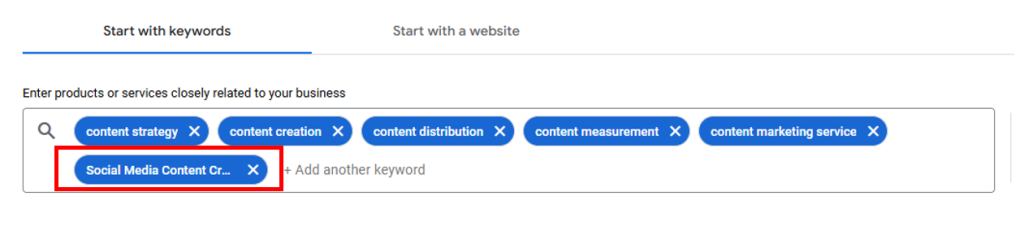
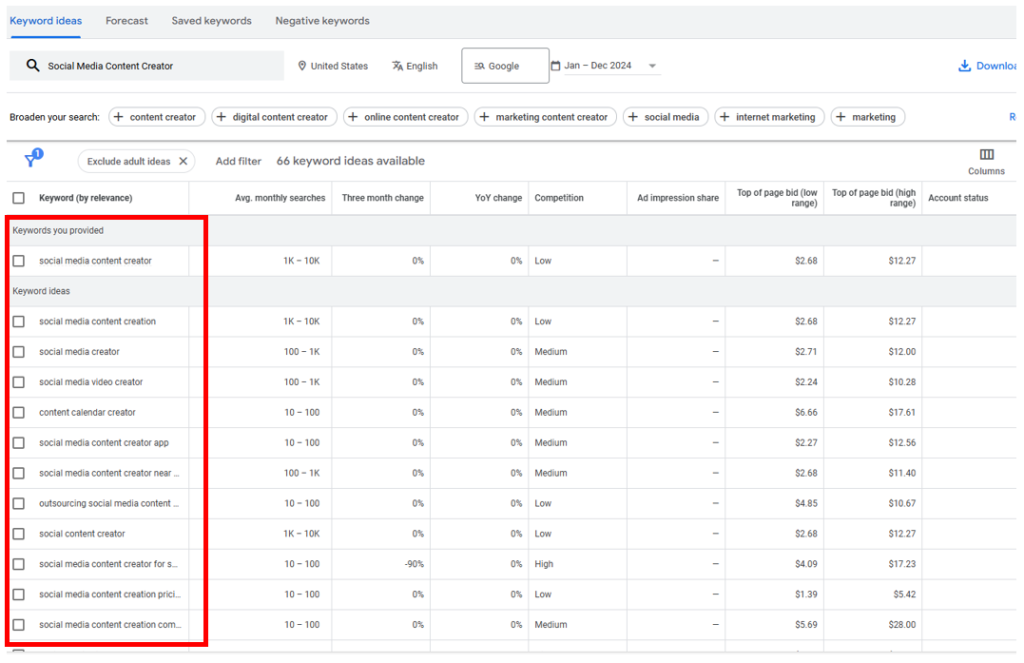
3. Analyze content depth at each level by entering the keyword you want to review
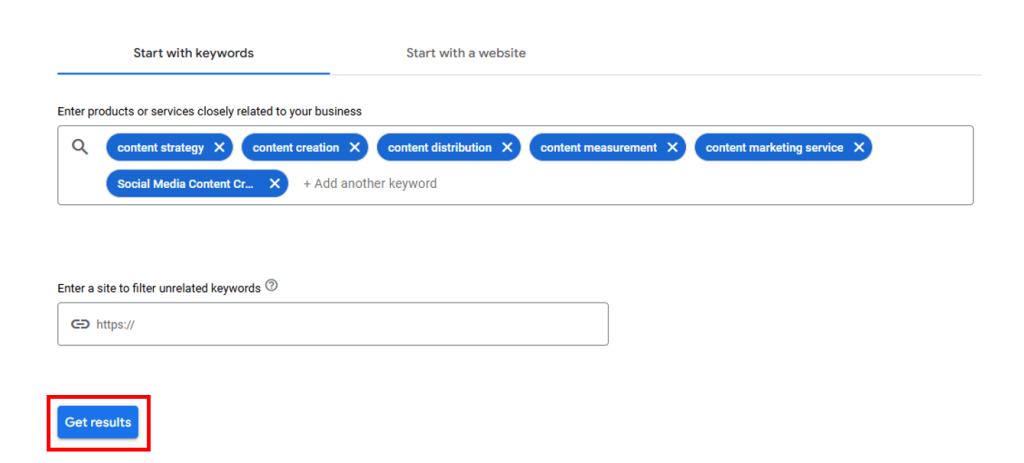
4. Click the get response button
5. Look for missing connections between topics
Content Depth Analysis Framework
This is where getting in the weeds can be fun. Performing a content depth analysis will help you better understand the keywords you’re analyzing.
When analyzing content depth, ask yourself these specific questions:
- Does it answer all common user questions?
- Are there supporting visuals/examples?
- Is there actionable advice?
- Are there expert opinions or data citations?
Once you answer these questions, you’ll better understand the content you need to build for your keywords.
Gap Tracking Template Structure
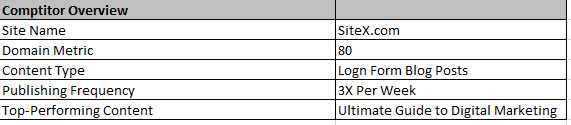
To document your GAP analysis, you can build a spreadsheet based on the outline below:
Competitor Overview (Tab 1)
- Domain metrics
- Content types
- Publishing frequency
- Top-performing content
Content Gap Matrix (Tab 2)
- Topic
- Search intent
- Current ranking
- Competitor coverage
- Gap priority score
- Implementation status
Implementation Timeline (Tab 3)
- Content type
- Assigned writer
- Due date
- Progress status
- Expected impact
If done correctly, your spreadsheet should be like this:
Competitor Overview Example
Content Gap Matrix Example

Implementation Timeline Example

Make sure it’s part of your process to address your gap analysis at least once a year periodically. Markets change over time; new opportunities arise, and new competitors emerge.
To be successful with your gap analysis, you must take a systematic approach and focus on creating content that serves your audience better than your competitors.
Analyze Your Competitors’ Content
An essential aspect of your gap analysis is examining your competitors’ content. Studying what your competitors are doing can be very beneficial. It can help you identify the types of content you should create, what you might avoid, and areas where your existing content can be enhanced.
Mapping Competitor Content
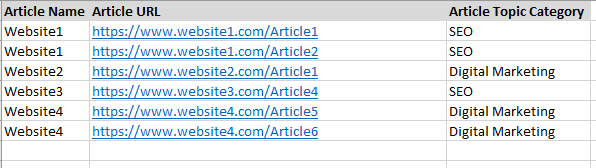
The first step is creating what I call a Content Coverage Map. Below is an effective system. Here’s the process:
1. List all competitor URLs by topic category
2. Track their content performance metrics:
- Organic traffic (via Google Keyword Planner, Ahrefs, or Semrush)
- Social shares
- Word count
- Publication date
- Last updated date

Assess Content Quality and Depth
After you’ve assessed your competitor’s content, you’re ready to determine the quality of your content. Here’s the framework you should leverage for evaluating content quality:
Comprehensiveness Check:
- Does it answer all primary user questions?
- Are there practical examples?
- Does it include expert insights?
- Is there original research or data?
Use a scoring system from 1 to 5 for each factor. A scoring system might seem excessive, but it’s essential for making objective comparisons.
The E-E-A-T Assessment Framework
Try to evaluate your content based on Google’s E-E-A-T principles:
- Experience
- Expertise
- Authoritativeness
- Trustworthiness
Look for signs like author credentials, original insights, case studies, and cited sources. These elements make a huge difference in content performance.
Backlink Analysis for Content Gaps
This is where things get interesting. As part of your Gap analysis, you need to review backlinks. Many people strongly dislike performing backlink analysis and link building. 41% of SEOs consider link building to be the most difficult aspect of the job. Backlinks are vital to the success of your content. Backlinks are incoming hyperlinks from another website that link to your webpage. The more backlinks you have to your site, the more popular it will be. This is especially true if you get backlinks from reputable sites like Forbes or Tech Radar.
To perform a backlink pattern analysis, try performing the following:
1. Export competitor backlinks using an SEO tool with your paid tool (Ahrefs, Semrush, etc.).
Important Note – Google Keyword Planner does not perform this action.
2. Group similar pieces of content that attract links
3. Identify common characteristics:
- Content length
- Data inclusion
- Visual elements
- Expert contributions
Finding backlink opportunities while analyzing your competitors will lead to discovering more opportunities. The more opportunities you have, the more potential for growth.
Link-Worthy Content Patterns
While performing your backlink analysis, you want to pay close attention to content that consistently earns links. Link-worthy content usually has a unique value that can’t be easily replicated. It generally consists of unique types of content that aren’t generally performed by everyone, like a standard how-to post or a listicle. Try to find the following types of content and review the number of links they have.
- Original research and surveys
- Expert roundups
- Comprehensive guides
- Industry statistics pages
- Free tools and templates
Once performed, try to build your versions of these types of content. Always remember that the goal isn’t to copy your competitors but to understand what works in your industry and do it better. Smart competitor analysis helps you avoid these costly mistakes.
Maintaining quarterly or bi-annual reviews of competitor content analysis is essential. Markets constantly evolve, new competitors emerge, and content strategies shift. Staying up-to-date with these changes is vital for maintaining a competitive edge.
Creating Your Content Gap Action Plan
After identifying your content gaps, it’s time to build a content gap action plan. A content gap action plan is a document that outlines the steps required to address the content gaps identified during your content gap analysis.
It’s a roadmap for closing the gap between your existing content, what your target audience needs, and what your competitors successfully give to their audience.
Below is a process that will take your work during your analysis into a viable action plan.
Develop Your Content Calendar from Gap Analysis
The first step is organizing your content opportunities into a workable calendar. A workable calendar will help keep you organized and on track. To properly build the workable calendar, try to execute the following steps below:
1. Create a master list of all identified gaps
2. Score each opportunity based on:
- Search volume potential
- Competition difficulty
- Resource requirements
- Expected business impact
- Current market demand
Try to use a simple 1-5 scoring system for each factor. The scoring system will help you better categorize your gaps and understand where and when they are addressed.
Set Measurable Goals and KPIs
Once you’ve documented your content gaps and have built a calendar to help schedule when to address them, you should set and measure goals around them. Every content gap you document needs clear success metrics. Here are some recommended KPIs to focus on. One essential item to note is that this is not an exhaustive list, just something to get you started:
- Organic traffic growth
- Time on page
- Social shares
- Backlink acquisition
- Conversion rate
- Featured snippet acquisition
- Position improvements
Conclusion
A comprehensive content gap analysis requires a clear understanding of your content and gaps. It also involves leveraging tools to analyze competitor content and search intent data while identifying emerging topics and formats that resonate with your target audience.
Integrating quantitative data from tools like Google Search Console with qualitative insights from customer feedback allows you to identify underserved topics and content opportunities that align with user needs and business objectives. Regularly reassess your content gaps as search algorithms and user behaviors evolve in response to new technologies and consumption patterns.