
Content marketing can sometimes feel like you’re putting in work for nothing. You want to create content that people love and that also reaches the right audience. These effective content marketing tips will provide a clear path forward, helping you maximize the impact of your efforts.
A successful content marketing strategy is more than just publishing a blog post sporadically. It’s about a consistent and thoughtful approach to connecting with potential customers. Let’s get started on refining your marketing tactics.
15 Effective Content Marketing Tips
Fortunately, numerous effective content marketing tips can help you enhance your content marketing process. As a new content developer, I have used and can vouch for many of these. For example, I have worked diligently to understand my audience better, developing SMART goals and creating high-quality content.
In terms of those that I haven’t, I have seen them work. For example, using various content distribution methods and developing different types of content. Many of these you’ve also seen work in action, whether you realize it or not. With that said, let’s review the tips below.
1. Know Your Audience Inside and Out
First, you must understand who you are trying to reach. A deep understanding of your audience’s needs, challenges, and motivations is the foundation of all effective content. What problems are they actively trying to solve in their daily lives?
To create a picture of your defined audience, develop detailed buyer personas. These are semi-fictional representations of your ideal customers based on market research and real data. This helps you to create content that directly addresses your audience’s pain points.
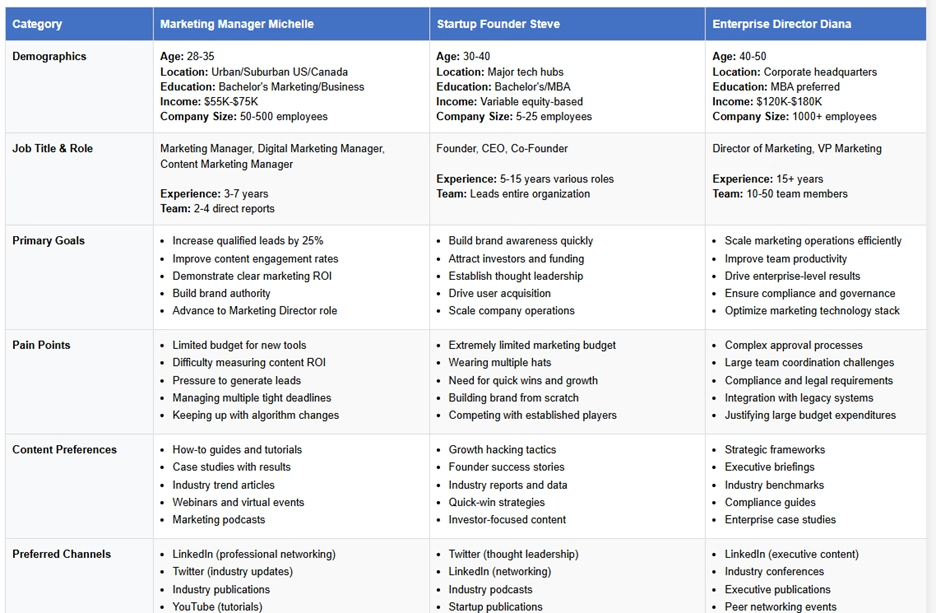
Utilize tools such as Google Analytics, social media insights, and customer surveys to gather data on your target audience. Examine demographics, interests, and behavioral patterns throughout their customer journey. This information will help you craft content that truly resonates and captivates your audience.
2. Set Clear Goals for Your Content
Before creating anything, define what you want your content to achieve. Are you hoping to boost brand awareness, generate new leads, or increase sales? Your specific marketing goals will shape your entire content marketing strategy.
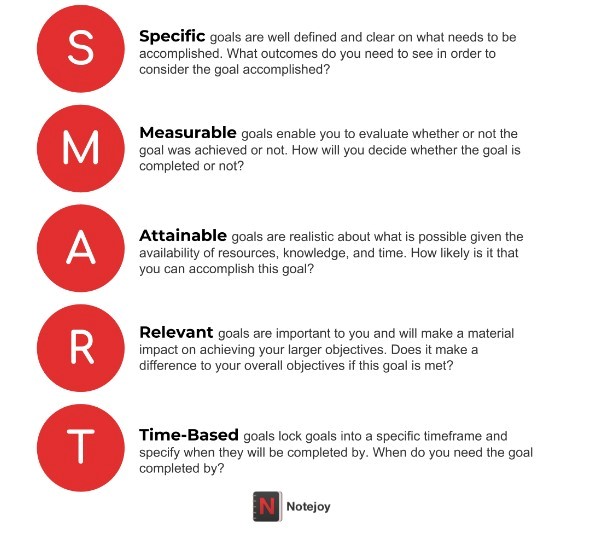
Your content marketing aims must be SMART: Specific, Measurable, Achievable, Relevant, and Time-based. For example, a goal might be to increase your visitor session time on your blog by 5% in the next quarter. This approach keeps your marketing strategies focused and allows you to track progress accurately.
(Source – Notejoy)
Different marketing objectives will require different types of content for each stage of the marketing funnel. Awareness content, such as a general blog post, may be suitable, while a detailed case study is more effective for the decision stage. Aligning content to the funnel stage makes your digital marketing more effective.
3. Create a Solid Content Strategy
A well-documented content strategy acts as a roadmap for your marketing efforts. It outlines the types of content you will create, your publishing schedule, and the channels you will use for distribution. This document keeps your entire team aligned and working toward the same objectives.
Your content plan should include a content calendar to help you stay organized and consistent. Consistency is a massive factor in building an audience and gaining traction with a search engine. A content marketer who plans can produce higher-quality work and avoid last-minute scrambling.
For small businesses, a documented, small business-centric content strategy is vital for managing limited resources effectively. It helps prioritize tasks and focus on the marketing tactics that will have the most significant impact. This structured approach is central to any successful content marketing plan.
4. Focus on Quality Over Quantity
It can be tempting to churn out a high volume of media content, hoping something sticks. However, one piece of great content that is well-researched and genuinely helpful will consistently outperform multiple mediocre articles. Quality content is what builds trust with your audience.
Invest time in creating valuable and original material that offers real solutions to your audience’s problems. When your content is a reliable source of information, you start to establish credibility within your industry. This approach establishes you as an authority and makes people more likely to do business with you.
Successful content often comes from a place of deep understanding and expertise. Share industry insights that your audience cannot easily find elsewhere. This focus on value will improve customer engagement and loyalty over time.
5. Optimize Your Content for Search Engines
Modern search engine optimization (SEO) is about creating content that clearly answers user questions. Think about the intent behind a search query, not just the keywords themselves. Utilize tools like Google’s ‘People Also Search For’ section to identify related topics that your audience is curious about.

Pay close attention to on-page SEO elements, such as the following:
- Meta descriptions
- Titles
- Headers
- Sentence length
- Outbound links
- Inbound links
These components help search engines understand the context and relevance of your content, which can improve your rankings. A solid SEO foundation helps drive sustainable organic traffic to your website.
Internal linking is also a powerful tactic. Linking to other relevant blog posts on your site helps search engines discover more of your content and keeps visitors on your site longer. This demonstrates the depth of your knowledge on a subject.
6. Embrace Different Content Formats
Do not restrict your content marketing to just a single format. A successful strategy should include blog posts, but it can be so much more. Experiment with different formats because people have diverse preferences for how they consume information.
Incorporate engaging video content, from detailed tutorials to quick short-form video clips for social media. Infographics are excellent for presenting data in a visually appealing way, while podcasts are perfect for audiences on the go. Offering a variety of ways to consume content broadens your reach.
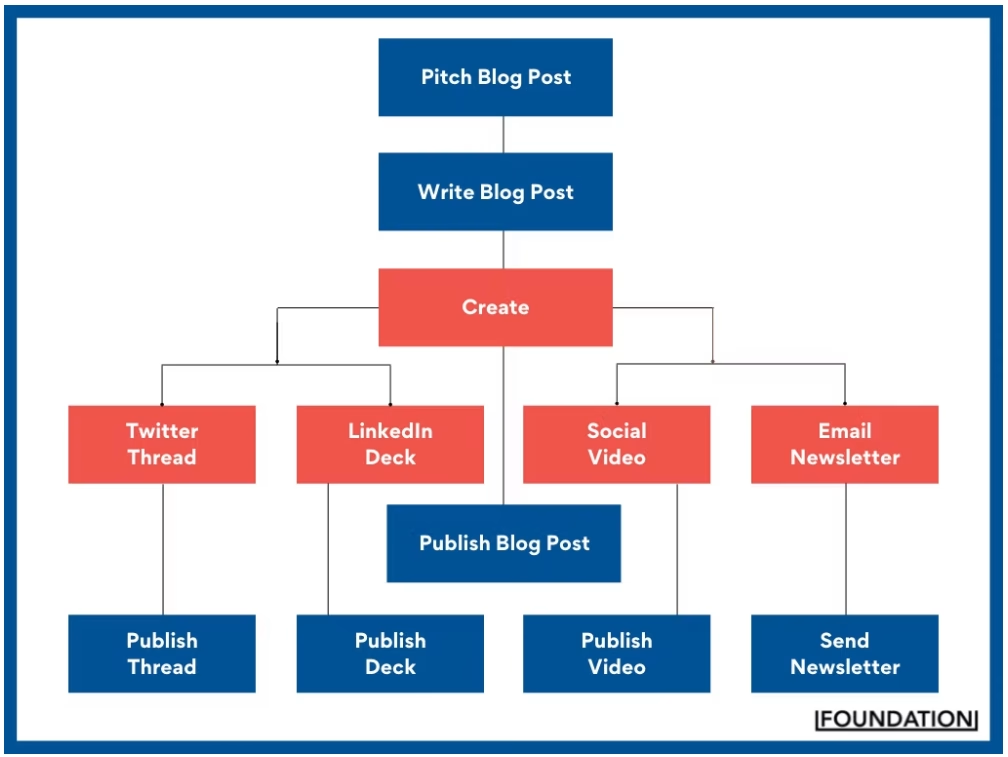
Repurpose your best-performing content into new formats. For instance, a popular blog post can be transformed into a video, an infographic, or a series of social media posts. This extends the life of your content and introduces it to new segments of your audience.
(Source – Wix SEO Hub)
7. Promote Your Content Effectively
Creating great content is only the first step; effective promotion is what gets it seen. Share every piece of content across the social media platforms where your target audience is most active. A well-crafted media post can significantly expand your reach.
A core part of your digital marketing should be an email marketing list. Share your latest content with your subscribers to drive repeat traffic and nurture leads. Your email list is a direct line of communication with individuals who have already demonstrated an interest in your brand.Consider using paid promotion for your top-performing content to boost brand visibility. This can help you reach a much wider audience than organic methods alone. Smart promotion is one of the most effective content marketing tactics for accelerating growth
8. Engage With Your Audience
Content marketing is a dialogue, not a monologue. Encourage comments and discussions on your blog posts and social media content, and make it a point to respond promptly. This interaction helps build a vibrant community around your brand.
Utilize social media to initiate conversations and actively engage with customers. Ask questions, create polls, and share user-generated content to engage your audience and make them feel involved. Meaningful customer engagement can lead to valuable insights and strengthen relationships.
When you listen and respond, you show that you value your audience’s opinions. This simple act builds trust and fosters a loyal following. These followers are more likely to become customers and advocates for your business.
9. Use Data to Inform Your Strategy
Continuously monitor your content performance metrics to understand what works. Which pieces are driving the most engagement and generating the most leads? This data is critical for refining your content marketing strategy and making informed decisions.
Tools like Google Analytics offer powerful insights into user behavior. Pay close attention to metrics such as time on page, bounce rate, and conversion rates, especially. High conversion rates indicate that your content is successfully persuading visitors to take a desired action.
Use this data to see which content generates leads most effectively. A/B test headlines and calls-to-action to optimize performance. A data-driven approach removes guesswork and helps you focus your efforts where they matter most.

10. Stay Up-to-Date with Industry Trends
Digital marketing is constantly changing. Stay informed about new trends, technologies, and best practices within your industry. Following thought leaders and subscribing to reputable publications will keep you current.
Experimenting with new formats or platforms can give you a competitive advantage. Being an early adopter of things like short-form video or interactive content can capture your audience’s attention. This positions you as an innovative thought leader in your space.
Creating thought leadership content based on current industry insights can elevate your brand. It demonstrates that you are knowledgeable and forward-thinking. This type of leadership content is highly valuable for building authority.
11. Collaborate with Others
Partnering with other brands or influencers in your niche can be a powerful growth strategy. Consider co-creating content, such as webinars or case studies, or contributing guest posts to other websites. These collaborations expose your brand to new, relevant audiences.
Featuring expert interviews or quotes in your content is another great tactic. It adds credibility and offers fresh perspectives that provide more value to your readers. This is a straightforward way to establish credibility without a substantial investment.
Collaboration builds relationships and expands your network. The right partnerships can be mutually beneficial, enabling both parties to achieve their marketing objectives. Look for partners whose audience and values align with your own.
12. Focus on Storytelling
Facts tell, but stories sell. Humans are wired to connect with stories, so use storytelling techniques to make your content more engaging and memorable. Share customer success stories, behind-the-scenes looks at your company, or personal anecdotes related to your topic.
A compelling narrative can make even complex topics more relatable and engaging. It helps your audience form an emotional connection with your brand, which is far more powerful than a transactional one. Make sure every story has a clear point that supports your overall message.
Good storytelling makes content resonate on a deeper level. It can effectively highlight your audience’s pain points and position your solution in a natural, compelling way. This approach often leads to higher engagement and better recall.
13. Create Evergreen Content
While timely content about current events is useful, a cornerstone of a successful content marketing strategy is evergreen content. These are pieces on topics that remain relevant and valuable over a long period. When developing evergreen content, think of the following:
Evergreen articles can continue to drive organic traffic and leads long after they are published. This makes them a high-return investment of your time and resources. This type of successful content becomes a foundational asset for your business.
Periodically review and update your evergreen content to keep it fresh and accurate. Try to update your evergreen content at least twice per year or quarterly. This helps maintain its search engine rankings and ensures it remains a reliable source for your audience. A small update can breathe new life into an older post.
14. Optimize for Mobile
A growing majority of people consume content on mobile devices. According to Backlinko, today, approximately 4.69 billion individuals own a smartphone. That’s set to grow to 5.83 billion by 2028. The time spent on mobile devices also continues to rise.

(Source – Backlinko)
Your website and all its content must be easy to read and navigate on smaller screens. Use short paragraphs, clear headings, and properly sized images to create a smooth mobile experience.
Consider the technical aspects of mobile optimization, such as page load speed and responsive design. A slow or clunky mobile site can frustrate users and hurt your search rankings. A positive user experience is critical for retaining visitors.
A seamless mobile experience can significantly boost customer engagement with your content. Buttons and links should be easy to tap, and text should be legible without zooming. Prioritizing mobile is no longer optional for a successful content marketing strategy.
15. Measure and Adjust
Finally, remember that effective content marketing is an iterative process. Regularly review your content marketing strategies and adjust them based on performance data. Do not be afraid to adjust your approach if certain marketing tactics are not yielding the expected results.
Set aside time each quarter to conduct a content audit. Analyze your content to identify top performers, pieces that need updating, and low-value articles that could be removed or consolidated. This process helps your content stand out and remain relevant.
This cycle of creating, measuring, and refining is what leads to long-term success. By continuously learning and adapting, your content marketing efforts will become more efficient and impactful over time. This dedication is what separates good content marketers from great ones.
Conclusion
These effective content marketing tips are not about following a rigid formula. Success comes from deeply understanding your audience, consistently creating valuable content, and continuously learning and adapting. By implementing these strategies, you are building a strong foundation for your content marketing.
Remember, this is a long-term game that rewards patience and consistency. Stay focused on your goals, keep refining your approach, and put your audience at the center of everything you do. With sustained effort, you will see your content marketing pays off through increased engagement, stronger brand awareness, and business growth.