
It feels like you’re just throwing content out there. You write a blog post, post on social media, and send an email newsletter. Unfortunately, nothing seems to stick, and the results are quite random. This happens without a plan, and that plan is a solid digital content strategy.
A strong digital content strategy gives you a clear direction for your entire content marketing program. This approach turns scattered actions into a focused and effective marketing strategy.
Understanding Your Target Audience
What problems keep them up at night?
Consider their daily life and what they aspire to achieve, as well as understanding their pain points. When you understand these things, your content stops being noise and starts becoming a helpful voice they trust. This process involves creating what marketers call a customer persona (buyer persona). A customer persona is a fictional character representing your ideal customer.
A detailed persona makes your digital marketing efforts far more personal and effective. Your audience engagement depends on how well you connect with their specific needs and interests.
Creating Your Customer Persona
Give your persona a name, a job, and some hobbies. What are their biggest challenges, and what business goals are they trying to meet? Consider where they spend their time online: are they on Instagram, reading articles on LinkedIn, or asking questions on Reddit?
Knowing this helps you meet them on the right digital channels. Answering these questions gives you a compass for all content creation. Every piece of content you create should speak directly to this person’s needs, helping you choose content that resonates. An example of a customer persona is shown below:

You can develop multiple customer personas, depending on the size of your audience. Since my blog is relatively new, I have only built one, and as I grow and learn more about my audience’s interests, habits, and pain points, I can develop more personas. It’s also important to note that you should review your persona periodically, at least twice a year or quarterly.
Establishing Clear Goals
Clear business goals are everything. Without them, you are just making content for the sake of it. Your goals should be clear and measurable, directly tied to your overall digital strategy.
You may want to increase traffic to your website or boost brand awareness. You may need more email subscribers, or your goal is to generate leads directly. Whatever it is, please write it down and connect it to key performance indicators.
A popular method for goal setting is the SMART framework. As I developed my goals for this blog, I ensured that I leveraged the SMART goal framework. SMART goals are defined as Specific, Measurable, Achievable, Relevant, and Time-Based. For example, instead of saying “get more traffic,” a SMART goal is “increase organic website traffic by 20% in the next three months to improve search engine rankings.”
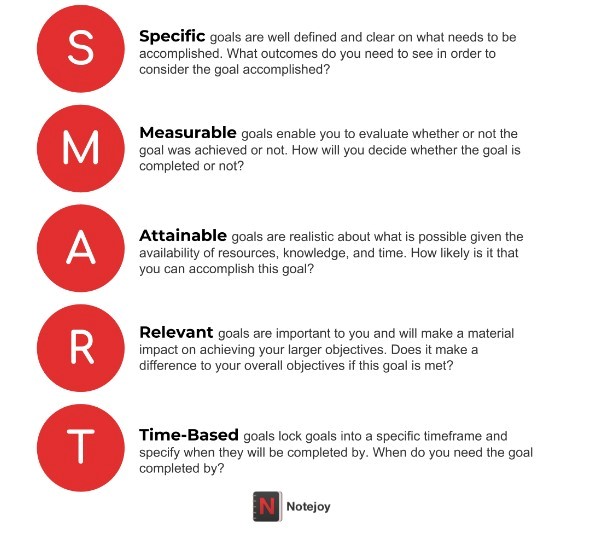
(Source – Notejoy)
Having these clear objectives will guide every decision in your content plan. It transforms your content from a cost into an investment that drives tangible results. A good strategy helps determine the path to these results.
Building Your Perfect Digital Content Strategy
Now we get to the fun part: mapping out what kind of content you’ll create and where you’ll share it. This plan serves as your guide for all content you publish, forming the core of your content marketing strategy. A content strategy is not just about topics but also covers format, channels, and the workflow for getting it all done.
You’ll need to think about what your audience actually wants to see. Do they prefer short-form videos or long-form blog posts? The answer goes back to the persona you created earlier, helping you choose content types that hit the mark.
Start with a Content Audit
Before you generate a single new content idea, look at what you already have. A content audit is a systematic review of all your existing content. This process helps you identify your top-performing pieces, uncover gaps in your topics, and find outdated content that needs a refresh or removal.
Catalog your assets, from blog posts to social media posts. Analyze their performance against your key performance indicators. A thorough audit provides valuable insights into what resonates with your target audience and what falls short of expectations.
This review of existing content prevents you from repeating mistakes. It also provides a foundation of successful topics and formats to build upon. This step is crucial to developing a robust digital content strategy that evolves and improves over time. To help streamline and enhance your auditing process, numerous content audit tools are available to assist. Key audit tools include the following:
Keyword Research is Your Foundation
You need to know what words your audience uses to find solutions online. This is known as keyword research, which helps you optimize your content to be found on search engines like Google. Think about the main topics related to what you do and brainstorm specific phrases people might search for.
Tools like Google Keyword Planner or other generation tools can give you content ideas and show you how many people are searching for those terms. Don’t just look at popular keywords; sometimes, less common, more specific phrases, called long-tail keywords, are better. According to Ahrefs, these often have higher conversion rates because the searcher’s intent is very clear.
This research helps you understand user intent. Are they looking for information, comparing products, or ready to make a purchase? Aligning your content with this intent is crucial for enhancing search engine rankings and meeting user needs.
Deciding on Content Formats
Content comes in many shapes and sizes, and sticking to just one format can get stale. Mixing up your content formats keeps your audience engaged and allows you to reach people on their preferred platforms. The content types you choose should align with your resources and audience preferences.
Here are a few popular formats to consider:
- Blog posts and articles for in-depth information
- Videos, both long-form for tutorials and short-form for social media posts
- Email newsletters to nurture your existing audience
- Case studies to provide social proof and build trust
- Infographics to present data in a visually appealing way
- Webinars and premium content, like ebooks, for lead generation
Your choice of format depends on your audience and the goals you are trying to achieve. If your goal is to explain a complicated process for a digital product, a how-to video might work better than a blog post. If you want to build a community, regular social media updates are perfect.
Planning With a Content Calendar
A content calendar is a schedule of when and where you plan to publish your content. It can be a simple spreadsheet or a more advanced project management tool. It’s your secret weapon for creating consistent content.
Your calendar should include the topic, format, publishing date, and the channel you’ll use. This level of organization removes stress from the content creation process. It lets you produce content ahead of time, so you are never stuck wondering what to post next.
Being organized this way helps you see the bigger picture of your marketing strategy. You can plan for holidays, product launches, or special events with plenty of time to spare. A well-managed calendar is a cornerstone of effective content management. Like with performing audits, there are numerous content calendar tools available, including CoSchedule, Hootsuite, and Loomly, among others.

Streamlining Content Operations
A plan is useless without a process to execute it. Content operations refer to the people, processes, and technology needed to manage the content lifecycle effectively. This includes everything from brainstorming content ideas to publishing and archiving outdated content.
Strongcontent governance sets the rules for your content. It defines brand voice, tone, style guidelines, and legal requirements. These guidelines help teams create content that is consistent and on-brand, regardless of who creates it.
Establish clear approval processes so everyone knows their role. This could involve an editor’s note on drafts, a legal review, or a final check by the marketing manager. A defined content workflow prevents bottlenecks and helps teams work efficiently.
Creating Content That Connects
The creation part is where your ideas come to life. But it’s not just about producing a lot of content; it’s about making high-quality digital content. Your writing should sound like a real person, using a conversational tone and simple language.
People connect with stories and personal experiences. Focus on providing genuine value and thoroughly addressing your audience’s questions. Help them solve their problems to build trust and position yourself as a helpful resource.
High content quality is non-negotiable. Whether it’s a blog post or a video script, it should be well-researched, accurate, and polished. This commitment to quality builds credibility and encourages audience engagement.
Getting Your Content in Front of People
Creating amazing content is only half the battle. You need to actively promote it across various digital channels. Too many people hit ‘publish’ and hope for the best, but a solid content strategy involves a well-planned content distribution strategy.
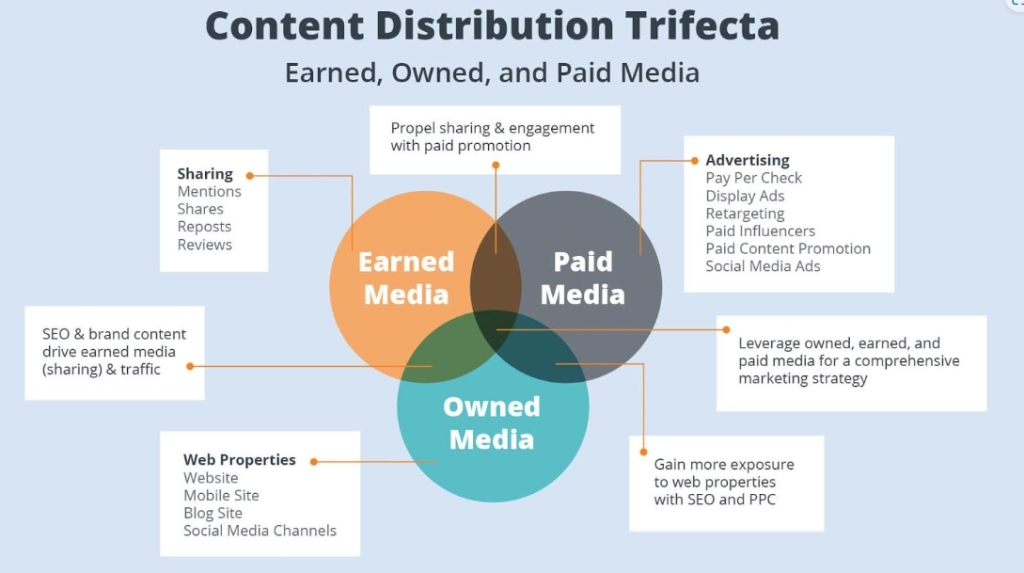
(Source – Instapage)
You need to share your work across all the channels where your audience is active. Let’s examine a few common ways to increase visibility for your content. The right promotion makes all the difference in achieving your business goals.
Using Email to Your Advantage
Email is a powerful way to reach people who already know you. Your email list is comprised of individuals who are eager to hear from you. Send them your new content, but don’t just send a link; include the actual content as well.
Explain why they should read or watch it and provide a compelling reason to click. A compelling subject line and a short, personal message can make a big difference in your click-through rates. This direct communication is great for promoting new media posts or premium content.
The Power of Social Media
Each social media platform is unique, so you should tailor your message to each one. What works on LinkedIn might not work on TikTok. For example, on Instagram, you could create a visual graphic with a key quote from your blog post to promote your market content.
On X (Twitter), you might post a thread breaking down the main points. This approach shows you understand the platform, and data from Sprout Social often points to the need for platform-specific content. Tailoring your channels’ content improves engagement and reach.
Don’t Forget About SEO
Search engine optimization helps people find you through Google. It’s a long-term game, but it’s worth the effort for sustainable traffic. It all starts with the keyword research you did earlier.
Make sure your target keyword is in your title, headings, and throughout your text. But write for humans first, not search engines. Google is smart enough to understand context and wants to show its users the best possible answer to their question.
This focus on user experience and content quality will naturally improve your search engine rankings over time. Good SEO is a fundamental part of a strong digital content strategy. Key fundamental aspects of SEO include:
- Keyword Research and Optimization – Identify relevant search terms your target audience uses and strategically incorporate them into your content.
- Technical SEO and Site Performance – Ensure your website loads quickly, is mobile-friendly, has clean URL structures, and proper site architecture.
- High-Quality, Relevant Content Creation – Develop valuable, original content that directly addresses user search intent.
- On-Page Optimization Elements – Optimize title tags, meta descriptions, header tags (H1, H2, H3), and internal linking structure.
- Authority Building Through Backlinks – Earn quality inbound links from reputable websites in your industry to demonstrate credibility and expertise to search engines.
How Do You Know if It’s Working?
You need to measure your results to ensure you’re getting a proper return on your investment (ROI). This step tells you what’s working and what’s not, letting you make smart decisions about your future content. Go back to the SMART goals you set earlier and look at the key performance indicators you defined.
What metrics will tell you if you are on track? Some common performance indicators include website traffic, time on page, social media engagement, and email click-through rates. Monitoring these numbers is crucial for understanding your key performance.
Content analytics tools, such as Google Analytics and HubSpot, can provide you with a wealth of information for free. Don’t get overwhelmed by all the data; focus on the key numbers directly tied to your goals. Checking in on your metrics every month helps you adjust your content marketing strategy as you learn more, ensuring it continues to drive results, such as higher conversion rates or lead generation.
Conclusion
Creating a digital content strategy feels like a lot of work at first, but it’s the most important work you can do for your marketing. It gives you focus, purpose, and a way to measure your success. This is the difference between guessing and knowing.
A digital content strategy helps you align your efforts with specific business goals. It ensures your team creates consistent, high-quality content that genuinely connects with your target audience. A strong digital content strategy doesn’t just support your marketing; it becomes a powerful asset that works for you around the clock.