
Did you know that companies with well-structured content teams are more likely to achieve their marketing goals? Although having well-structured content teams is more likely to lead to success, there is an issue. Organizations struggle to determine the optimal way to organize their content teams.
When you get your content team organization right, you set the foundation for a well-oiled content machine that drives efficiency and results. If you’re looking to learn how to build a high-performing content team, look no further than this article.
Whether you’re building your first content team or restructuring an existing one, this guide will walk you through everything you need to know about creating a content team structure that works for your organization. This guide will walk you through content team structures, organizational models, and determining the appropriate content size for your business, as well as common mistakes to avoid. Following this outline will help you pave the way for content marketing success.
Content Strategist Responsibilities and Strategic Planning Functions
There are a couple of team members who are required for your content team. The first is the content strategist. Content strategists are the backbone of successful teams. Your content strategist is responsible for creating and maintaining editorial calendars, conducting audience research, and aligning content goals with business objectives. Additionally, the content strategist ensures the team is organized and aligned with the overall content marketing process.
Content Creators and Content Writers
Next on the list are your content creators. Content creators focus on the broad scope of content creation. They create content for various media, including:
- Podcasts
- Written Articles
- Videos
They perform a wide range of activities and are considered generalists, as they cover a broad spectrum of areas. Key roles content creators take on include blogging, photography, podcasting, and social media influencing.
Content writers, on the other hand, do a great deal of the heavy lifting, as they are responsible for creating the content and making necessary updates, such as editing and revisions. Content writers focus on ensuring the content appeals to the target audience and is both readable and engaging. Generally, content writer job titles include:
- Blog writer
- Copywriter
- Technical writer
- Content marketing specialist
Content Editors and Quality Assurance Team Members
Quality control isn’t optional anymore. It’s a mandate. Having a quality control content team separates professional content from amateur work. They make sure your content is consistent with other content your team has developed. They also focus on technical aspects, such as SEO optimization (if you don’t have an SEO specialist), formatting standards, and publication workflows.
Within the quality assurance team are content editors. Content editors ensure brand voice consistency by:
- Fact-checking information
- Making sure style guide compliance exists across all materials
- Tone consistency
- Review content against brand guidelines
- Conduct regular brand voice audits
SEO Specialists
If you’re creating content for the web (which everyone is), SEO specialists are also a must. SEO specialists are responsible for the following:
- Keyword research strategy
- On-page optimization
- Performance tracking and reporting
- Technical SEO audits
- Competitor analysis
Since content is entirely online, SEO is vital to the success of your content strategy and content development. They take your content and optimize it for SEO. Technical knowledge is essential for SEO specialists, as it enables them to optimize content effectively and improve search engine performance.
Visual Content Creators: Designers, Videographers, and Graphic Artists
This role can be viewed as a luxury. Many medium and large organizations with money to spend should invest in visual content creators.
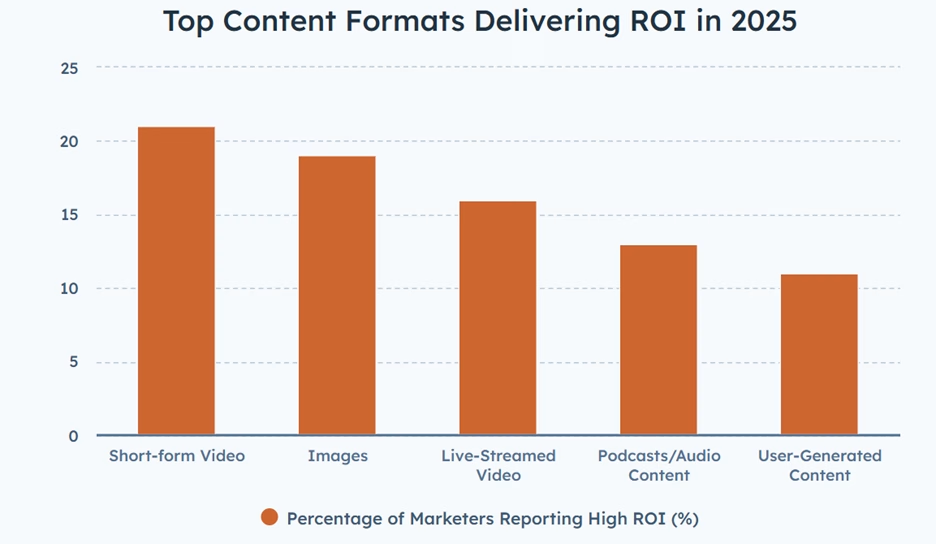
According to HubSpot, video content is the most popular and effective media format. The short-form video currently has the highest ROI, with 21%.
(Source – HubSpot)
This makes visual creators essential team members. Visual content creator responsibilities generally include:
- Develop infographics
- Create multimedia content
- Develop social assets
- Design illustrations for custom brand elements
Organizations that primarily focus on text-based content should consider hiring a visual content creator to add a different element to their content. Having dedicated graphic designers on the team enhances the quality and effectiveness of visual content, ensuring consistency and a professional look across all digital assets.
Content Managers and Project Coordination Roles
Content managers keep the entire machine running smoothly by coordinating editorial calendars, managing deadlines, and ensuring content flows efficiently through approval processes. They’re essentially project managers specialized in content workflows.
This role becomes critical once you’re producing more than 20 pieces of content monthly. Without proper coordination, even talented teams struggle with missed deadlines and communication breakdowns that hurt content quality.
Social Media Specialists and Social Media Management Positions
Both social media managers and social media specialists play a vital role in promoting your brand’s content. Social media managers are responsible for distributing content and managing a brand’s presence on social platforms, while specialists manage communication through various distribution channels. They market your content to attract more people to your brand and their content.
Community management involves real-time engagement, responding to comments, and building relationships beyond just posting content.
Content Team Organizational Models That Drive Results
Now that you have your list of roles within a content team, it’s time to structure them. Structure is important as it helps optimize your team’s processing and communication. It provides everyone with a better understanding of who is in charge and who their peers are.
Centralized Content Team Model
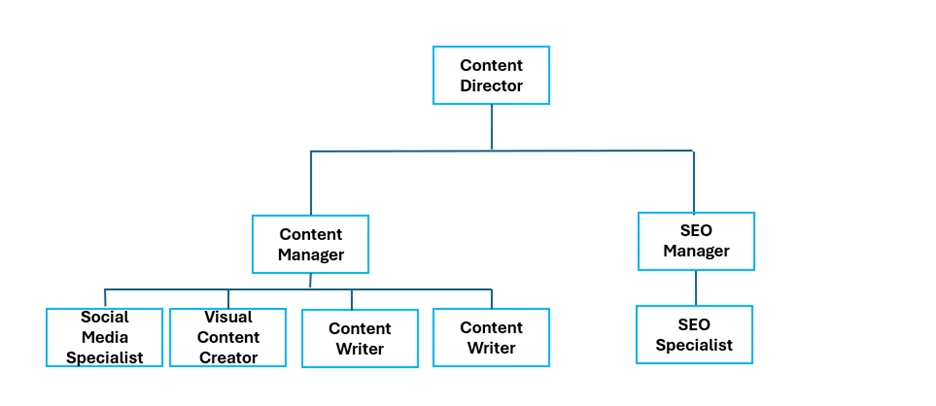
A centralized content structure consolidates all content-related activities under a single team and leader. Typically, a centralized content team model involves oversight from a leadership team, which ensures alignment with overall business goals and strategic coordination.
The centralized structure ensures a unified brand voice and streamlined approval processes. As great as a centralized team is, one thing to consider if you decide to implement one is that centralized teams can become bottlenecks when other departments need quick content turnarounds. Response times often stretch beyond internal SLAs, causing issues with content completion time. Content workflows can help with this.
Decentralized Content Team Model
In contrast, a decentralized content team structure is the exact opposite of a centralized model. Content members and teams are embedded within various organizational departments. This structure is beneficial for organizations managing content for multiple clients or brands, as it enables the development of tailored strategies and responsiveness to each client’s specific needs.
For example:
- Sales get their own writer
- Product teams have dedicated creators
- Marketing handles brand content
This approach delivers faster turnaround times and department-specific expertise. Unfortunately, the downside to this is the potential loss of brand and content development consistency. This is due to a lack of proper coordination.

Hybrid Content Team Model
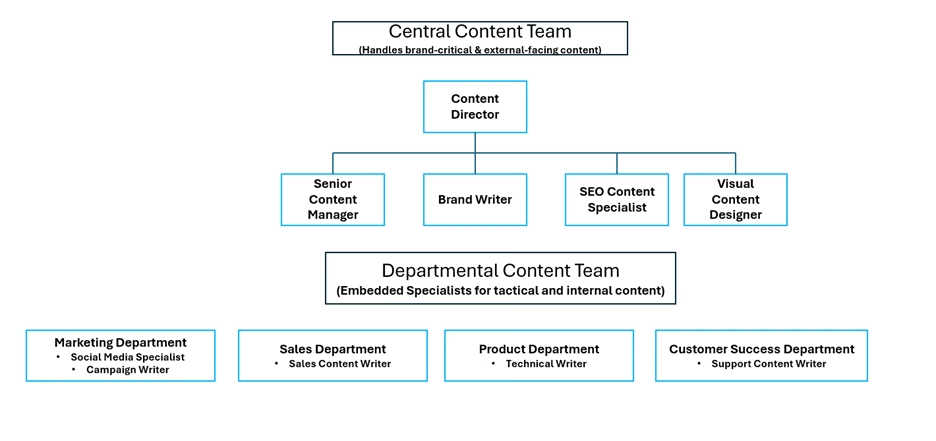
As its name implies, the Hybrid models combine the best of both worlds. A hybrid content maintains a core content team that handles brand-critical and external-facing content while allowing individual departments to manage their own tactical, internal communications.
Hybrid models benefit from leveraging specialized skills from both the core team and departmental teams, ensuring that tasks requiring unique expertise are handled efficiently and effectively. To ensure you’ve effectively implemented the hybrid model, establish clear guidelines about what content should be centralized versus departmental. Generally, external-facing content is reviewed by the central team, while internal communications can be handled departmentally.
Agency-Style Content Team Model
Agency-style team models are organized around client accounts or project types rather than traditional hierarchies. Content creators work across multiple “accounts” or business units, bringing diverse perspectives and preventing creative stagnation. In some cases, the agency-style model may begin with just you managing multiple accounts before expanding the team. This model requires strong project management systems and clear communication protocols.
Cross-Functional Content Team Integration Strategies
Cross-functional integration means breaking down silos between content, design, development, and marketing teams. This often involves close collaboration with digital marketing teams to ensure cohesive campaigns and unified brand messaging.
It’s similar to a decentralized model, but there is more communication among the various content teams. Regular cross-team workshops and shared project management tools help maintain alignment and ensure consistency across teams.
How to Size Your Content Team Based on Business Goals
The size of an organization’s content team can vastly affect its success. When determining the optimal size and composition of your content team, it is crucial to understand audience preferences, as aligning your team’s capabilities with what your audience expects ensures your content resonates and drives engagement. Although the size of a team is essential, only 38% expect their team to grow in 2025.

(Source – Content Marketing Institute)
Below is a summary of the various team structures that can be developed based on the size of your team.
Small Business Content Team Structure (1-4 Members)
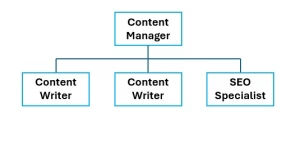
Small businesses with a budget for a small content team should start with a team of 1-4 people. Ideally, the small team should consist of the following:
- A content manager who handles content strategy, content marketing, and editing
- Two content writers who can write across multiple formats
- An SEO specialist who can take the documented content and optimize it for SEO
Having a small team configured in this way keeps costs manageable while covering essential content needs.
Mid-Size Company Content Team Structure (5-10 Members)
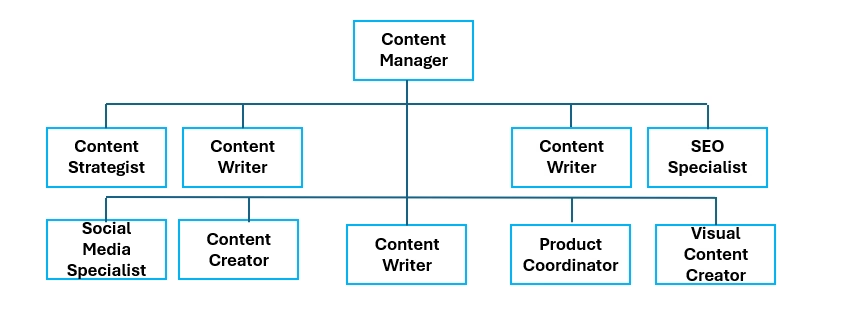
Mid-size teams allow for more specialization without breaking the bank. This configuration would generally consist of the following:
- One content manager
- Three content writers
- One SEO specialist
- One content strategist is responsible for developing the content strategy for the content team
- One content creator who is responsible for the development of content in other mediums, including podcasts and videos
- One visual content creator is responsible for developing and designing visual content, including infographics and illustrations
- One social media specialist who manages the social media strategy and execution of the content team
- One project coordinator who manages the content of the content team and ensures deadlines are hit
This size enables specialized roles while maintaining team cohesion and communication efficiency that larger teams often struggle with. This size also enables specialized roles while maintaining team cohesion and communication efficiency that larger teams often struggle with.
Enterprise Content Team Structure (11+ People)
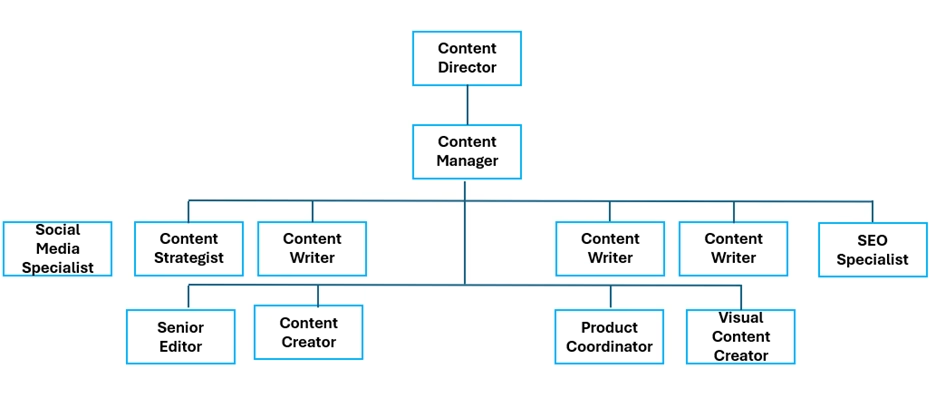
An enterprise configuration is built for large organizations with big budgets. These organizations can create larger content teams. The enterprise content team structure features larger hierarchies and specialized departments.
Leadership structure becomes critical at this scale. You’ll need content directors, senior editors, and team leads who can manage multiple projects simultaneously while maintaining quality standards across diverse content types. Enterprise teams often include a chief content officer (CCO), who oversees the entire content ecosystem and ensures that content strategies are aligned with business goals.
Content Team Hierarchy and Reporting Structures
Content Leadership Roles and Responsibilities
Regardless of the size of your content team structure, a formal hierarchy is essential. This is where roles like content directors and content managers come in. Content directors should focus on strategic planning and stakeholder management, while content managers handle day-to-day operations and team coordination.
Reporting Relationships Within Content Teams
Flat reporting structures are most effective for teams of 10 people or fewer, where everyone reports directly to the content manager or director. Larger teams need tiered hierarchies with senior editors, team leads, and specialized department heads.
The key is to avoid having too many reporting layers. You want to prevent issues like communication and approval bottlenecks. You also want to avoid slowing down your management’s decision-making processes. Streamlined reporting structures help ensure efficient content production and minimize bottlenecks, thereby enhancing overall productivity.
Common Content Team Structure Mistakes to Avoid
Unclear Role Definitions and Responsibility Overlap
Unfortunately, teams can implode because nobody knows who is in charge of what and who is doing what. Role overlap creates frustration, duplicated work, and missed deadlines when everyone assumes someone else is handling critical tasks. Successful content marketing teams rely on clear role definitions to avoid confusion and maximize productivity.
Inadequate Content Strategy Leadership
Too many companies treat content strategy as an afterthought, expecting writers to know what content to create intuitively. Without dedicated strategic leadership, teams produce content that is random and doesn’t align with business goals or audience needs.
Poor Communication Between Team Members
Many content teams, especially those that work remotely or operate in a decentralized structure, struggle with poor communication. Either they don’t communicate at all, or they simply aren’t aligning with knowing everyone’s roles and responsibilities. Poor communication can also lead to misaligned or failed content initiatives, making it challenging to execute and manage content strategies effectively. Fortunately, poor communication can be easily remedied with daily stand-ups, shared project boards, and clear update protocols.
Lack of Documented Processes and Workflows
Undocumented processes are productivity killers that waste time and create inconsistent results. New team members shouldn’t have to guess how your approval process works or where to find brand guidelines. I recommend creating workflow documentation for everything. This includes:
- Content briefs
- Content strategy document
- Content templates
- Brand voice guidelines
- Brand style guideline templates
- Audit guidelines
- Content distribution plans
Teams with documented processes produce content faster than those relying on tribal knowledge and informal training.
Insufficient Budget Allocation for Content Tools
Unfortunately, poor budget decisions hinder the efficiency of the content team, and if managed poorly, they can impact your budget significantly. Content teams need design software, SEO tools, project management platforms, and collaboration systems to work effectively. Skimping on tools forces talented creators to waste time on manual tasks rather than producing high-quality content.
Inadequate budget allocation can also slow down content production and reduce overall team efficiency. As an organization, you want to make sure that your budget is aligned with your organization’s goals and business needs. Ensure that spending is accurately tracked and regularly evaluated periodically (e.g., weekly, monthly, quarterly).
Ignoring Skill Gaps and Training Needs
Content marketing evolves rapidly. It goes without saying that skills that worked for two years may be obsolete today. It’s recommended to regularly assess team capabilities and identify training needs before skill gaps become performance problems.
Don’t assume your writers automatically understand SEO, social media, or video content. Invest in ongoing education and specialized training to keep your team competitive and engaged in their professional development. This investment helps your team develop the specialized expertise needed to stay competitive in a changing landscape.
Conclusion
Building the right content team structure isn’t just about filling positions; it’s about creating a well-structured unit. Your content team’s role is to consistently deliver results and align with your organization’s content strategy. The most successful content teams share common traits, including clear roles, streamlined processes, and strong leadership that keeps everyone aligned on business objectives.
Remember, there’s no one-size-fits-all solution. Your content team structure should reflect your company’s unique goals, budget constraints, and growth trajectory. Start with the basics, focus on getting the right people in the right roles, and don’t be afraid to make changes as you learn what works best for your organization and what doesn’t.
Ready to build your dream content team? Start by assessing your current structure against the frameworks outlined in this guide, identifying your most significant gaps, and taking action on the most critical improvements first. Your future content team awaits.