
Staring at a blank screen while trying to create a content strategy can feel overwhelming. Trust me, this especially happens for beginners. This unfortunately happened to me when I started my blog a year ago. Having a plan is important but you’re probably asking yourself where do you even start? A well-defined content strategy format provides a roadmap, transforming chaos into order and clarity and guiding your marketing efforts.
You might think a content strategy is just a list of content ideas for your blog. It is much more than that. A strong content strategy is the master plan that connects your business objective with the valuable content you produce.
Think of it as a blueprint for all your content marketing. You wouldn’t build a house without one, so why build your marketing framework without a plan? This document aligns all team members and moves them in the same direction. Most importantly it helps you properly format the strategy to make it easier to follow for yourself and your team.
What a Good Content Strategy Actually Does
Before building your format, you must understand its purpose. A great content marketing strategy is a powerful business tool. It makes your website content work for you, not the other way around.
A solid content plan defines your target audience so you are not just shouting into the void. It helps you stand out from competitors and establish your brand as a thought leader. Most importantly, it provides a way to measure what is working, allowing you to improve customer satisfaction and allocate resources effectively.
Without this structure, you are just guessing and creating content based on whims. That is a quick way to burn out with very little to show for your marketing efforts. A clear strategy ensures you consistently produce content that serves a purpose.
The Core Parts of Your Content Strategy Format
Let’s break down the essential pieces of the document itself. Think of these as sections in your content strategy template. You need to fill out each one to build a complete picture of your marketing plan.
Start With Your Main Business Goals
Your content must serve a larger purpose for your business. What are you trying to achieve this year or this quarter? Your content goal should directly support a high-level business objective.
Your content goals could range from increasing organic traffic to enhancing customer loyalty. You may want to generate more qualified leads for sales enablement. You may need to boost brand awareness in a new market or improve customer engagement on social media platforms.
Whatever they are, write them down. Using a framework like SMART goals helps you get specific with what you want to accomplish and by when. This clarity is the foundation of a successful content marketing plan, making it easier to create a marketing report.
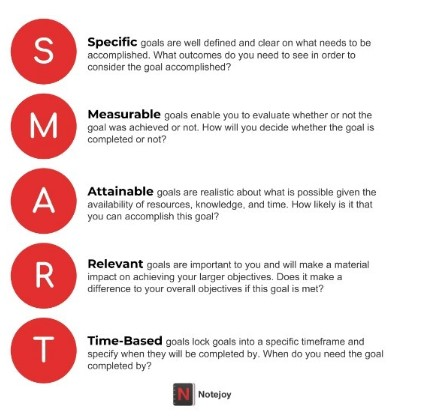
(Source – Notejoy)
To help you with developing your content SMART goals, use the examples below as a guide.
- Increase Organic Blog Traffic by 35% – Grow organic search traffic to the blog from 10,000 to 13,500 monthly visitors within the next six months.
- Generate 150 Qualified Leads Per Month Through Content – Achieve 150 marketing-qualified leads monthly from gated content downloads (eBooks, whitepapers, templates) by the end of Q2 2025.
- Grow Email Newsletter Subscribers to 5,000 – Increase email newsletter subscribers from 2,500 to 5,000 by December 31, 2025.
- Achieve 10% Engagement Rate on Social Media Content – Increase average social media engagement rate from 4% to 10% across all platforms within four months.
- Publish 52 High-Quality Blog Posts This Year – Create and publish one comprehensive, 2,000+ word blog post every week for 52 weeks (ending December 31, 2025).
Define Your Audience with Personas
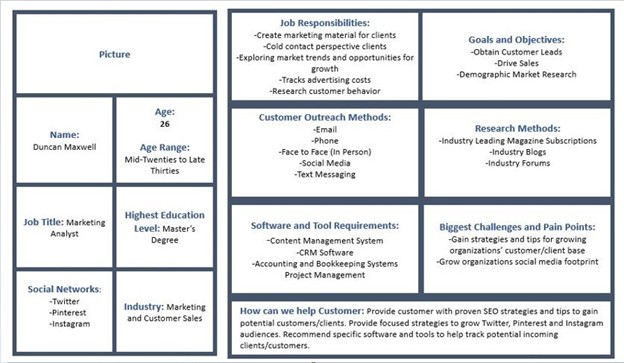
You cannot create great content if you do not know who you are talking to. You need to delve deeper than simple demographics, such as age and location. What are your target audience’s biggest challenges and pain points?
What questions keep them up at night that your brand can answer? Creating detailed buyer personas is the solution. A persona is a fictional character that represents your ideal customer, helping to ensure your content is consistent in tone and focus.
Give them a name, a job title, and a backstory that informs their needs and motivations. The Content Marketing Institute explains how personas improve content. This step helps you create content that truly connects with people, attracting prospects who are a good fit for your business.
Analyze What Your Competitors Are Doing
You are not creating content in a vacuum, as your audience also consumes content from your competitors. A competitive analysis helps you understand those in your niche or industry. This often begins with a content audit of what your rivals are publishing.
Take a look at the topics they cover on their social media accounts and blogs. Find the subjects they are not talking about. These content gaps are your golden opportunities to provide valuable content where others are not, which can help you rank for specific keywords.
Also, notice what content type performs well for them. Is it long-form blog posts, videos, or podcasts? This provides insights into what your shared target audience prefers and informs your own content creation process.
Establish Your Core Content Pillars
You cannot be everything to everyone, so you need to focus your efforts on what matters most. Content pillars are the 3-5 broad topics your brand will own. These subjects are directly related to what you sell and what your audience is interested in.
For example, a project management software company might have pillars like “Team Management,” “Project Planning,” and “Leadership.” These are big themes you can explore for a long time. From there, you can break them down into hundreds of smaller topic ideas, called topic clusters. Here is an example of the Time Management pillar with sub-category articles underneath.
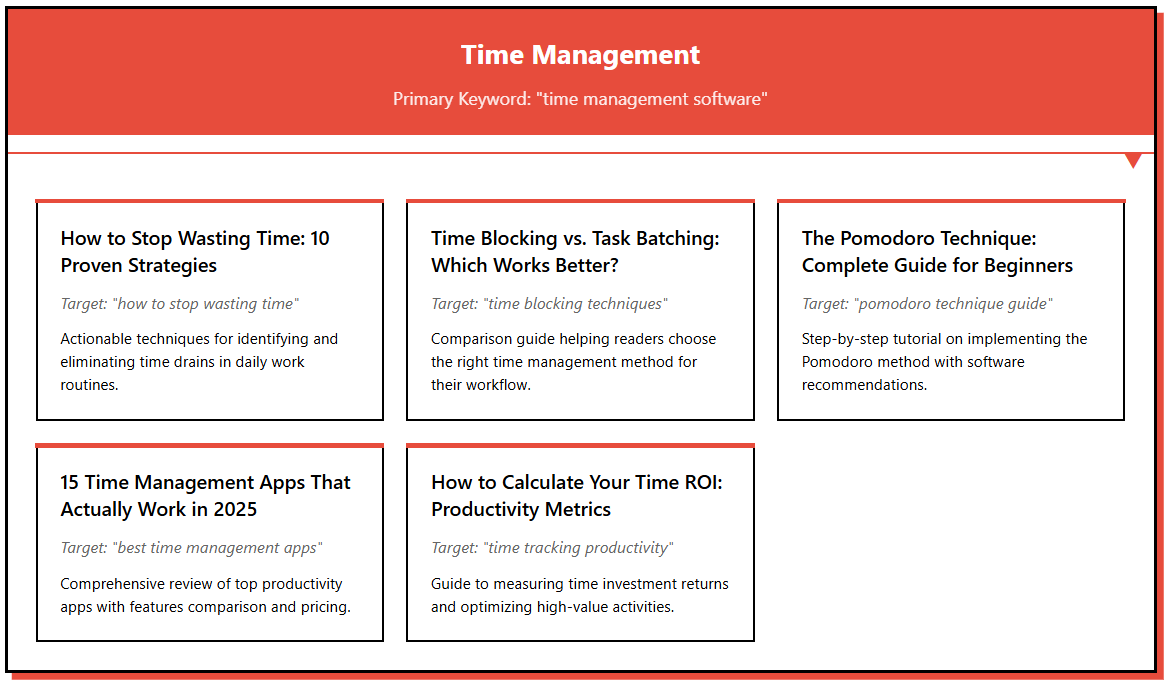
This approach establishes your brand as an authority and a thought leader in your niche. It also helps with visibility on search engines over the long term. Having clear pillars guides content creation and keeps your content consistent.
Map Your Content to the Buyer’s Journey
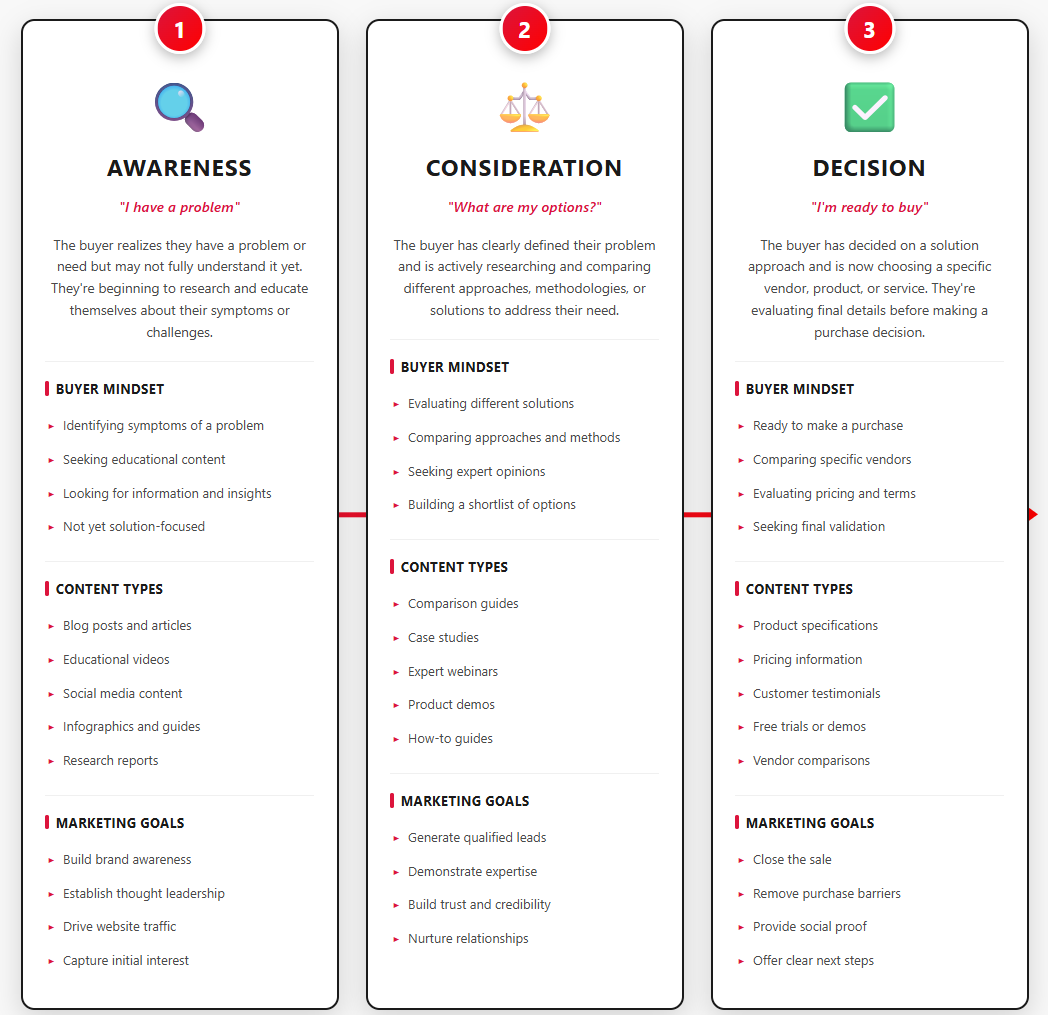
People do not just appear on your website ready to buy. They go through a process of discovery and evaluation. The customer’s process of discovery and evaluation is defined as the buyer’s journey, which comprises several key stages that require distinct content types.
First, there is the Awareness stage, where they realize they have a problem. Next is the Consideration stage, where they look for solutions. Finally, the Decision stage is where they choose a specific product or service to solve their problem.
Your existing content and future content should help people at each stage of the process. Blog posts that answer questions are great for Raising Awareness. Case studies and product comparisons work well for the Decision stage. Mapping content this way makes you a helpful guide for potential customers, which can boost lead generation and build brand loyalty.
Structuring Your Content Strategy Document
Now you have all the research and ideas from your content audit. It is time to put it all into one document. Your content audit document becomes the source of truth for your entire content program, keeping all team members aligned and informed.
You can use a simple Google Doc or something more advanced like a Notion database.
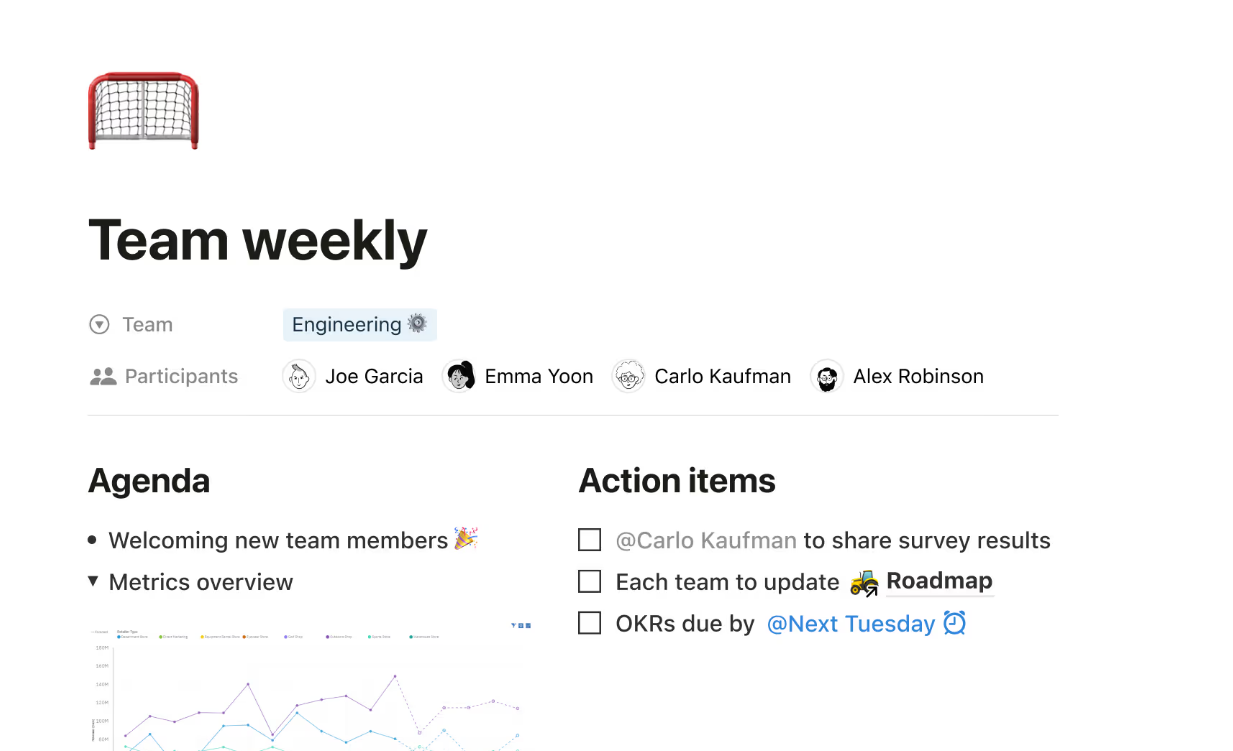
(Source – Notion)
The tool does not matter as much as the information you put in your strategy template. Here are the sections to include for a strong content strategy.
| Section Number | Section Name | What It Should Include |
|---|---|---|
| 1 | Executive Summary | A one-page overview of the entire strategy for busy executives and stakeholders. |
| 2 | Business Goals & Content KPIs | The high-level business objective and the specific content metrics you’ll track. |
| 3 | Target Audience Personas | Your detailed buyer personas, including pain points, goals, and motivations. |
| 4 | Competitive Landscape | A summary of your competitors’ content strengths, weaknesses, and your opportunities. |
| 5 | Brand Voice & Tone | How your brand should sound to create a consistent experience. Is it witty, serious, formal, or friendly? |
| 6 | Content Pillars & Topics | A list of your core pillars and some initial content ideas for topic clusters. |
| 7 | Channel Distribution Plan | Where you’ll publish and promote content (e.g., blog, YouTube, LinkedIn, email). This includes a plan for social media platforms. |
| 8 | Creation & Governance | Your workflow for content creation, including roles for content creators, editors, and approvers. |
Having these sections clearly laid out keeps your marketing plan organized. Anyone on your team can open the document and understand the mission. This format layout is clean and flows from one section to the next.
Turning Your Strategy into Action
A beautiful document is nice, but it isn’t beneficial if it just sits there. You have to bring your content strategy format to life. Turning your content strategy into action is difficult; it’s something as a solopreneur that I struggled with, but I stuck with it and now see growth. You can definitely do it too.
Your strategy should directly feed into your editorial calendar. The calendar is your day-to-day plan for what gets published and when. It turns your big ideas and content pillars into actual articles, videos, and posts for your media accounts.
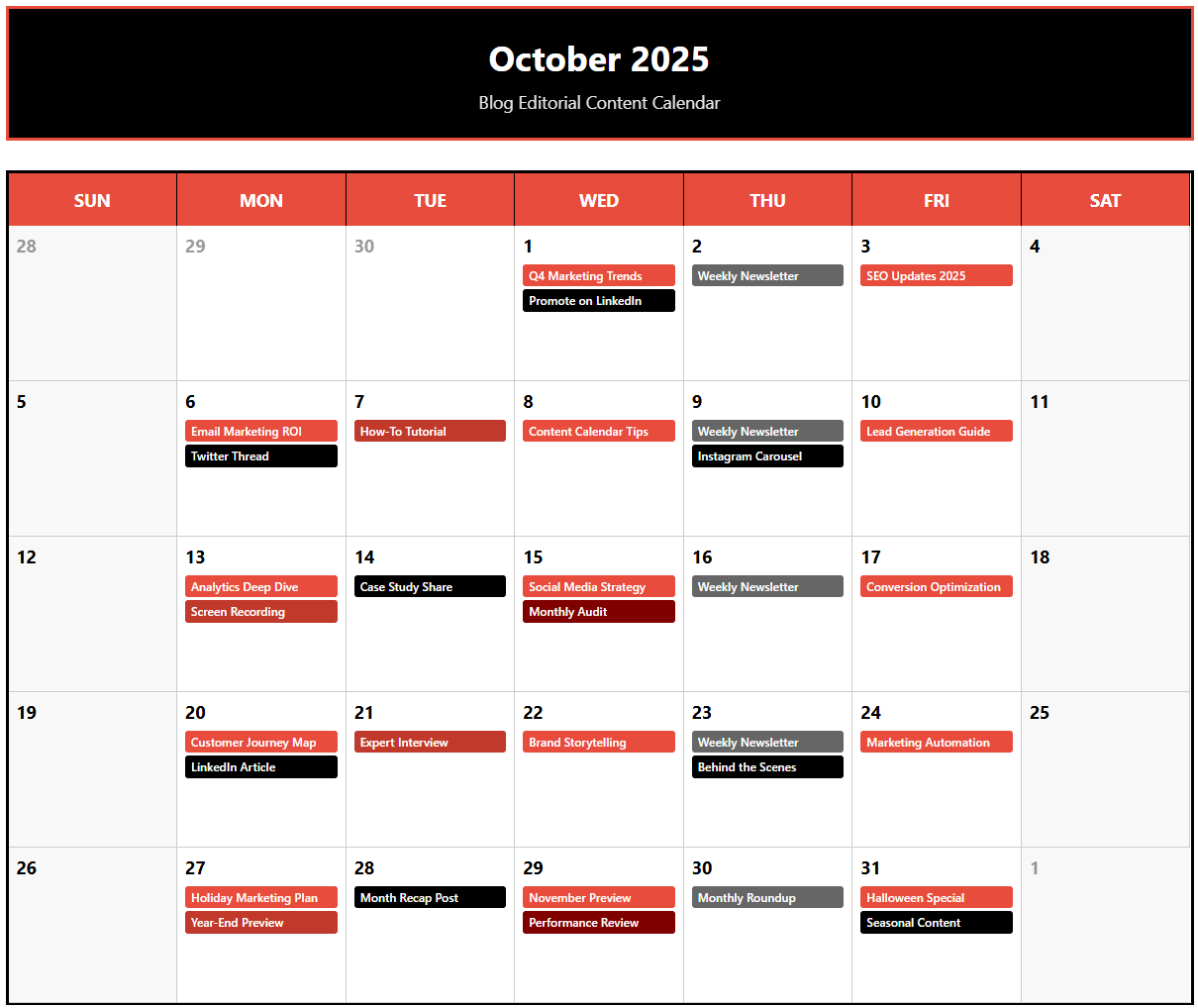
The creation process also needs to be defined to keep your content consistent. Who is responsible for writing?A clear workflow, like the one described, prevents bottlenecks and keeps production moving. Having defined roles for all team members involved is also crucial for success.
Finally, your content marketing strategy is not a stagnant document. You must review it regularly, perhaps once a quarter, using tools like Google Analytics. Are you hitting your content goals and contributing to the business objective?
The market changes quickly, and your audience’s needs can shift. Your marketing framework needs to be flexible enough to adapt to changes. This process keeps your content relevant and effective over time, helping to increase traffic and build brand loyalty.
Conclusion
Building a great content program starts with a solid marketing plan. Once you’ve developed a clear content strategy format it takes the guesswork out from your work and guides all content creators. Having a format that covers all of the important areas that mean the most to you and your team is paramount. Having a document for document’s sake that you don’t use nor truly understand is something that isn’t ideal.
The format must be easy to understand and aligns team members, focuses your efforts, and connects your content directly to business results. Remember, above all else, that you must put in the work and stay consistent.
Your content strategy document serves as a living guide that will evolve in tandem with your business and marketing efforts. From identifying your business objective and target audience to planning your editorial calendar, every step is critical. You now have a clear framework to create a content strategy format that will get you real results.