
Do you ever feel like you’re just throwing content at a wall? You create blog posts, social media updates, and emails, but there’s no real plan behind it all. This approach is exhausting, creates inconsistent digital experiences, and rarely gets the results you want. A solid content management strategy transforms that chaos into a well-oiled machine.
Think of it as the master blueprint for all your content efforts. With a clear content management strategy, you stop guessing and start building something that actually works. You’ll know what to create, who it’s for, and how your digital content helps you reach your business goals.
What is a Content Management Strategy?
Let’s get one thing straight: a content management strategy is not just a content calendar. A calendar tells you when to post, edit, and optimize your content, but the strategy is the high-level thinking that tells you why you’re posting it in the first place. It is the framework that guides the entire lifecycle of your content from creation to archive.
This strategy covers everything from ideation and publication to organization and removal of a digital asset. It defines the people, processes, and tools you use to handle your content efficiently. Basically, it’s your documented plan for managing digital content as a valuable business asset.
It’s easy to confuse this with a content marketing strategy, but they are different. A content marketing strategy focuses on using content to attract and retain customers, defining topics, and targeting specific audiences. The content management strategy deals with the practical execution, such as who approves a blog post and which management systems will be used to publish it.
Why You Need a Content Management Strategy
Maybe you think your small team doesn’t need a formal strategy because you just get things done. Without one, you’re likely creating more work for yourself and missing out on big opportunities. A lack of planning is how you end up with a messy, ineffective digital experience.
A huge benefit is saying goodbye to content chaos, which boosts team efficiency. When everyone knows their role and the steps to follow, things move smoothly. This consistency leads to better customer engagement and less stress for your team members.
You also start working smarter, not harder. A good plan helps you repurpose existing content and avoid creating duplicate materials. You save time and resources, which directly helps lower operating costs.
It also significantly enhances your online visibility. A search engine like Google favors organized, high-quality content that is published consistently. Google’s own SEO guide emphasizes the importance of helpful content, and effective content management ensures that you’re creating just that.

Finally, it keeps your brand message on point and strengthens brand awareness. A strategy makes certain that every piece of content, no matter who creates it, sounds like it came from your brand. This consistency builds trust with your customer base across all media platforms.
The Core Parts of a Powerful Content Management Strategy
A great content management plan has a few key ingredients. They all work together to create a system that runs without constant supervision. You can think of it as a three-legged stool: people, process, and technology.
People: Defining Your Content Team
Content doesn’t create itself. You need people with clearly defined roles and responsibilities. Who is in charge of coming up with ideas? Who writes the first draft?
Think about who will edit and approve the content. Having a clear approval workflow prevents bottlenecks and confusion, ensuring a smooth process. Even if you’re a one-person team, you can still assign yourself these different roles to stay organized.
Typical roles include a content strategist, writers, editors, a designer, and someone to handle SEO and promotion. Don’t worry if you can’t fill all these roles right away. Start with what you have and document who is responsible for each part of the process so everyone is clear on their duties.
Process: Building Your Content Workflow
Your workflow is the repeatable set of steps your content goes through from an idea to a published piece. Documented content workflows mean anyone can step in and understand what to do next. It eliminates the constant question of, “What happens now?”
Your process should cover the entire content lifecycle:
- Ideation – How do you generate and track new content ideas? This could involve team brainstorming sessions or keyword research.
- Creation – Who is assigned to write, design, or record the content? This stage covers the development of all content types, from articles to infographics and videos.
- Review and Approval – What is the process for editing and getting final sign-off? A multi-stage review might involve an editor, a subject matter expert, and a legal check.
- Publishing – How does content get loaded into your content management systems and scheduled? Proper planning ensures content goes live at the optimal time.
- Promotion – Where and how will you share the content after it goes live? This includes sharing on social media platforms or via email newsletters.
- Auditing – How will you review and update old content to keep it fresh? A regular content audit helps you identify content that isn’t performing well and needs improvement or removal.
Mapping this out gives everyone on your team clarity. It also makes it easier to spot areas where you can become more efficient. You get a clear view of your entire content production line from start to finish.
Technology: Choosing the Right Tools
The right technology can make your entire strategy easier to manage and execute. Your tools should support your people and your process, not make things more difficult. There are a few key categories of tools to consider for your marketing strategy.
The most important tool is your Content Management System (CMS). This is the software you use to publish and manage your digital content, like a website or blog.
You may also need a Digital Asset Management (DAM) system for effective asset management. A DAM is where every digital asset is securely stored and organized, from images and videos to brand logos. This system prevents team members from using outdated or incorrect files, maintaining brand consistency.
The table below breaks down the common tools that support content strategies.
| Tool Category | Purpose | Examples |
|---|---|---|
| Content Management System (CMS) | Publishing and managing website content | WordPress, HubSpot (CMS), and Contentful |
| Project Management Tool | Tracking content through the workflow | Asana, Trello, and Monday.com |
| Digital Asset Management (DAM) | Centralized content storage for media files | Bynder, Brandfolder, and Canto |
| SEO & Analytics Tools | Optimizing content and measuring performance | Ahrefs, Semrush, and Google Analytics |
Finally, consider tools for SEO, analytics, and content creation. SEO tools like Ahrefs help you find keywords, while Google Analytics shows you how your content is performing. You might also use grammar tools or graphic design software to improve the quality of your work.
How to Build Your Content Management Strategy in 5 Steps
Alright, you’re sold on the idea. But how do you actually build a content management strategy? Here is a simple, five-step process you can follow to get started. You can even create a strategy template to reuse for different campaigns.
Step 1: Set Clear Goals
You can’t create a good plan without knowing what you want to achieve. What is the purpose of your content? Are you looking to increase traffic to your website?
Perhaps your goal is to generate more leads for your sales team. Or maybe you want to establish your brand as an authority in your industry. It’s crucial to be specific about what success looks like so that your content aligns with your main objectives.
Using the SMART goals framework can be a huge help here. It forces you to set goals that are specific, measurable, attainable, relevant, and time-based. This clarity will guide every other decision you make.
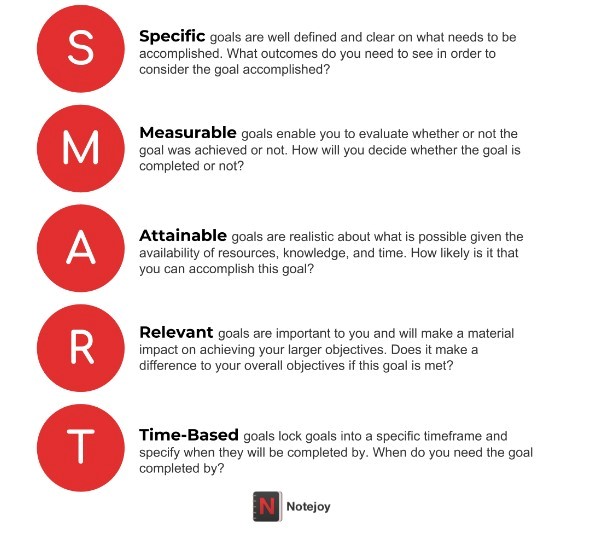
(Source – Notejoy)
Step 2: Understand Your Audience
You aren’t creating content for yourself. You’re creating it for a specific audience. Who are they? What do they care about?
Take the time to create detailed buyer personas. These are fictional profiles of your ideal customers. Give them names, jobs, and goals to make them feel real.
Dig deep into their pain points and challenges because if content lacks focus on your audience, it’s bound to fail. What problems are they trying to solve? Your content should provide the answers and solutions they are looking for so that your message resonates with them.
A customer persona chart can help you gain a better understanding of your audience. A customer persona chart is a visual representation of your ideal customer(s). You would document customer demographic information, including:
- Age
- Job
- Industry
- Interests
- Pain Points
Depending on the size of your audience, you may have multiple customer personal charts.

To gather the information needed to build your customer persona, you’ll need to obtain additional data. To do so, you can perform various tasks, including the following:
- Surveys
- Interviews (In person or virtual)
- Review website content metrics (popular pages)
- Social media monitoring
- Sales team insights
- Online community and forum research
Step 3: Conduct a Content Audit
Before you create anything new, you need to know what you already have. A content audit is a process where you review content you’ve already published. It helps you identify what’s working, what’s not, and where you have gaps.
You can create a simple spreadsheet to track your content. For each piece, note its topic, format, publication date, and key performance metrics. Look for your top performers and pieces that are outdated or no longer relevant.
This audit will reveal valuable insights. You might discover topics that connect strongly with your audience or find old posts that you can update and republish for a quick win. It prevents you from wasting time creating content you already have.
Step 4: Map Out Your Workflow and Choose Your Tech
Now it’s time to get practical. Based on your goals and team, document the step-by-step workflow your content will follow. Refer back to the content lifecycle we discussed earlier.
Decide who is responsible for each stage of the process. This clarity prevents tasks from falling through the cracks. Make this workflow document easily accessible to all team members.
This is also the time to finalize your technology stack. Select the CMS and project management tools that best align with your workflow. Confirm that everyone on the team is trained on how to use them properly for the best results.
Step 5: Create a Content Calendar
With a plan in place, content finally has a home in your editorial calendar. This is where your strategy becomes an actionable plan. Your calendar will show you what content is being created, who is creating it, and when it will be published.
A good editorial calendar includes more than just a publication date. It should track the topic, author, content type, target keywords, current status, and promotion channels. It’s your single source of truth for all content activities.
Your calendar brings your entire content management strategy to life. It translates your high-level goals into daily and weekly tasks. This tool is what will keep your content engine running consistently over time.

Measuring Success Content Strategy Success
Creating a strategy is a great start, but it’s not a one-and-done task. You need to regularly measure your performance to see if your plan is actually working. This means tracking the right Key Performance Indicators (KPIs). KPIs to include in your tracking list include:
- Number of visitors (Per week, month, and quarter)
- Click-Through-Rate
- Clicks
- Time on website
Your KPIs should connect directly to the goals you set in step one. If your goal is to increase website traffic, then you should track metrics such as organic traffic, unique visitors, and time on page. If your goal was lead generation, tracking conversion rates, and the number of new leads from content. To help analyze your metrics, there are many content analytics tools that can help, including Kissmetrics and Sprout Social.
Set a regular schedule for reviewing your results, maybe monthly or quarterly. If you’re really short-staffed, they should be performed at least once a year. As a solopreneur, I am currently on an annual schedule. This review process helps you understand what’s working and what isn’t. Be prepared to make adjustments to your content management strategy based on the data you gather about your digital marketing efforts.
Conclusion
Organizing your content may seem like a daunting task, but it is one of the best investments you can make in this digital age. A thoughtful content management strategy removes the guesswork and stress from creating and publishing content. It empowers your team with a clear plan, improves the quality of your work, and ultimately delivers better results for your business.
Implementing robust systems for content storage and developing cohesive content workflows is no longer optional; it is essential. A plan transforms random acts of content into a strategic program that drives growth. So, take the first step and begin outlining your new content management strategy today.