
A blog content strategy can make or break your online presence. It’s the plan that turns a simple website into a thriving hub for information and engagement. Crafting a winning strategy enables you to create content that resonates with your audience and delivers tangible results for your business.
What is a Blog?
A blog is a website that focuses on a specific topic or several related topics. The website is frequently updated with new blog posts based on the topics covered in the blog. Blogs can be created by solopreneurs, small businesses, and large enterprises.
Blogs are a great way for audiences to learn about given topics or be entertained. For example, Forbes has a blog that educates users on various topics, including business and technology. They also review products ranging from phones to laptops. Their product reviews help individuals make informed decisions before buying a particular product.

(Source – Forbes)
What is a Content Strategy?
A content strategy is a detailed plan that guides the ideation, creation, development, delivery, and management of your organization’s content.
The content aims to achieve specific business objectives and goals, while also meeting the needs of both potential and existing target audiences.
Content strategies cover everything from content planning and creation to maintenance, distribution, and measurement. One interesting thing I have learned through my research on a content strategy is that it is versatile. There isn’t just one content strategy; you can build one for just about anything, as you can see with the list detailed below:
- Small business content strategy
- B2B content strategy
- LinkedIn content strategy
- UX content strategy
- Vlog content strategy
- Product content strategy
There are also content strategies specifically for the web, as well as one based specifically on data. Larger organizations may develop multiple content strategies, while solopreneurs and small businesses might just have a singular content strategy that covers many areas.
Developing a Blog Content Strategy
Now that you have a better understanding of what a blog is, as well as what a content strategy is, it’s time for you to begin developing your blog content strategy. By following the requirements below, you can expand your blog and reach a larger audience.
Understanding Your Audience
Your target audience is the foundation of your entire blog content strategy. Taking the time to research and create detailed buyer personas is an essential first step. Knowing your audience is one of the most important aspects of developing your blog. Your audience is the lifeblood of your blog, without them it won’t be successful.
These fictional representations of your ideal readers will guide your content creation process from start to finish. This is where a buyer persona comes in. A buyer persona can include many things when it comes to customer demographic information, but if you’re developing one for the first time, make sure to include the following:
- Age
- Occupation
- Interests
- Goals
- Pain points/Challenges
One of the most important aspects a buyer persona helps with is understanding the specific pain points of your potential customers. It also enables you to create content that offers genuine solutions and fosters trust.
To gather this information, there are many different ways you can do it, including the following:
- Surveys
- Interviews
- Social media listening and monitoring
- Community forum and group participation
- Email marketing performance analysis
The more you understand your audience, the better you can craft content that truly meets their needs.
Setting Clear Goals
Every successful blog has a clear purpose behind its content. Are you trying to increase brand awareness, generate leads for your sales team, or establish your company as an industry expert? Your specific business goals will shape the type of content you create and how you measure its success.
It’s essential to set SMART goals: Specific, Measurable, Achievable, Relevant, and Time-based. For instance, a vague goal is “get more traffic.” A SMART business goal would be to “Increase organic traffic by 20% in the next quarter by publishing two quality blog posts per week.” This approach helps you stay focused, and it allows your marketing team to track progress effectively.
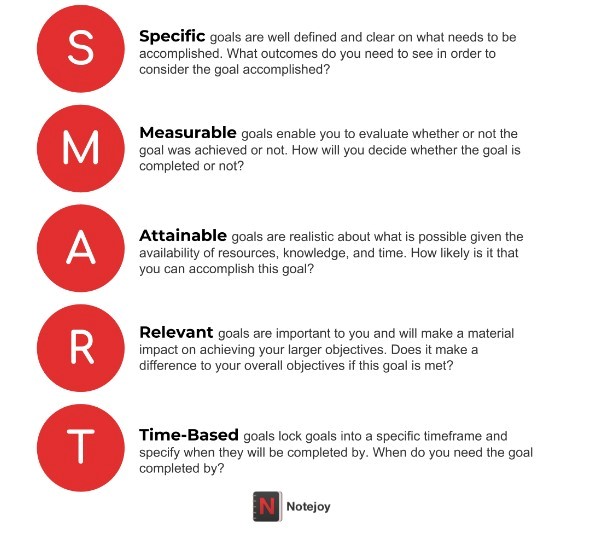
(Source – Notejoy)
Your content marketing strategy should always align with your broader marketing strategy and business objectives. Whether your goal is to boost your conversion rate or increase demo requests, a documented plan makes achieving these outcomes significantly easier. When you set goals upfront, every piece of content has a specific purpose to fulfill.
Choosing the Right Topics
With your audience and goals defined, it’s time to brainstorm content ideas. Start by listing the main themes or categories that align with your brand and what your buyer persona cares about. From there, you can develop more specific topics within each of those categories.
Utilize online tools to identify popular questions and topics within your industry. This research can reveal what your audience is actively searching for, giving you a direct line into their needs. Also, pay attention to seasonal trends and current events that could inspire timely and relevant blog posts.
A great way to organize your topics is by using a pillar page and topic cluster model. A pillar page is a comprehensive resource on a broad topic, while cluster posts delve into related subtopics in greater detail and link back to the pillar page. This structure helps you build authority on a subject and signals to search engines that you are a credible source.
Keyword Research
Incorporating the right keywords into your blog content is vital for getting discovered through organic search. Use an SEO like Ahrefs, Google Keyword Planner or SE Ranking to find keywords with healthy search volume and manageable competition. Focus on long-tail keywords, which are longer and more specific phrases that often reveal a user’s direct intent. For example, instead of “running shoes,” you should try “how to choose running shoes for marathon training” or “trail running shoes vs road running shoes comparison”.
Understanding search intent is critical. A user searching for “best running shoes for beginners” has a different goal than someone searching for “Nike Air Zoom Pegasus review.” Your content must align with the intent behind the SEO keyword to rank well and effectively satisfy the reader.
Your goal isn’t just to sprinkle an average keyword throughout your text. Use keywords naturally in your title, headings, and body copy to enhance your search rankings. To be successful with keyword usage, it has to be deliberate and planned. Good keyword research ensures your valuable content reaches the right potential customers.
Creating a Content Calendar
Organization is a significant component of any successful blog strategy. An editorial calendar helps you plan and schedule your posts in advance, which is necessary for maintaining a consistent publishing cadence. This tool also enables your content team to align blog posts with key company dates, such as product launches or marketing campaigns.
Your content calendar, also known as an editorial calendar, should be a comprehensive document for your marketing platform. You can use a simple spreadsheet or a project management tool like Trello or Asana. You may also use content planning software, which is more geared to scheduling and planning. It’s easy to get started with your strategy using a simple tool.
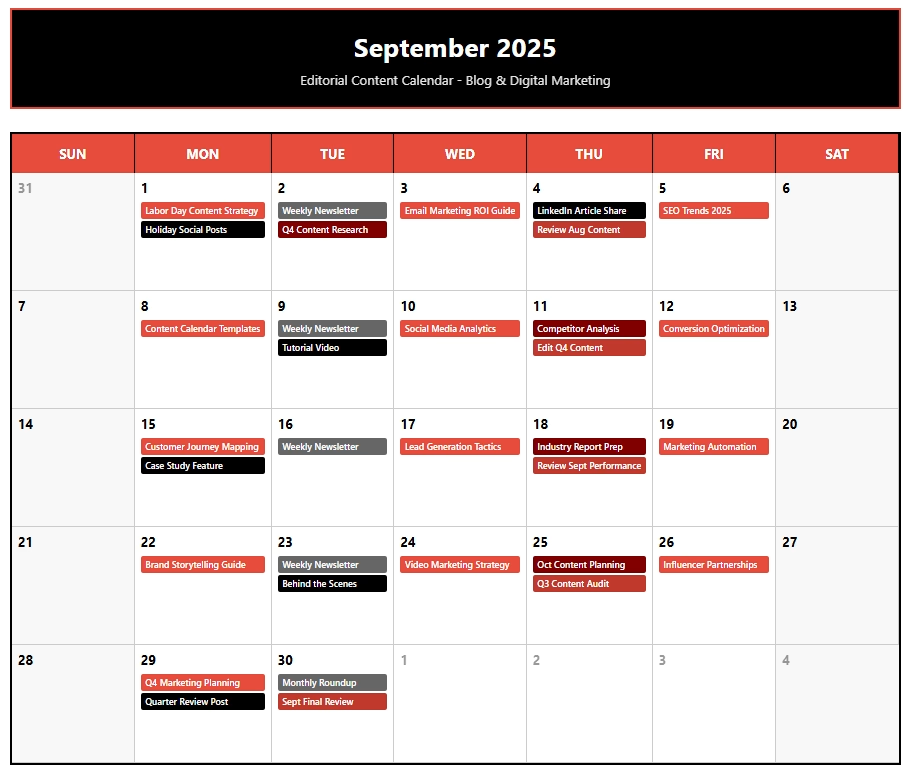
To make your calendar as useful as possible, include columns for more than just the publication date. Tracking these details helps you manage the entire content lifecycle from ideation to performance analysis.
| Section | Description |
| Publication Date | The target date for the blog post to go live. |
| Working Title | A placeholder title for the article. |
| Author | The person on the content team responsible for writing the post. |
| Status | The current stage of the content (e.g., Idea, In Progress, In Review, Scheduled). |
| Target Keywords | The primary and secondary SEO keywords for the post. |
| Content Format | The type of content, such as a how-to guide, listicle, or case study. |
| Promotion Plan | Notes on how you’ll share the content (e.g., social media posts, email newsletter). |
Developing a Unique Voice
Your blog’s voice helps you stand out from the competition. It should reflect your brand’s personality and connect with your target audience. Are you professional and authoritative, or more casual and conversational?
Consistency is the most important element of brand voice. You should create a style guide that outlines your brand’s voice, including rules for language, tone, and formatting. This document ensures a cohesive experience across all your blog posts, even if you have multiple writers creating content. When you develop a style guide, some key items should include the following:
- Brand voice and tone guidelines
- Writing standards and grammar rules
- Content structure and formatting
- Audience and messaging framework
- Usage guidelines and restrictions
A strong brand voice fosters familiarity and trust with your readers over time. It makes your content recognizable and helps foster a loyal community around your blog. Your style guide helps your writers content stay on track.
Crafting Compelling Content
Now you can begin the content creation process of writing your blog posts. Start with a strong headline that grabs the reader’s attention and accurately describes the content. Use subheadings, bullet points, and short paragraphs to make your posts easy to scan and digest.
Visuals are a great way to break up text and make complex information easier to understand. Include relevant images, infographics, or even short videos to enhance the reader’s experience. Different content formats appeal to different people, so mixing up your media can broaden your reach.
Finally, every post needs a clear call-to-action (CTA). This tells the reader what you want them to do next, whether it’s downloading a resource, signing up for your email list, or reading another related article. A CTA transforms a passive reader into an active participant. Here are some examples of a call-to-action.
- Contact or Consultation Offer CTA – “Have questions about applying these concepts to your specific situation? Schedule a free 15-minute consultation with our team to discuss your needs.”
- Next Step Action CTA – “Ready to implement these strategies? Start with step one today and track your progress using our free template. Take action within the next 24 hours for best results.”
- Newsletter Subscription CTA – “Stay updated with our latest insights and tips by subscribing to our weekly newsletter. Join 5,000+ professionals who rely on our content to stay ahead.”
Optimizing for SEO
While your primary focus should be on creating quality content for your readers, you also need to think about search engines. A proper strategy includes optimizing your posts by placing your target keyword in the title, meta description, and URL. It should also appear naturally throughout the content itself.
Internal and external links are another key part of on-page SEO. Linking to other relevant posts on your blog helps keep visitors on your site longer, while linking to authoritative external sources can enhance your credibility. This digital marketing practice helps with increasing organic search visibility.
Promoting Your Content
You need to actively promote your blog posts to reach a wider audience than what organic search alone can provide. The best content marketers know that creation is just the beginning.
Share your articles on the social media channels like LinkedIn, Facebook or X (Twitter), where your target audience is most active. You can create unique social media posts with images or short videos to drive traffic back to your blog. For your top-performing content, you might even consider running paid social campaigns to expand its reach.
Email marketing remains one of the most effective ways to distribute your content. Build an email list and send regular newsletters that feature your latest blog posts and other helpful resources. A strong email list gives you a direct line of communication with your most engaged readers.
Analyzing and Adjusting
You should regularly analyze your blog’s performance and make adjustments based on the data. Use tools like Google Analytics to track key metrics, such as page views, time on page, and bounce rate, to understand how readers interact with your work.
Pay close attention to which topics and content types perform best. This information will help you refine your blog strategies and create more of what your audience loves. You should also take the time to conduct a content audit every six to twelve months to review all of your existing content and identify opportunities for updates or improvements.
Don’t be afraid to experiment with new content formats or topics. The ability to pivot and adapt will keep your content fresh, engaging, and effective at achieving your business goals.
Conclusion
Developing a solid blog content strategy takes time and dedication, but the return is well worth the effort. By deeply understanding your audience, setting clear business goals, and consistently creating valuable content, you can build a loyal readership. This approach will help you achieve your most important objectives.
Remember, your content marketing strategy should evolve as your business grows and your audience’s needs change. Stay flexible, keep learning from your data, and enjoy the process of connecting with your readers. A thoughtful plan is the difference between writing into the void and building a powerful asset for your business.