
Writing a blog article can be difficult, especially if it’s an in-depth article that requires a lot of information. I know I’ve personally sat down at my desk, ready to write an article, and frozen because I don’t know how to proceed. I would ask myself, which topics do I cover? How do you outline the article? What are the most important aspects I should include? It’s enough to drive you crazy. Luckily, some tools can help you with researching practically any topic you want to write about.
Content research tools specifically give you the right ideas backed by real data to move the needle. With content research tools, you will see how these tools help you figure out what your audience already cares about. Through this article, you will gain a better understanding of what a content research tool is, why it’s important, and the 5 best research tool options to choose from. You also learn about the tool’s primary benefits and how to choose the best one for you.
What is a Content Research Tool?
A content research tool is software that helps marketers and content creators discover, analyze, and validate content ideas. What makes the content research tools truly helpful is that they are data-driven. This means that content research tools gather data from various sources, including search engines, social media platforms, and content databases.
The quality of the data sources enhances the trustworthiness of your content. It also helps you make more informed decisions about what content to create. These tools provide valuable information to help improve the quality of your content, including:
- Search trends
- Keyword performance
- Audience interests
- Competitor strategies
- Industry content gaps
The secret to a content research tool’s success is that it takes the guesswork out of content creation by showing you exactly what your target audience is searching for and which types of content perform best in your niche.
Why is a Content Research Tool Important?
Content research tools are essential because they prevent you from wasting time and resources creating content that nobody wants to read. Without these tools, you’re essentially creating content without guidance.
With the billions of pieces of content published online, you need data to guide your content strategy.
These tools help you understand search intent and identify content opportunities before your competitors do. It also allows you to create content that ranks higher in search engines. At the end of the day, content research tools deliver a strong ROI on content.
How The Best Content Research Tools Work Together
You will get the most out of your stack when you see research as a flow. It is not just a random grab bag of software and apps. Here is a simple way to think about it.
| Stage | Main Goal | Tool Types |
|---|---|---|
| Discover | Find topics, keywords, and questions | SEO tool options, Ahrefs, Exploding Topics, Feedly, BuzzSumo social monitoring, audience panels |
| Validate | Check search demand and competition | Google Keyword Planner, Ahrefs, SERP analysis, rank trackers |
| Shape | Outline, structure, and content angle | Content optimization software, brief builders |
| Measure | See traffic, engagement, and conversions | Google Analytics, Semrush One, behavior tracking, conversion tools |
This article is a list style guide. That fits the intent behind “best content research tools” because you want options. You want to see the pros and cons of each platform.
We also cover use cases so you can pick the right mix. You can select the perfect marketing tool for your specific needs. It is about building a system that works for you.
5 Best Content Research Tools
1. SemRush
Summary
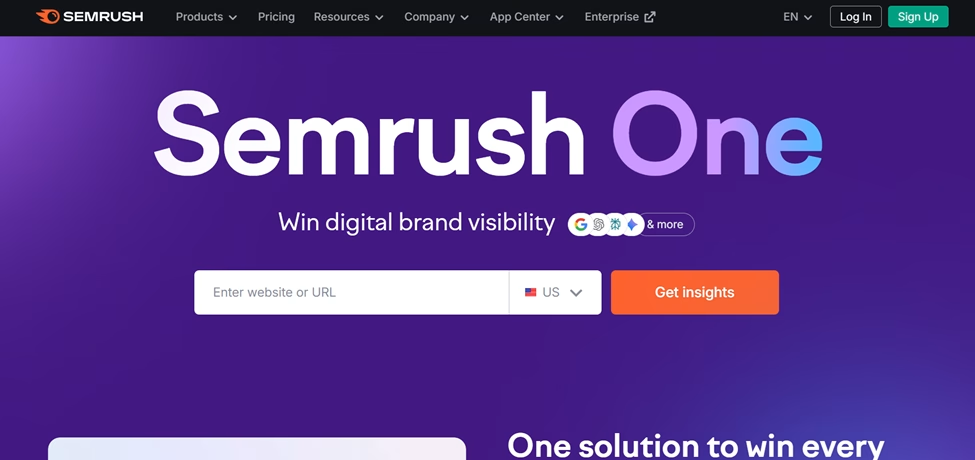
Semrush One is a content research and digital marketing analytics tool that serves as part of an all-in-one marketing suite. The Semrush One tool offers extensive SEO and analytics capabilities, including keyword research tracking and competitor analysis. Semrush One offers user tools to monitor keyword rankings, visibility, and backlinks. It has a higher price tag than most of its competitors, but it is completely worth it due to its extensive feature set.
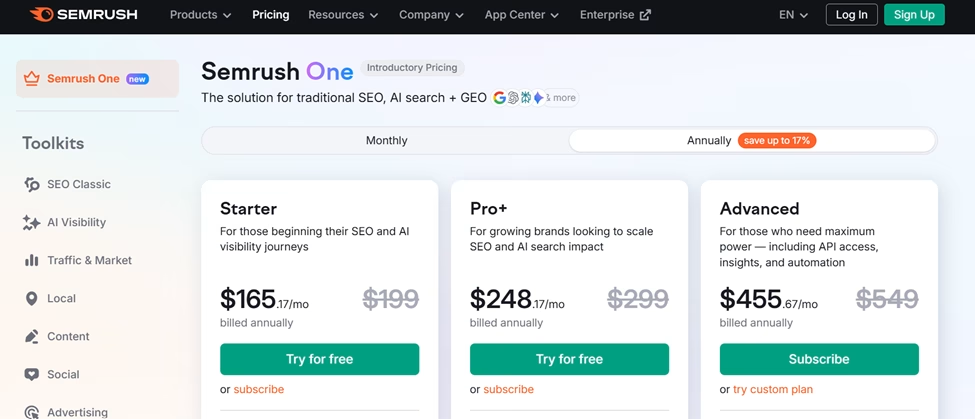
Pricing Range – $199.99 to $549.00 (Per month)
Important Notes – You can create a free account with Semrush. However, the free account limits your ability to pull data and use other tools. The annual cost pricing range is $165.17 to $455.67 (billed annually).
Key Features
- Keyword Research capabilities include the following:
- Keyword Gap analysis
- Competitor research and analysis
- AI visibility brand tracking
- Competitive positioning insights
- AI-driven marketing opportunities
Pros
- Offers a free trial
- Obtain actionable content ideas via the content and audience opportunities feature
- Ability to generate 300 reports per day
- Provides detailed reporting features
- PDF reporting capabilities
Cons
- All three pricing plans are expensive, especially compared to many other content research tools
- Additional users and add-on features will incur an additional cost
2. BuzzSumo
Summary
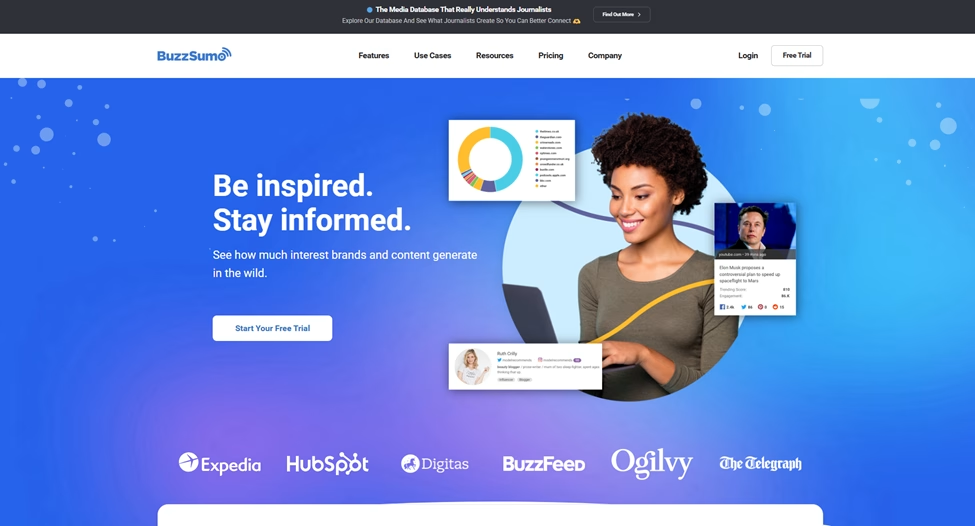
BuzzSumo is a content research and discovery platform that helps you figure out what content is actually performing well across the web and social media. Think of it as your content intelligence tool that shows you what’s working in your industry.
The platform works by scanning billions of articles and social posts to give you real insights into what content gets the most engagement, shares, and backlinks. BuzzSumo also helps you identify influencers and journalists in your space, making it easier to build relationships and get your content in front of the right people.
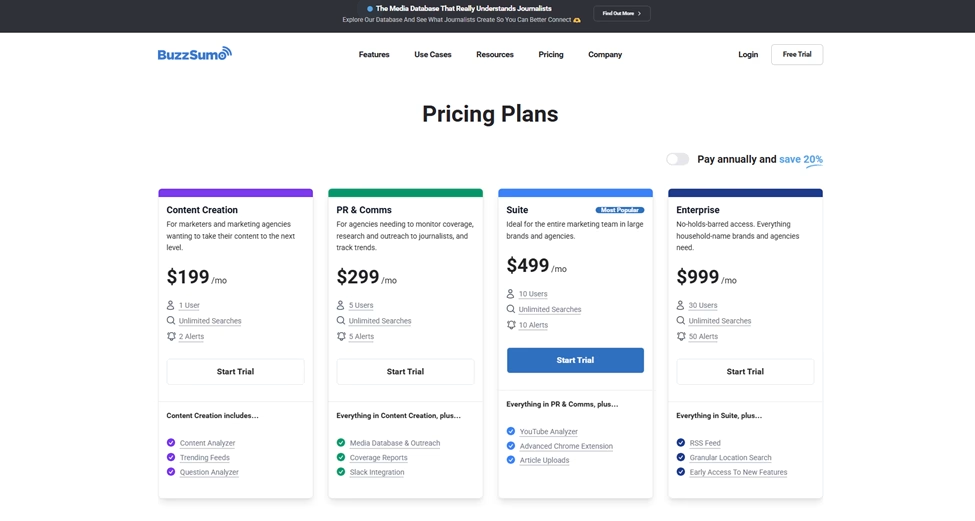
Pricing Range –$199 to $999 (Per month)
Important Note – Paying annually is 20% cheaper. Pricing range changes to $159-$999.
Key Features
- Backlink Analyzer
- Content Ideas Generator
- Content Analyzer
- Media Database and Outreach features
- Coverage Reports
- YouTube Analyze
- Question Analyzer
- Tool Integrations
Pros
- 7-day free trial offer
- Integrations with tools, including Slack
- All plans have unlimited searches.
- Media database
- Backlink Analyzer
- Content Ideas Generator
Cons
- Pricing plans are very expensive when compared to other tools on this list
- Creation Content plan has limited features for its expensive pricing
- Content measurement features are only available on the Suite and Enterprise plans
3. Ahrefs

Summary
Ahrefs is a powerful SEO-centric rank-tracking software tool with many content analytics and reporting features. This makes it an excellent tool for content research. Ahrefs offers keyword research functions, website auditing, backlink reporting, and ranking analysis. With all the SEO-centric metrics, it makes it easier to audit your content’s performance.
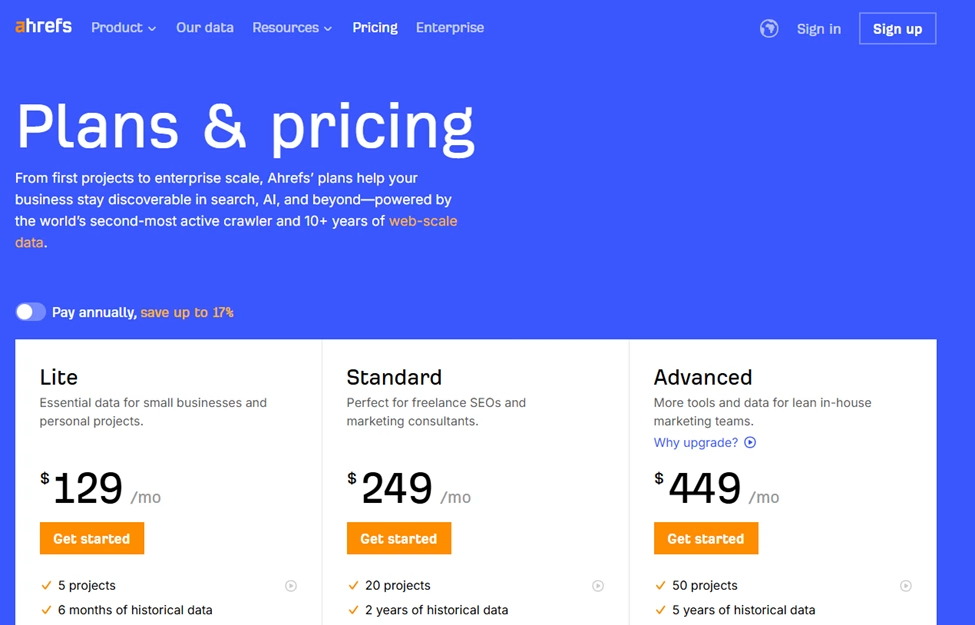
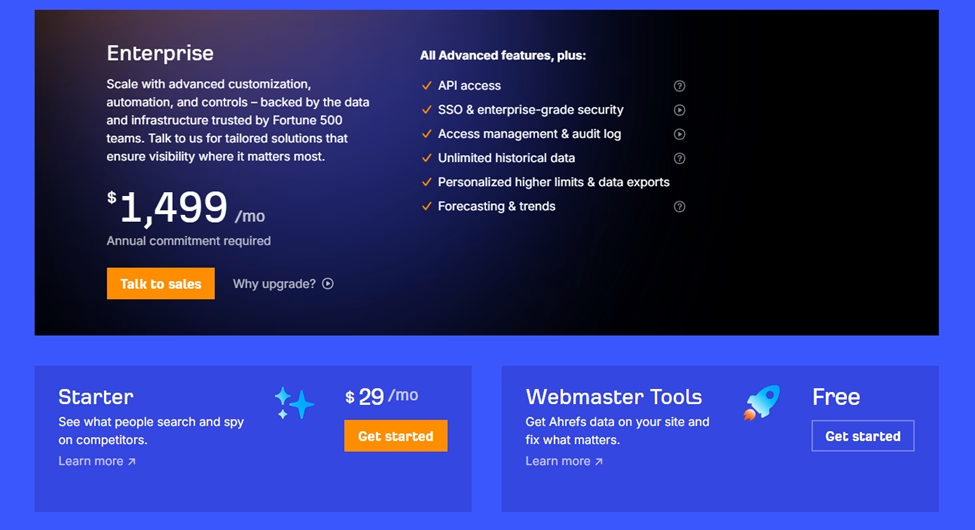
Pricing Range – Free to $1,499 (Per month)
Important Note – The enterprise pricing plan is the most expensive in Ahrefs, at $1,499. The enterprise version requires an annual commitment.
Ahrefs– Lite, Standard, and Advanced pricing plans
Ahrefs– Free, Starter, and Enterprise pricing plans
Key Features
- Keyword explorer
- SEO reporting dashboard
- Content gap analysis
- Website rank tracker
- SERP comparison reporting
- Backlink analysis reporting capabilities, including the following:
- Broken backlinks
- Broken links
- Outgoing links
- Link intersect reporting
Pros
- Export reporting capabilities
- Extensive reporting capabilities
- Data can be updated daily (additional price)
- Free tools include:
- Backlink checker
- Website authority checker
- Keyword generator
- Broken link checker
- Website checker
- AI writing tool (includes AI paragraph generator and AI paragraph rewriter)
Cons
- The free version only provides limited access to Site Explorer and Site Audit for website owners.
- Limited credit allotment for Starter and Lite pricing plans
- Limited reporting data to export based on the plan selected
- The enterprise version requires an annual commitment
4. Feedly
Summary
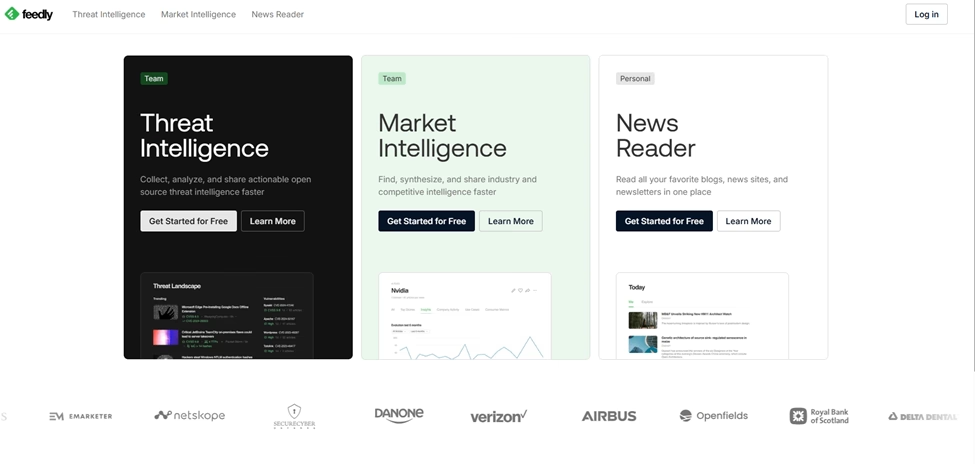
Feedly is a content research tool that primarily serves as a news aggregator and RSS reader. Essentially, Feedly brings all your favorite content sources into one organized place. With this tool, you avoid jumping between websites, blogs, and newsletters throughout the day and bring everything into a single feed.
The News Reader feature lets you follow up to 100 sources on the free plan, including news sites, blogs, YouTube channels, Reddit feeds, and even newsletters. In addition to its news and RSS readers, there are two other features: Threat Intelligence and Market Intelligence. The Threat Intelligence feature allows you to collect, analyze, and share open source-related threat intelligence. Market intelligence performs the same function but focuses on various industries.
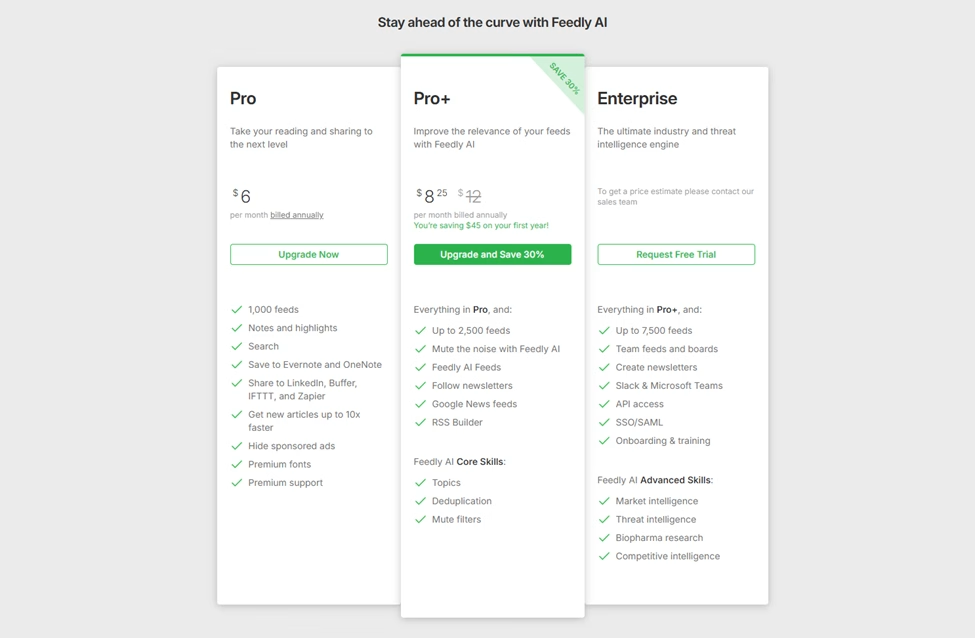
Pricing Range – $6 to $12 (Per month, billed annually)
Important Note – Customers are billed annually. If you want to use the Enterprise plan, you will need to contact the Feedly customer service team.
Key Features
- Access to 100+ feeds depending on pricing plan
- Ability to use Evernote and OneNote
- Access to Google News feeds
- RSS builder
Pros
- Free Plan
- Ability to create newsletters
- Premium customer support
- Available for download on the following:
- iOS
- Android
- Chrome Extension
- Firefox Extension
Cons
- Limited features on the free plan, including:
- 100 feeds
- Ability to use 3 data folders
5. Exploding Topics
Summary
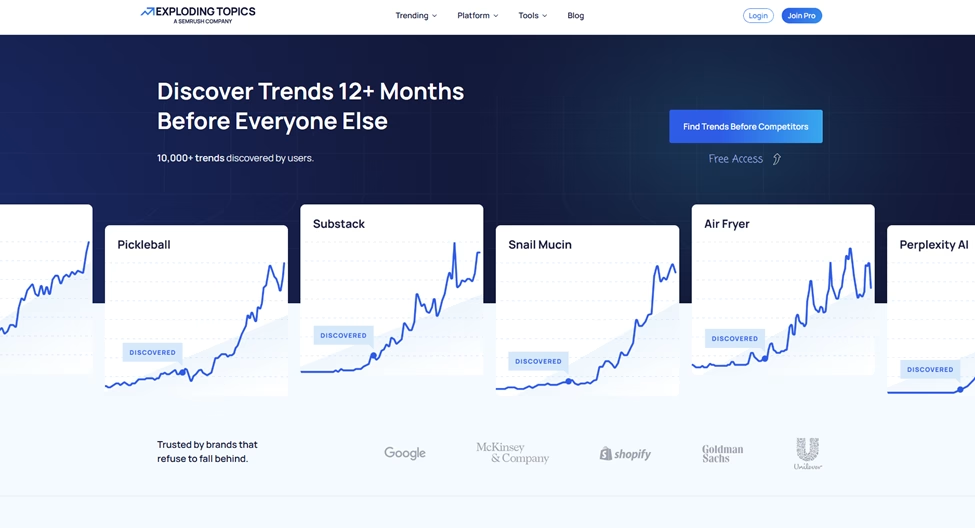
Exploding Topics is an AI-powered trend-discovery platform that identifies emerging trends before they reach mainstream awareness. The tool analyzes millions of search patterns, social signals, and market movements across the web to surface rapidly growing topics in their early stages. It also offers a comprehensive trends database, growth charts, and filtering options. Leveraging Exploding Topics will help you stay ahead of the curve and create timely, relevant content that resonates with your audience.
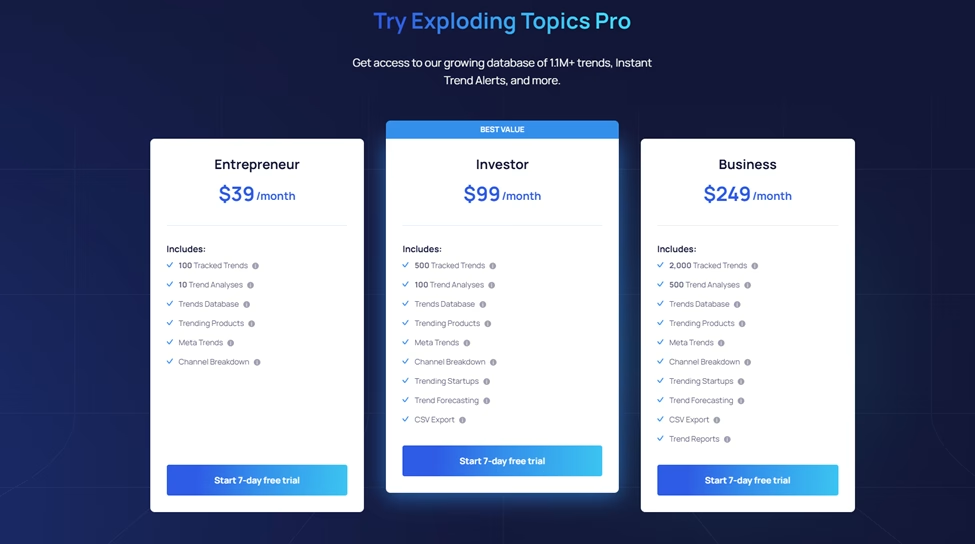
Pricing Range – $39 to $249 (Per month)
Key Features
- Users are granted the ability to track trends
- Ability to leverage a trends database
- Meta trends
- Ability to export metrics to CSV files
- Keep track of trending products
Pros
- 7-day free trial offer for all 3 plans (Entrepreneur, Investor, and Business pricing plans)
- Entrepreneur and Investor plans are relatively inexpensive
- Depending on the pricing plan, users are granted the ability to track a minimum of 100 trends
- Users can leverage an API that provides emerging trend topics to the user’s dashboard
- Users can use many different tools for free (with limited usage), including but not limited to the following:
- Keyword Research tool
- Keyword Generator tool
- SEO Checker tool
- SERP Checker tool
- Keyword Difficulty tool
- Website Traffic Analyzer tool
- Backlink Checker
- Keyword Checker tool
Cons
- The tool, at times, lacks transparency in the data sources it uses
- The tool may not equally cover all niche areas
Benefits of Content Research Tools
A content research tool can be a very important weapon in your arsenal, along with content distribution tools, content planning software, and content audit tools. Content research tools come with many benefits that can help generate new ideas. Here is a list of some of the primary benefits with using a content research tool.
Identifies High-Value Topics and Keywords
Content research tools perform many important functions, including analyzing the following:
- Search volume
- Keyword difficulty
- Trending topics
These areas of focus help show you exactly what your audience is looking for. With the right keywords, you can avoid guessing which topics might perform well. With content research tools, you can discover high-traffic keywords with manageable competition, helping you prioritize content that actually drives results.
I have used Ahrefs on and off for over 3 years. It has helped me generate over 60 keywords in the content marketing and writing niches. Without this tool, I could probably generate a couple of keywords on my own, but I would never know whether they can rank or resonate with an audience.
Accelerates Content Ideation and Planning
Coming up with fresh content ideas consistently is one of the biggest challenges content creators face. Content research tools eliminate issues that can hinder you, including:
- Writer’s block
- Content gaps
- Content duplication
Content research tools can help you generate hundreds of keyword ideas in minutes. These tools also help you plan your editorial calendar by showing trends and content opportunities throughout the year.
Improves Content Relevance and Audience Targeting
Content research tools provide deep insights into your audience’s questions, pain points, and interests based on actual search behavior and engagement data. This helps you create content that directly addresses what your target audience cares about most. These tools also reveal the language and terminology your audience uses when searching for solutions.
Increases Organic Traffic and Search Rankings
Content research tools help you optimize your content for search engines by identifying keywords with the right balance of search volume and competition. By targeting these strategic keywords and creating comprehensive content around them, you improve your chances of ranking higher in search results. The primary point of your blog’s content is to climb the search ranking, which makes it easier to discover.
Reveals Competitor Content Strategies
Content research tools give you a behind-the-scenes look at what’s working for your competitors, including their following key metrics:
- Top-performing content
- Keyword rankings
- Traffic sources
The tool’s competitive intelligence helps you identify content gaps where your competitors are weak and opportunities where you can outperform them. Tools like Ahrefs and Semrush are among the best in this particular area.
How to Choose the Best Content Research Tool for You
Picking tools randomly wastes time and money and, in the long run, creates a lot of frustration. This is something you must avoid. To choose the best content research tool for you, start by developing a criteria list. To help you get started, below is a list of key criteria to leverage.
Price
The price of the tool you ultimately choose is the most important criterion. It goes without saying that you should avoid anything beyond your budget. Look at your budget and figure out what you can comfortably pay for. Look for tools that offer a free version or trial as well.
Ease of Use
Everyone wants to turn on a tool and use it without issues. Look for user-friendly and easy-to-use tools. It’s also important to ensure the tool’s vendor offers support options to help users learn to use the tool easily and to fix any issues. For example, the following items will help you:
- How-to guides
- Tutorial videos
- 24/7 support team via email, chat, and/or phone
It’s important to have support for any issues you may encounter.
Features
When researching your potential choices, consider the tool’s features. When doing so, consider what you are trying to do with it. For example, think about the following:
- What do I want to use the tool for?
- What features are most important to me/my team?
- What features will the me/my team realistically use?
Answering these questions helps eliminate the features you don’t need. Unfortunately, most people pick a tool for its features. Some important features to keep in mind when you select your content research tool include:
- Keyword generator
- Competitor analysis
- Content gap analysis (internal and customer)
There are many other features to consider when looking for a tool; you and your content team must determine which are most important.
Data Accuracy and Reliability
The accuracy of the data your content research tool provides is critical to making informed decisions. If the search volume numbers are off or the keyword difficulty metrics are unreliable, you’ll end up targeting the wrong topics. You don’t want to waste valuable time writing an article that won’t get any traction.
I unfortunately ran into this issue when I created this blog. I wrote blog articles without doing any research at first. Those articles did not help grow my audience. At the end of the day, you need a tool that provides accurate, actionable insights you can confidently base your content strategy on.
Scalability and Growth Potential
Your content needs will evolve as your blog and business grow. As a result of the growth, you need to choose a tool that can scale with you. A tool that works well when you’re publishing five articles a month should still be effective when you’re producing fifty.
Look for platforms that allow you to easily upgrade plans, add team members, and increase your keyword tracking or content analysis capabilities as your content operation expands. You don’t want to invest time learning a platform only to outgrow it in six months and have to migrate to a new system.
Conclusion
Choosing the right content research tool can help enhance your content. The five tools covered in this guide offer many ways to help you take your content to the next level. For example, finding the right keywords, generating content ideas, and conducting competitor analysis.
To find the right tool for you, you must evaluate your needs, budget, and features, among other factors. Use the criteria we discussed in this guide to help narrow down the best research tool for you and your organization and start improving your content and ideas today.