
Feeling like you’re just throwing content at a wall and hoping something sticks? It’s a common problem for many marketers, leading to wasted resources and a frustrated content team. Creating a solid content marketing roadmap can give you the direction you desperately need, turning random acts of content into a focused strategy that gets real results.
Without this plan, you might be creating beautiful blog posts or a great YouTube video that go nowhere. They don’t attract the right target audience or help your business grow. You’ll learn how a strategic content marketing roadmap aligns every piece of digital content with a larger business goal.
What is a Content Marketing Roadmap?
Let’s clear something up first. Content roadmaps are not just glorified content calendars. An effective content calendar tells you what you’re publishing and when, which is tactical. Your roadmap, on the other hand, is your strategic, high-level guide. Unfortunately for me this is something I had to learn the hard way.
When I started this blog I didn’t value the importance of a roadmap. Especially during my first month of the blog. As a studied more about content strategy and development I learned about the importance of a roadmap, in particular what it can do for key areas like keyword research and content development. It gave me a clear path of writing content that is related and within appropriate niche.
Think of your roadmap as the blueprint for your entire marketing campaign. This strategy roadmap shows the major content initiatives you plan to tackle over several months or even a year. It connects your content directly to your marketing objectives, making sure every effort has a clear purpose.
The roadmap sits between your broad marketing strategy and your daily publishing schedule. It also links back to your other criteria specific content strategies including your content, product and brand strategies. The strategy defines your goals and audience. A roadmap provides the major campaigns and themes to achieve those goals. Then, the calendar breaks it down into daily and weekly action steps.
Why is a Content Marketing Roadmap Important?
Operating without a roadmap is like trying to drive to a new destination without a map. You might get there eventually, but you will waste a lot of time and resources along the way. Your marketing efforts can become chaotic, inconsistent, and ultimately, ineffective. Currently 69% of content marketers say they follow a documented content strategy which acts as their roadmap in 2025.
One of the biggest benefits is aligning your marketing team with your company’s business goals. It’s important to note that if you’re a small business owner or solopreneur and don’t have a marketing team your roadmap should still align with your goals.
A content plan also helps you and your team members stay organized and proactive. This also leads to higher quality content that builds trust with your audience and improves the overall customer experience over time.
Building Your Content Marketing Roadmap Step-by-Step
Creating a content marketing roadmap doesn’t have to be a difficult process. You can break it down into manageable steps. By following this framework, you’ll create a clear plan that guides your team to success.
Step 1: Define Your “Why” – Set Clear Goals
Every journey needs a destination, and your content marketing plan is no different. You must start by defining what you want to achieve. These goals should connect directly to your broader business objectives.
Use a framework like SMART goals to get specific. This popular method helps you set goals that are Specific, Measurable, Achievable, Relevant, and Time-Based. A vague goal like “get more traffic” becomes “Increase organic search traffic to the blog by 75% from Q1 2025 to Q3 2025 by creating content on these specific topics.”
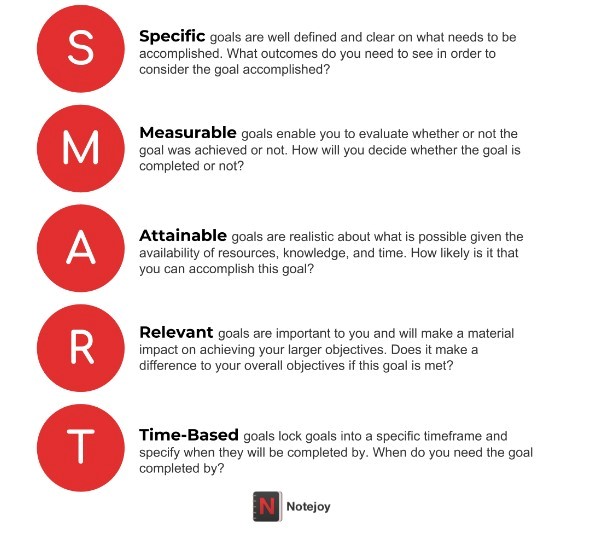
(Source – Notejoy)
Other goals could relate to different stages of the marketing funnel. For brand awareness, you might aim to increase social media reach. To improve retention, you could focus on creating content that helps existing customers succeed. Clear goals make it easy to measure success and justify your marketing efforts.
Step 2: Know Your Audience
You can’t create effective content if you don’t know who you’re creating it for. This is where detailed buyer personas come into play. A persona is a semi-fictional representation of your ideal customer.

Go beyond basic demographics like age and location. Dig into their goals, challenges, and daily pain points, use the chart shown above as a guide to get you started.
To properly build the persona out you can this customer information through the following:
- Surveys
- Interviews (In person or virtual)
- Website analytics
In addition to those listed above your sales team can also offer valuable insights into common customer questions and objections. The more deeply you understand your audience, the more your content resonates with them.
Step 3: Figure Out Your Main Content Themes
Now that you know your goals and your audience, it’s time to decide what you’ll talk about. Instead of brainstorming one-off ideas, think in terms of content pillars. These are the big, overarching topics that your brand will own.
Your content themes should sit at the intersection of what your audience cares about and what your brand is an expert in. A company that sells project management software, for example, might have themes like “Team Productivity,” “Project Planning,” and “Leadership.” These broad topics give your digital strategy a clear focus.
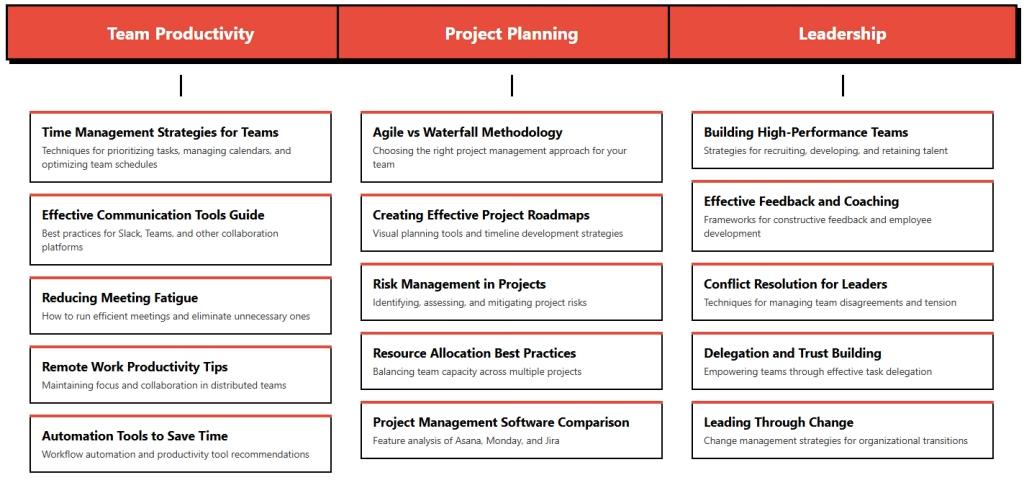
Brainstorm three to five core themes that you can create a ton of content around. This approach helps you build authority in your niche and makes it easier to come up with specific ideas for creating content. These themes form the foundation of your content calendar.
Step 4: Perform a Content Audit and Gap Analysis
You probably already have a lot of content living on your website. Before you create anything new, take stock of what you have. A content audit involves systematically reviewing all of your existing content assets.
Look at what’s performing well, what is outdated, and which pieces could be updated or repurposed. Analyzing customer data from your site will show which posts drive traffic and conversions. This prevents you from reinventing the wheel and helps you get more value from your previous work.
Next, perform a gap analysis. This means identifying important topics content that your audience is looking for but that you haven’t covered yet. Analyzing your competitors’ content is a great way to find some of these gaps and identify opportunities to create better quality content.
There are many content audit tools out there including Google Analytics and SEOptimer that can help inventory your content as well as analyze to determine what webpages are performing well and which aren’t among many things.
Step 5: Brainstorm Content Ideas and Formats
With your themes identified and your content gaps known, you can finally start brainstorming specific topics. This is where you come up with the titles for blog posts, video scripts, and podcast episodes. For each of your themes, try to generate a list of 10-15 potential ideas as a starting point.
You should also think about different content formats. Not everyone loves to read blog posts. Consider creating videos, infographics, ebooks, webinars, and checklists to appeal to a wider audience and their learning preferences. Remember these forms of content will roll under your content pillars.
Map your ideas and formats to different stages of the buyer’s journey. An awareness stage topic might be a blog post that answers a common question. A decision stage piece of content could be a detailed case study or a comparison guide in the form of a PDF download or a press release about a new feature.
Step 6: Map Out Your Distribution Channels
Creating great content is only half the battle. You also need a plan for getting it in front of the right people. This is where content distribution comes in, and it’s a critical part of your content roadmap.
Think about where your audience spends their time online. Are they active on LinkedIn? Do they rely on search engines like Google to find information? The channels you choose will impact the type of media content and front-end experiences you build.

(Source – Instapage)
Choose a few key channels to focus on instead of trying to be everywhere. Your main channels could include organic search (SEO), an email newsletter, and a few social media platforms where you can share social media content. Your distribution strategy is just as important as your content creation strategy. Make sure to remember your website is your primary channel and that it should receive the most amount of attention.
Step 7: Create a Realistic Timeline and Calendar
Finally, you need to bring everything together into a tangible timeline. Your roadmap should lay out your major content initiatives and project milestones for the next six to twelve months. It is not a day-to-day calendar but a high-level view of your priorities.
You could map out which theme you will focus on each month or quarter. Then, list the major marketing asset you plan to create for that theme. This gives everyone on the marketing team a clear view of what’s coming up and helps manage team resources.

A simple marketing roadmap template can help organize your thoughts. Here is a sample structure:
| Quarter | Theme | Major Content Pieces | Channels | Success Metrics |
|---|---|---|---|---|
| Q1 | Team Productivity | ebook: The Ultimate Guide to Team Productivity; Webinar: 5 Hacks for More Efficient Meetings | Email Newsletter, LinkedIn Ads, and Organic Search | 250 ebook Downloads, 100 Webinar Registrants |
| Q2 | Project Planning | Video Series: How to Plan a Project from Start to Finish; Infographic: Project Planning Mistakes to Avoid | YouTube, Blog, Pinterest, and Twitter | 10,000 Video Views, 500 Infographic Shares |
| Q3 | Leadership | Interview series with industry leaders; White Papers on future of work. | Podcast platforms, Blog, and LinkedIn | 5,000 podcast downloads per episode, and 150 MQLs from white papers |
Bringing Your Roadmap to Life: Tools and Tips
Your roadmap is a living document, not something you create once and forget about. You’ll need some tools to help you manage and track content. Project management software like Asana or Trello is great for this.
These tools let you assign tasks to a team member, set deadlines, and see the status of every content piece at a glance. You can use a dedicated content platform like Brightspot CMS or even a simple spreadsheet. The tool itself is less important than the habit of using it consistently to create an effective content calendar. Never be afraid to avoid bright shiny tools especially if your on a budget. I currently use an excel spreadsheet and don’t for see changing that anytime soon.
Remember to review your roadmap regularly, perhaps on a quarterly basis. If you have a small team or a solopreneur once to twice a year is fine. Use tools like Google Analytics to track performance against your goals. Be prepared to adjust your content plan based on what the data tells you is and isn’t working with your digital experiences.
Conclusion
Building a thorough content marketing roadmap is one of the most strategic things you can do for your business. It transforms your content from a collection of random articles into a powerful engine for growth. The roadmap gives you focus, helps your team work together, and ultimately leads to much better results.
A great marketing roadmap template is a solid starting point, but the real power comes from the strategic thinking that goes into it. By defining your goals, understanding your audience, and planning your initiatives, you set your content and your business up for long-term success. Your final draft should be a guide that empowers your team to create content with purpose.